

1000 francs – Rwanda
Add to wishlist
Rwanda
Context
Material
References
KM: #
Numista: #55719
Value
Exchange value: 1000 RWF
Bullion value: $237.86
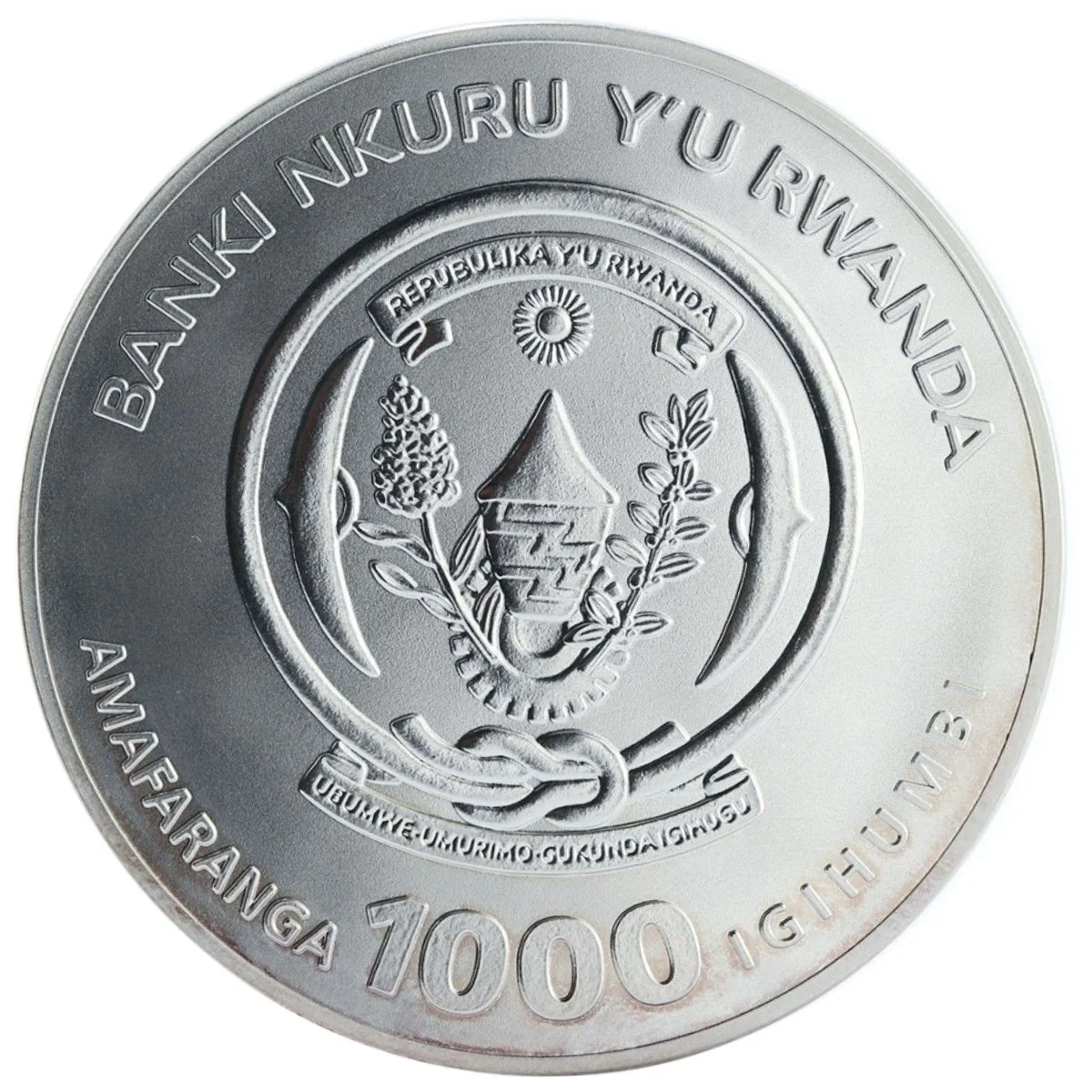
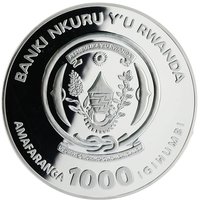
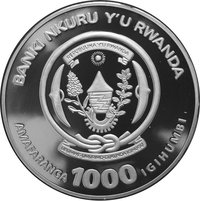
Obverse
Description:
Rwanda's national emblem.
Inscription:
BANKI NIKURU Y'U RWANDA
REPUBLIKA Y'U RWANDA
UBUMWE - UMURIMO - GUKUNDA IGIHUGU
AMAFARANGA 1000 IGIHUMBI
REPUBLIKA Y'U RWANDA
UBUMWE - UMURIMO - GUKUNDA IGIHUGU
AMAFARANGA 1000 IGIHUMBI
Translation:
BANKI NIKURU Y'U RWANDA: National Bank of Rwanda
REPUBLIKA Y'U RWANDA: Republic of Rwanda
UBUMWE - UMURIMO - GUKUNDA IGIHUGU: Unity - Work - Patriotism
AMAFARANGA 1000 IGIHUMBI: 1000 Francs One Thousand
REPUBLIKA Y'U RWANDA: Republic of Rwanda
UBUMWE - UMURIMO - GUKUNDA IGIHUGU: Unity - Work - Patriotism
AMAFARANGA 1000 IGIHUMBI: 1000 Francs One Thousand
Script: Latin
Language: Kinyarwanda
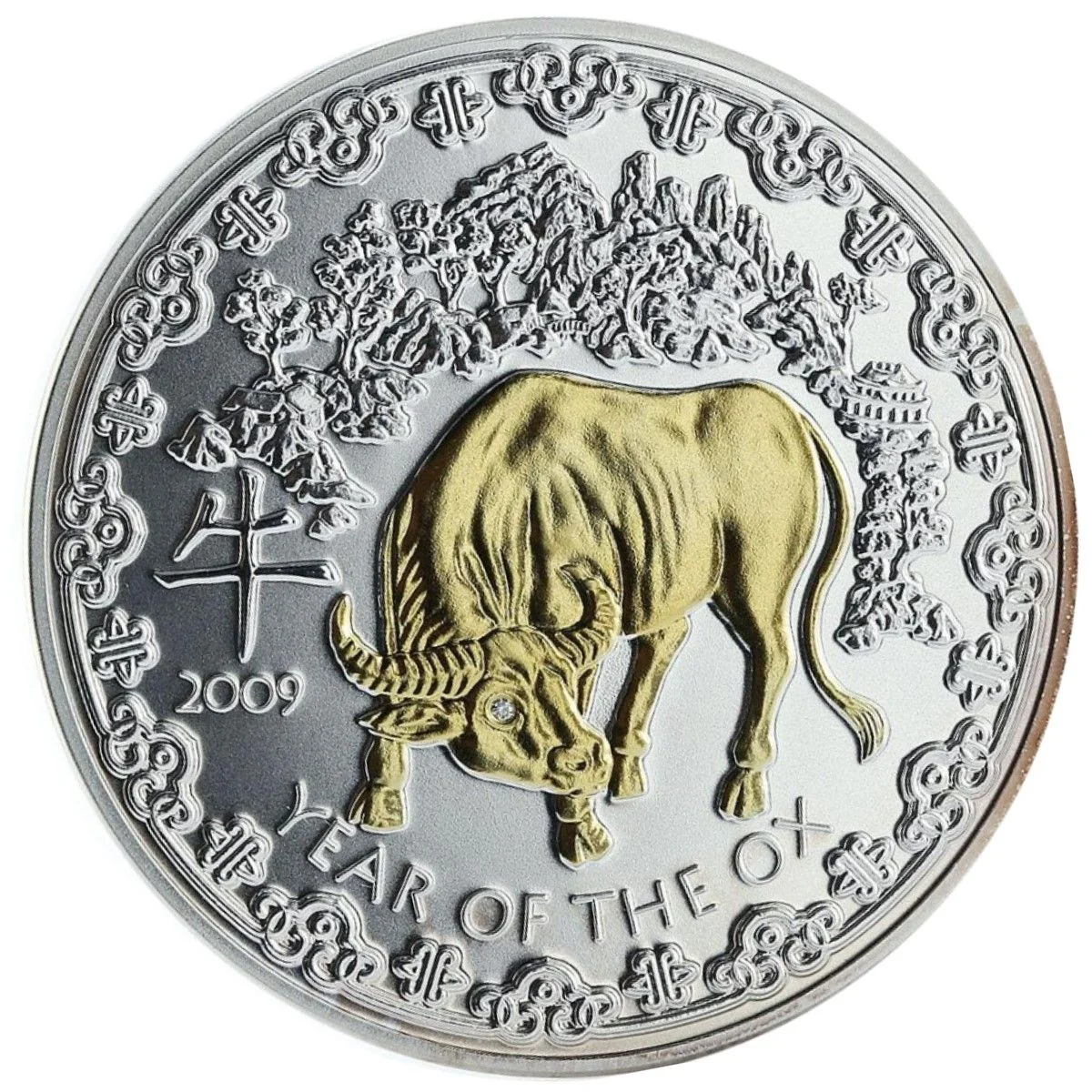
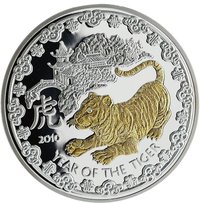
Reverse
Description:
Gilded ox, diamond right eye, before shrubs.
Inscription:
牛
2009
YEAR OF THE OX
2009
YEAR OF THE OX
Translation:
Ox
2009
YEAR OF THE OX
2009
YEAR OF THE OX
Scripts: Chinese (simplified), Latin
Edge
Plain
Categories
| Animal> Cow |
| Astrology> Chinese calendar |
| Symbols> Coat of Arms |
Mintings
| Year | Mint Mark | Mintage | Quality | Collection |
|---|---|---|---|---|
| 2009 | — | 10,000 |
Historical background
In 2009, Rwanda's currency situation was characterized by relative stability and cautious optimism, a significant achievement following the devastating genocide and hyperinflation of the mid-1990s. The Rwandan franc (RWF) was managed under a flexible exchange rate regime by the National Bank of Rwanda (BNR), with its value primarily determined by market forces of supply and demand. This period saw low and stable inflation, averaging around 10.3% for the year, which allowed the central bank to gradually reduce its policy rate to stimulate private sector credit and economic growth. The currency's stability was underpinned by sound fiscal management, substantial donor support, and growing exports, particularly from the coffee and tea sectors.
However, the year was not without pressures. Rwanda, as a landlocked and import-dependent nation, remained vulnerable to external shocks. The global financial crisis of 2008-2009 led to a decline in export demand and foreign direct investment, creating some downward pressure on the franc. Furthermore, the country's trade deficit posed a persistent challenge, as the need to import fuel, food, and capital goods consistently created higher demand for foreign currency (especially US dollars) than the supply generated by exports and remittances. The BNR actively monitored this volatility and maintained foreign exchange reserves to smooth out excessive fluctuations without targeting a specific exchange rate.
Overall, the 2009 currency landscape reflected Rwanda's broader economic narrative of post-conflict recovery and disciplined reform. The government's commitment to macroeconomic stability, supported by programs with the International Monetary Fund (IMF), provided a solid anchor for the franc. This environment of monetary stability was crucial for fostering investor confidence and supporting the country's ambitious development goals, as outlined in its Vision 2020 framework, which aimed to transform Rwanda into a middle-income nation.
However, the year was not without pressures. Rwanda, as a landlocked and import-dependent nation, remained vulnerable to external shocks. The global financial crisis of 2008-2009 led to a decline in export demand and foreign direct investment, creating some downward pressure on the franc. Furthermore, the country's trade deficit posed a persistent challenge, as the need to import fuel, food, and capital goods consistently created higher demand for foreign currency (especially US dollars) than the supply generated by exports and remittances. The BNR actively monitored this volatility and maintained foreign exchange reserves to smooth out excessive fluctuations without targeting a specific exchange rate.
Overall, the 2009 currency landscape reflected Rwanda's broader economic narrative of post-conflict recovery and disciplined reform. The government's commitment to macroeconomic stability, supported by programs with the International Monetary Fund (IMF), provided a solid anchor for the franc. This environment of monetary stability was crucial for fostering investor confidence and supporting the country's ambitious development goals, as outlined in its Vision 2020 framework, which aimed to transform Rwanda into a middle-income nation.
Series: Chinese Calendar

✨ Legendary