

1 Dollar – Australia
Non-circulating coins
Commemoration: VOC Zuytdorp Shipwreck
Australia
Context

Material
Diameter: 40.6 mm
Weight: 31.1 g
Silver weight: 31.07 g
Thickness: 4 mm
Shape: Round
Composition: 99.9% Silver
Standard: Silver ounce
Magnetic: No
Technique: Milled
Alignment: Medal alignment
flip
References
Numista: #55705
Value
Exchange value: 1 AUD = $0.71
Bullion value: $88.92
Inflation-adjusted value: 1.45 AUD
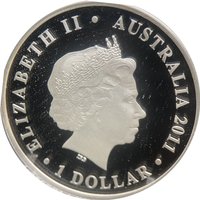
Obverse
Description:
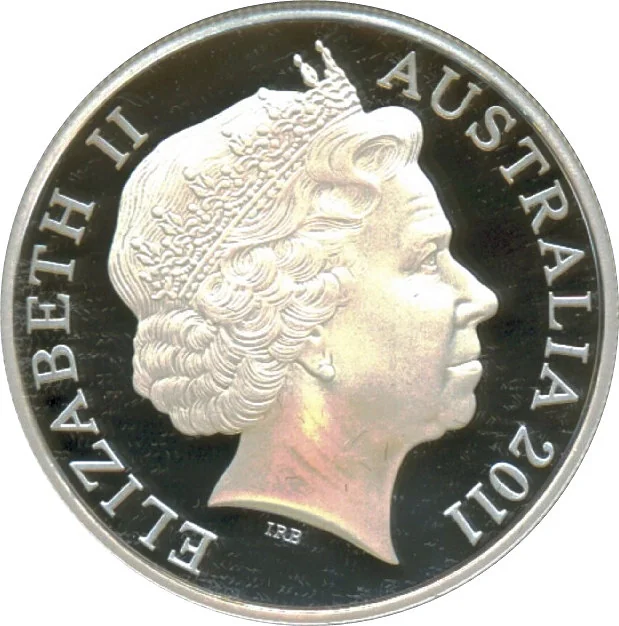
Queen Elizabeth IV, facing right, wearing the Girls of Great Britain and Ireland Tiara.
Inscription:
ELIZABETH II
AUSTRALIA 2011
IRB
AUSTRALIA 2011
IRB
Script: Latin
Designer: Ian Rank-Broadley
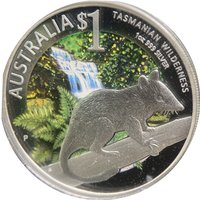
Reverse
Description:
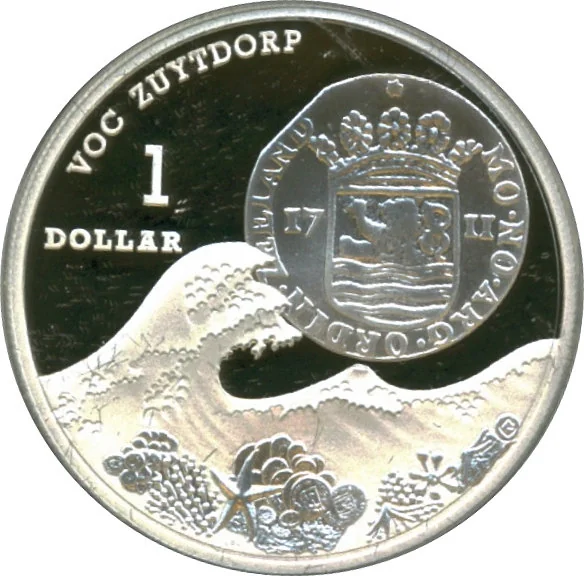
A 1712 Dutch two-stuiver coin design beside an underwater photo of the "carpet of silver."
Inscription:
VOC ZUYTDORP
1
DOLLAR
1
DOLLAR
Script: Latin
Edge
Reeded
Categories
| Currency> Coin depiction |
| Transportation> Watercraft |
| Geography> Sea |
Mints
| Name | Mark |
|---|---|
| Royal Australian Mint | — |
Mintings
| Year | Mint Mark | Mintage | Quality | Collection |
|---|---|---|---|---|
| 2011 | — | 2,948 | Proof |
Historical background
In 2011, Australia's currency situation was dominated by the remarkable strength of the Australian dollar (AUD), which reached historic highs against the US dollar. For much of the year, the AUD traded above parity with the USD, a level not consistently seen since it was floated in 1983. This surge was primarily driven by Australia's robust economic fundamentals amidst a fragile global recovery, high domestic interest rates set by the Reserve Bank of Australia (RBA), and soaring global prices for the nation's key commodity exports like iron ore and coal. The phenomenon was further amplified by Australia's AAA credit rating, which attracted significant capital inflows seeking a safe haven and yield.
The high dollar created a stark "two-speed economy." The booming mining and resources sector in states like Western Australia and Queensland benefited from high export incomes in AUD terms. However, the strong currency severely pressured other trade-exposed industries, including manufacturing, tourism, and education services, as their goods and services became more expensive for foreign buyers and faced intensified import competition domestically. This divergence posed a significant policy challenge, squeezing non-resource sectors and contributing to pockets of higher unemployment, while the overall economy grew.
In response, the RBA maintained a cautious stance. After a series of rate hikes in late 2009 and 2010 to curb inflation, it began cutting the cash rate in November 2011, partly in recognition of the contractionary effect of the high exchange rate. Throughout the year, RBA officials, including Governor Glenn Stevens, frequently commented on the currency's strength, noting it was higher than justified by fundamentals and expressing a willingness to intervene if market conditions became disorderly. The year concluded with the AUD still elevated, setting the stage for continued structural adjustments within the Australian economy.
The high dollar created a stark "two-speed economy." The booming mining and resources sector in states like Western Australia and Queensland benefited from high export incomes in AUD terms. However, the strong currency severely pressured other trade-exposed industries, including manufacturing, tourism, and education services, as their goods and services became more expensive for foreign buyers and faced intensified import competition domestically. This divergence posed a significant policy challenge, squeezing non-resource sectors and contributing to pockets of higher unemployment, while the overall economy grew.
In response, the RBA maintained a cautious stance. After a series of rate hikes in late 2009 and 2010 to curb inflation, it began cutting the cash rate in November 2011, partly in recognition of the contractionary effect of the high exchange rate. Throughout the year, RBA officials, including Governor Glenn Stevens, frequently commented on the currency's strength, noting it was higher than justified by fundamentals and expressing a willingness to intervene if market conditions became disorderly. The year concluded with the AUD still elevated, setting the stage for continued structural adjustments within the Australian economy.


💎 Extremely Rare