

20 Centavos – Mexico
Mexico
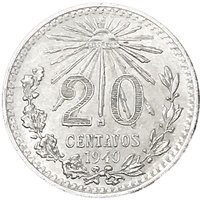
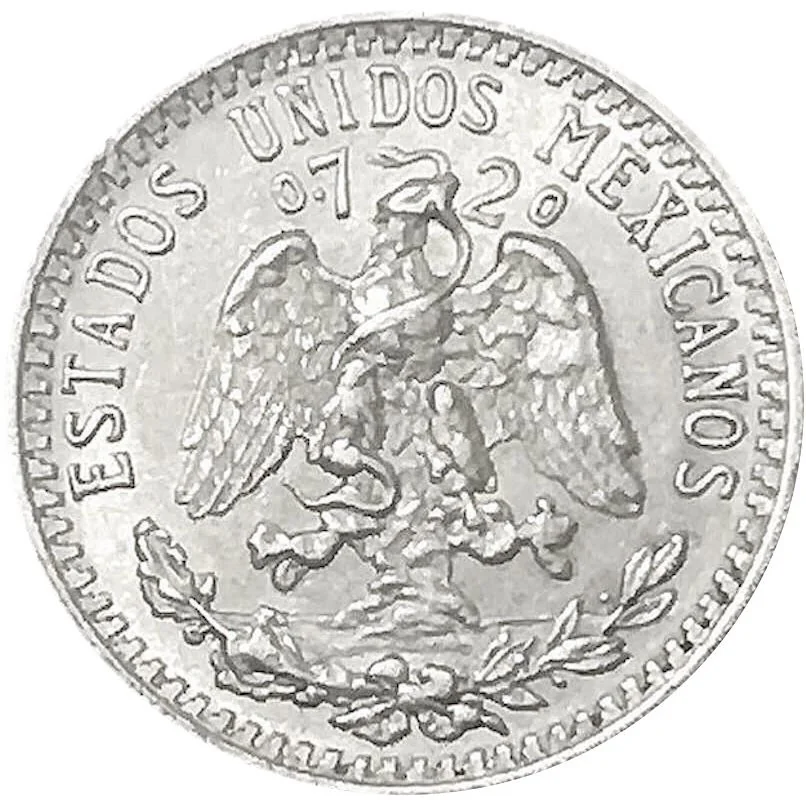
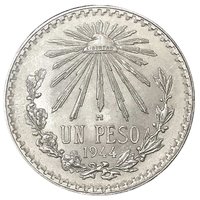
Obverse
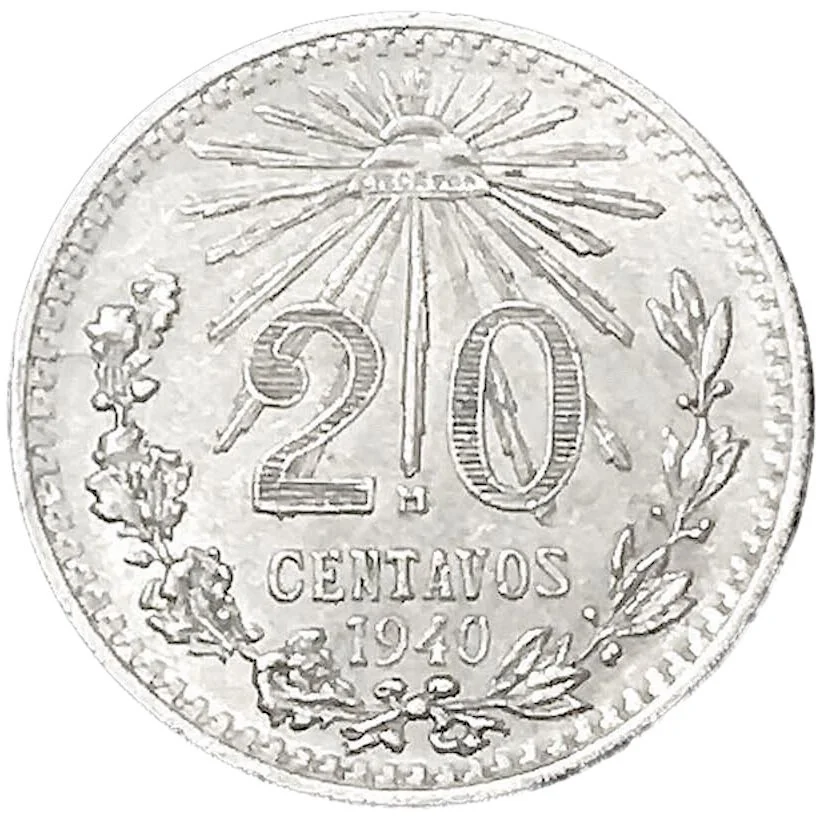
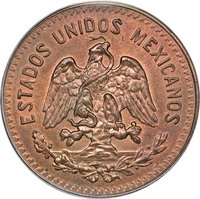
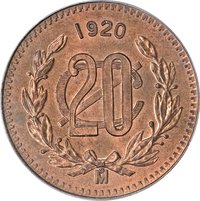
Reverse
Edge
Milled
Categories
| Symbol> Allegory |
| Symbols> Coat of Arms |
| Symbol> Wreath |
| Symbol> Phrygian cap |
Mints
| Name | Mark |
|---|---|
| Mexican Mint | (M) |
Mintings
| Year | Mint Mark | Mintage | Quality | Collection |
|---|---|---|---|---|
| 1920 | M | 3,710,000 | ||
| 1921 | M | 6,160,000 | ||
| 1925 | M | 1,450,000 | ||
| 1926 | M | 1,465,000 | ||
| 1927 | M | 1,405,000 | ||
| 1928 | M | 3,630,000 | ||
| 1930 | M | 1,000,000 | ||
| 1933 | M | 2,500,000 | ||
| 1934 | M | 2,500,000 | ||
| 1935 | M | 2,460,000 | ||
| 1937 | M | 10,000,000 | ||
| 1939 | M | 8,800,000 | ||
| 1940 | M | 3,000,000 | ||
| 1941 | M | 5,740,000 | ||
| 1942 | M | 12,460,000 | ||
| 1943 | M | 3,955,000 |
Historical background
Following the Mexican Revolution (1910-1920), the currency situation in 1920 was one of profound instability and fragmentation. The decade of civil war had shattered the nation's finances, depleting gold reserves and leading to the suspension of the gold standard. The revolutionary factions, including those led by Carranza and later Obregón, had financed their campaigns by printing vast quantities of paper money, known as bilimbiques. These notes were often issued by local authorities, state governments, and even military commanders, resulting in a chaotic patchwork of currencies of wildly varying and dubious value. By 1920, public confidence in paper money was virtually nonexistent, and much of the economy had regressed to a barter system or relied on the use of pre-revolutionary silver coins, which retained their intrinsic value.
The federal government, under President Venustiano Carranza and then Álvaro Obregón who took power in late 1920, faced the monumental task of monetary reunification. The sheer volume of depreciated paper in circulation caused rampant inflation and crippled commerce and reconstruction efforts. A key characteristic of the period was the coexistence of this worthless paper with sound silver currency, creating a dual-system where transactions in silver commanded a steep premium. The state lacked the central authority and fiscal resources to immediately recall and cancel the plethora of circulating notes, leaving the monetary landscape in disarray.
This crisis set the stage for the crucial monetary reforms of the 1920s. The Obregón administration recognized that economic recovery and legitimacy depended on establishing a stable and unified currency. While the definitive solution would come with the creation of the Bank of Mexico in 1925 and a new gold-backed peso, the immediate focus in 1920 was on halting the printing presses, beginning to consolidate the various issues, and restoring a foundation of metallic money. Thus, the year 1920 represents the chaotic low point of Mexico's revolutionary monetary collapse, but also the turning point where the protracted process of national currency restoration began in earnest.
The federal government, under President Venustiano Carranza and then Álvaro Obregón who took power in late 1920, faced the monumental task of monetary reunification. The sheer volume of depreciated paper in circulation caused rampant inflation and crippled commerce and reconstruction efforts. A key characteristic of the period was the coexistence of this worthless paper with sound silver currency, creating a dual-system where transactions in silver commanded a steep premium. The state lacked the central authority and fiscal resources to immediately recall and cancel the plethora of circulating notes, leaving the monetary landscape in disarray.
This crisis set the stage for the crucial monetary reforms of the 1920s. The Obregón administration recognized that economic recovery and legitimacy depended on establishing a stable and unified currency. While the definitive solution would come with the creation of the Bank of Mexico in 1925 and a new gold-backed peso, the immediate focus in 1920 was on halting the printing presses, beginning to consolidate the various issues, and restoring a foundation of metallic money. Thus, the year 1920 represents the chaotic low point of Mexico's revolutionary monetary collapse, but also the turning point where the protracted process of national currency restoration began in earnest.
🌱 Very Common