

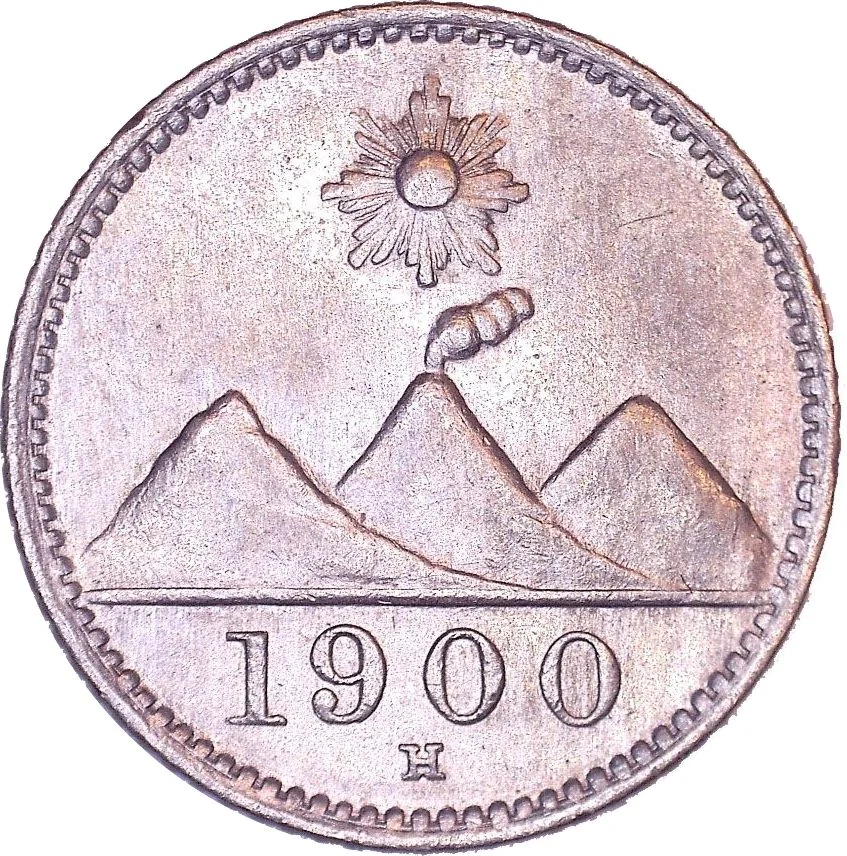
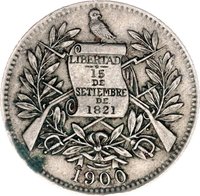
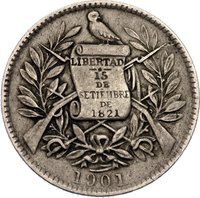
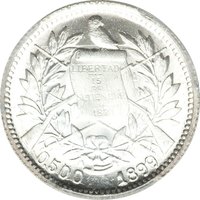
Obverse
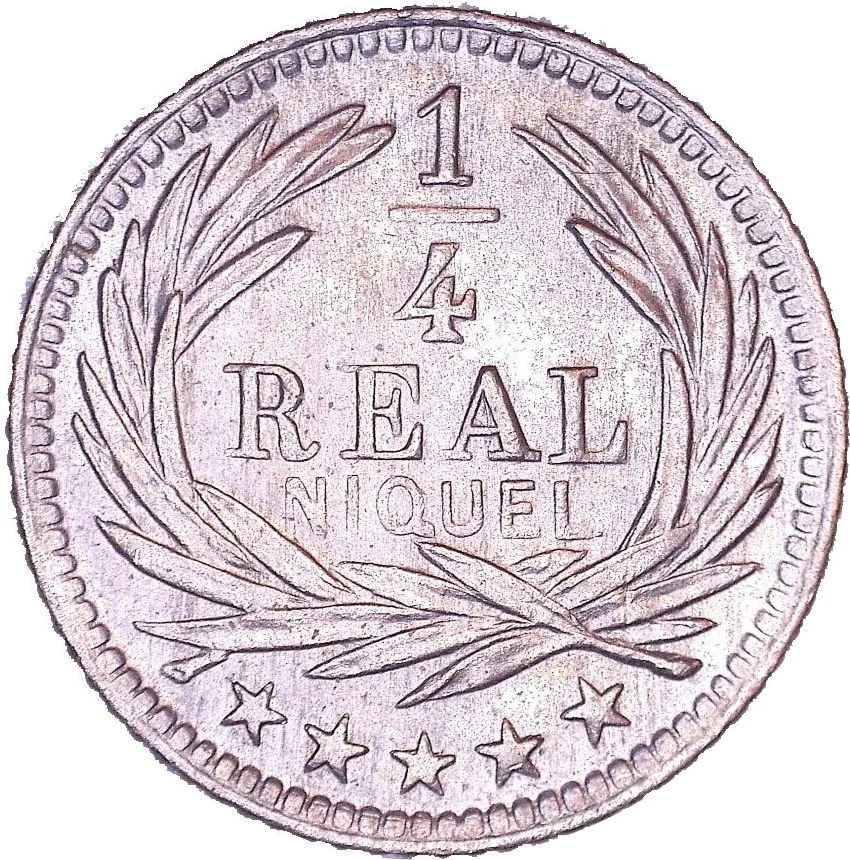
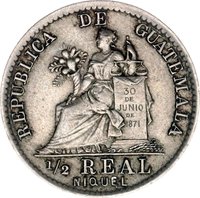
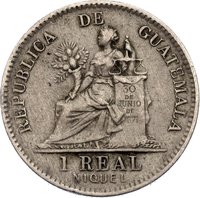
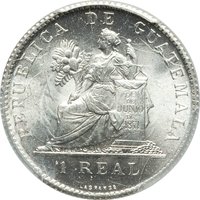
Reverse
Edge
Mints
| Name | Mark |
|---|---|
| Heaton and Sons / The Mint Birmingham | H |
Historical background
In 1900, Guatemala's currency system was in a state of transition and complexity, reflecting the nation's post-colonial economic structure and its integration into the global coffee market. The official currency was the Guatemalan Peso, a silver-based coin, but the monetary landscape was far from unified. Alongside the peso, the older Spanish colonial reales still circulated in daily transactions, particularly in rural areas, creating a dual-system that was cumbersome for commerce and accounting. Furthermore, the economic dominance of the coffee oligarchy and foreign investors, particularly Germans, meant that international gold currencies, especially the British gold sovereign and the US gold dollar, were commonly used for large-scale transactions, export financing, and banking reserves, effectively creating a de facto gold standard for the elite.
This fragmented system was a legacy of the 19th century, characterized by a chronic shortage of state-minted specie and the circulation of debased and counterfeit coins. The conservative governments of the late 1800s had struggled to establish monetary authority. The situation was further complicated by the government's issuance of billetes de curso forzoso (inconvertible paper money) in 1887 to finance infrastructure projects, which had led to depreciation and public distrust. By 1900, this paper money was still in circulation but traded at a significant discount to silver and gold, adding a third, less-valued tier to the already complex monetary environment.
Recognizing the inefficiencies hindering economic development and foreign investment, President Manuel Estrada Cabrera's government was actively pursuing reform. The year 1900 fell within a critical preparatory period just before a major monetary transformation. Efforts were underway to stabilize and modernize the system, which would culminate in the Currency Law of 1924 and the creation of the Quetzal in 1925, named after the national bird and pegged at par to the US dollar. Thus, the currency situation in 1900 was one of lingering colonial and early republican practices coexisting uneasily with the pressures of a modernizing export economy, on the brink of a deliberate and sweeping overhaul.
This fragmented system was a legacy of the 19th century, characterized by a chronic shortage of state-minted specie and the circulation of debased and counterfeit coins. The conservative governments of the late 1800s had struggled to establish monetary authority. The situation was further complicated by the government's issuance of billetes de curso forzoso (inconvertible paper money) in 1887 to finance infrastructure projects, which had led to depreciation and public distrust. By 1900, this paper money was still in circulation but traded at a significant discount to silver and gold, adding a third, less-valued tier to the already complex monetary environment.
Recognizing the inefficiencies hindering economic development and foreign investment, President Manuel Estrada Cabrera's government was actively pursuing reform. The year 1900 fell within a critical preparatory period just before a major monetary transformation. Efforts were underway to stabilize and modernize the system, which would culminate in the Currency Law of 1924 and the creation of the Quetzal in 1925, named after the national bird and pegged at par to the US dollar. Thus, the currency situation in 1900 was one of lingering colonial and early republican practices coexisting uneasily with the pressures of a modernizing export economy, on the brink of a deliberate and sweeping overhaul.
🌱 Fairly Common