

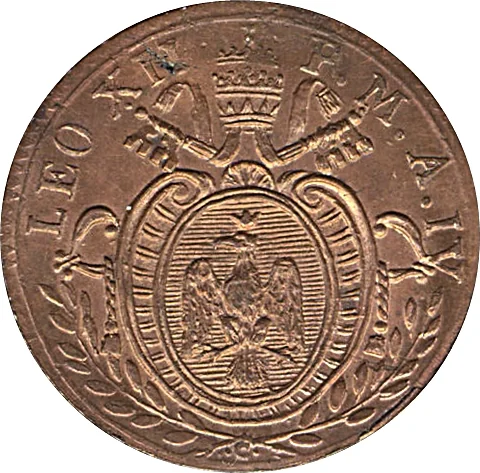
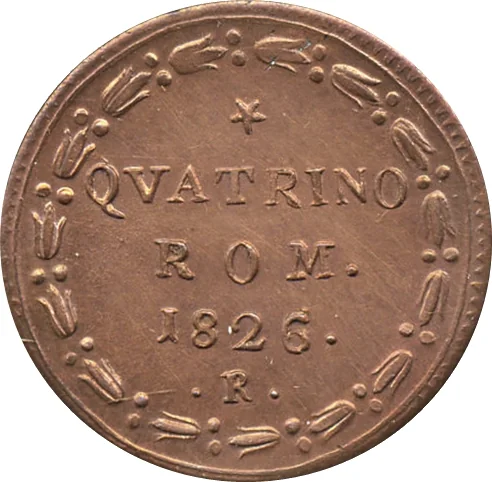
1 quattrino – Papal States
Add to wishlist
Vatican City
Context
Year: 1826
Country: Vatican City
Issuer: Papal States
Ruler: Leo XII
Currency:
(1534—1835)
Demonetized: Yes
Total mintage: 200,000
Material
References
KM: #
Numista: #55179
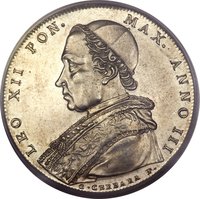
Obverse
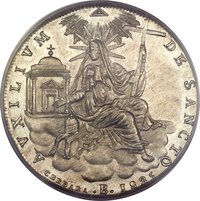
Reverse
Edge
Plain
Mints
| Name | Mark |
|---|---|
| Rome | — |
Mintings
| Year | Mint Mark | Mintage | Quality | Collection |
|---|---|---|---|---|
| 1826 | R | 200,000 |
Historical background
In 1826, the Papal States' currency system was a complex and fragmented relic of its medieval and early modern past, reflecting the temporal power's decentralized administration. There was no single, unified papal currency. Instead, the primary circulating coins were the Papal Scudo, divided into 100 Baiocchi, and the older Roman Scudo, which was valued slightly higher. These existed alongside a multitude of local coinages minted by various papal legations and delegations (like Bologna and Ferrara), as well as a significant influx of foreign coins, particularly from neighbouring states like Tuscany and the Kingdom of the Two Sicilies. This proliferation created chronic confusion in trade and exchange.
The financial situation underpinning this currency was dire. The papal government, under Pope Leo XII, was burdened by substantial debt and fiscal inefficiency, relying heavily on regressive taxes and forced loans. Revenues were insufficient to cover the costs of administration and the ambitious but expensive public works projects of previous pontificates. Consequently, the state often resorted to debasing its coinage—reducing the precious metal content—to generate short-term revenue. This practice, combined with the chaotic mix of coins in circulation, eroded public trust in the currency and contributed to inflationary pressures, harming the broader economy.
Ultimately, the monetary disorder of 1826 was symptomatic of the Papal States' broader struggle to adapt to the post-Napoleonic era. While the Congress of Vienna had restored the Pope's temporal power, it had not resolved the underlying structural weaknesses. The archaic currency system hindered commerce and modernization, highlighting the tension between the theocratic state's traditional governance and the economic realities of the 19th century. True monetary unification and stability would not be achieved until the sweeping reforms of Pope Pius IX in the 1850s, just a decade before the Papal States' final dissolution.
The financial situation underpinning this currency was dire. The papal government, under Pope Leo XII, was burdened by substantial debt and fiscal inefficiency, relying heavily on regressive taxes and forced loans. Revenues were insufficient to cover the costs of administration and the ambitious but expensive public works projects of previous pontificates. Consequently, the state often resorted to debasing its coinage—reducing the precious metal content—to generate short-term revenue. This practice, combined with the chaotic mix of coins in circulation, eroded public trust in the currency and contributed to inflationary pressures, harming the broader economy.
Ultimately, the monetary disorder of 1826 was symptomatic of the Papal States' broader struggle to adapt to the post-Napoleonic era. While the Congress of Vienna had restored the Pope's temporal power, it had not resolved the underlying structural weaknesses. The archaic currency system hindered commerce and modernization, highlighting the tension between the theocratic state's traditional governance and the economic realities of the 19th century. True monetary unification and stability would not be achieved until the sweeping reforms of Pope Pius IX in the 1850s, just a decade before the Papal States' final dissolution.
💎 Extremely Rare