

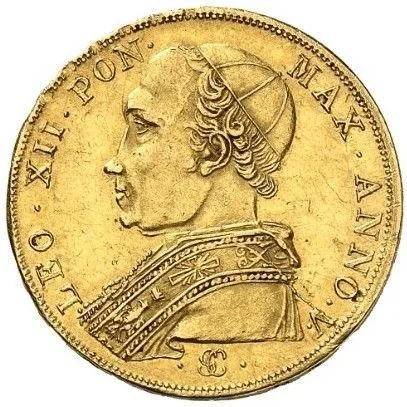
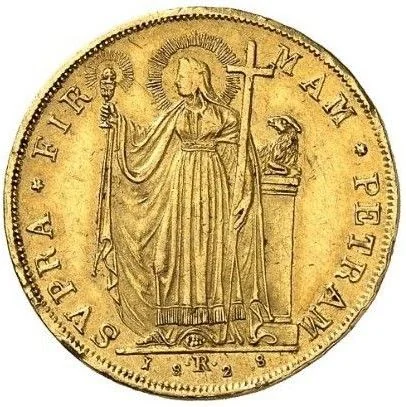
2 zecchini – Papal States
Add to wishlist
Vatican City
Context
Year: 1828
Country: Vatican City
Issuer: Papal States
Ruler: Leo XII
Currency:
(1534—1835)
Demonetized: Yes
Material
References
KM: #
Numista: #309014
Value
Bullion value: $1062.22
Obverse
Reverse
Description:
Female figure holding cross, lamb atop small pillar to right.
Inscription:
SVPRA FIRMAM PETRAM
R
1828
R
1828
Script: Latin
Edge
Reeded
Mints
| Name | Mark |
|---|---|
| Rome | R |
Mintings
| Year | Mint Mark | Mintage | Quality | Collection |
|---|---|---|---|---|
| 1828 | R | — |
Historical background
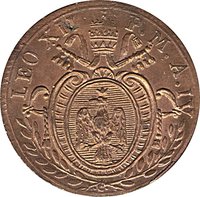
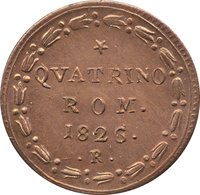
In 1828, the Papal States' monetary system was a complex and fragmented relic of the pre-modern era, reflecting its political and economic stagnation. There was no single, unified Papal currency. Instead, the primary unit was the Scudo Romano, divided into 100 Baiocchi, with each Baiocco further divided into 5 Quattrini. However, this official system coexisted with a multitude of regional and historical coins from other Italian states and foreign powers, all circulating simultaneously. This created a chaotic environment where exchange rates fluctuated locally, and transactions required constant calculation, hindering trade and economic integration.
The physical coinage itself was a mixture of old and new. The papal mint produced silver Scudi and Baiocchi, but these often circulated alongside older coins from previous pontificates, Spanish and French coins from the recent Napoleonic occupation, and currencies from neighboring states like Tuscany and the Kingdom of the Two Sicilies. Furthermore, the value of coins was intrinsically tied to their precious metal content, making the system vulnerable to debasement and clipping. The government under Pope Leo XII (1823-1829) made little effort to modernize this system, prioritizing theological orthodoxy and conservative restoration over economic reform.
Consequently, the monetary situation was a significant obstacle to development. The lack of a stable, trusted, and uniform currency discouraged commerce, complicated state finances, and symbolized the broader administrative inefficiency of the Papal States. This financial archaism would persist until the dramatic upheavals of the 1848 revolutions and, ultimately, the dissolution of the Papal States in 1870, after which it was fully integrated into the unified Kingdom of Italy's lira-based system.
The physical coinage itself was a mixture of old and new. The papal mint produced silver Scudi and Baiocchi, but these often circulated alongside older coins from previous pontificates, Spanish and French coins from the recent Napoleonic occupation, and currencies from neighboring states like Tuscany and the Kingdom of the Two Sicilies. Furthermore, the value of coins was intrinsically tied to their precious metal content, making the system vulnerable to debasement and clipping. The government under Pope Leo XII (1823-1829) made little effort to modernize this system, prioritizing theological orthodoxy and conservative restoration over economic reform.
Consequently, the monetary situation was a significant obstacle to development. The lack of a stable, trusted, and uniform currency discouraged commerce, complicated state finances, and symbolized the broader administrative inefficiency of the Papal States. This financial archaism would persist until the dramatic upheavals of the 1848 revolutions and, ultimately, the dissolution of the Papal States in 1870, after which it was fully integrated into the unified Kingdom of Italy's lira-based system.
✨ Legendary