

1 euro cent – Netherlands
Add to wishlist
Netherlands
Context
Years: 2014–2025
Issuer: Netherlands
Ruler: Willem-Alexander
Currency:
(since 2002)
Total mintage: 1,693,062
Material
References
KM: #
Numista: #54955
Value
Exchange value: 0.01 EUR
Inflation-adjusted value: 0.01 EUR
Obverse
Description:
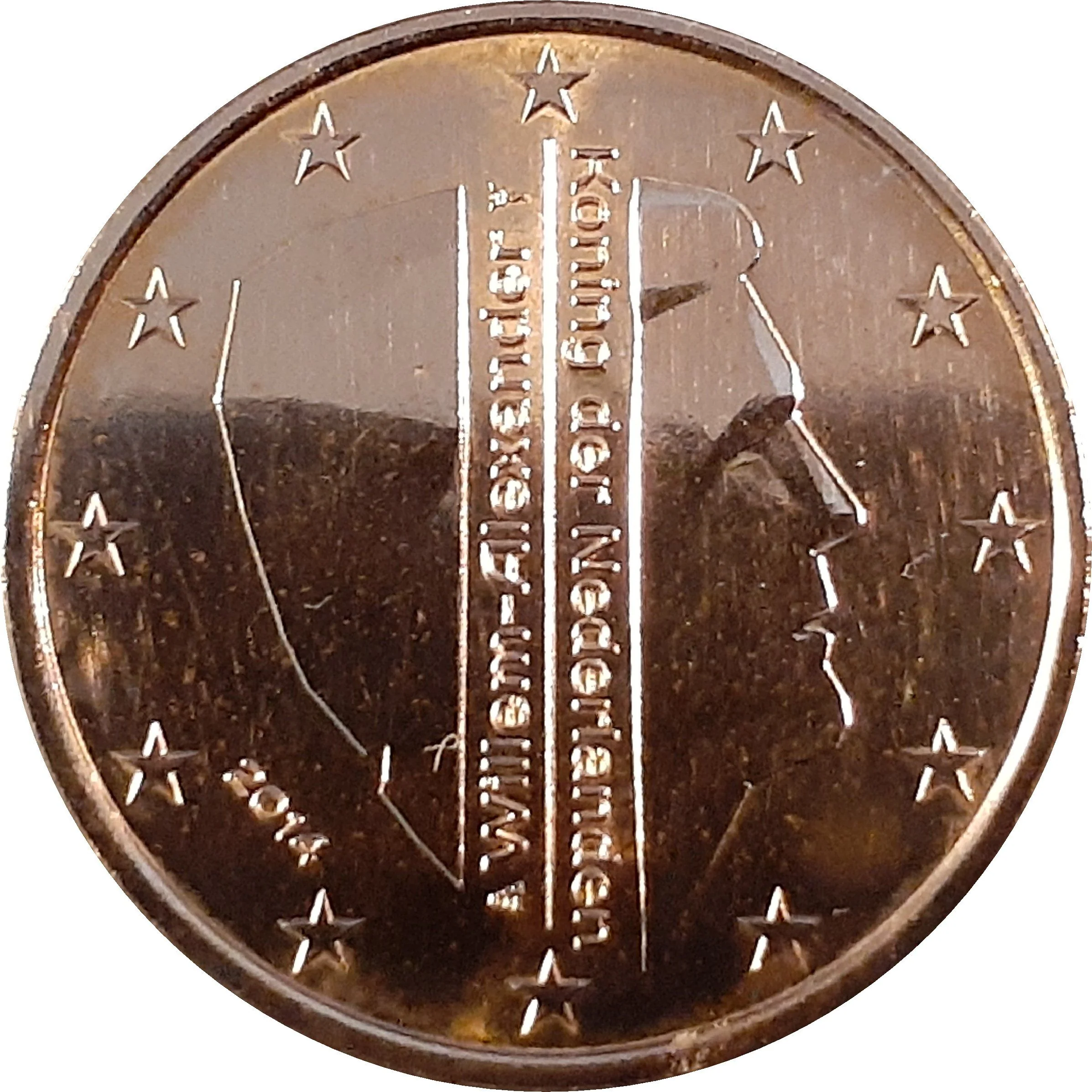
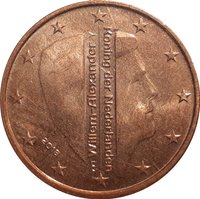
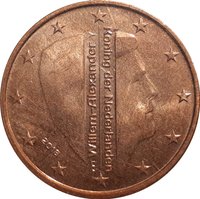
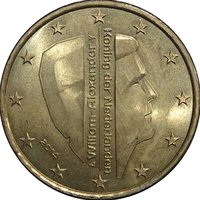
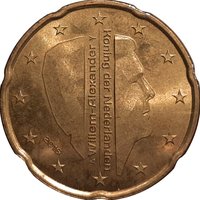
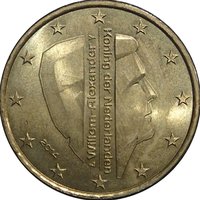
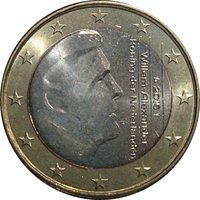
Right effigy of King Willem-Alexander with the inscriptions "Willem-Alexander Koning der Nederlanden" and the year, encircled by the twelve EU stars.
Inscription:
Willem-Alexander
Koning der Nederlanden
2014
Koning der Nederlanden
2014
Script: Latin
Engraver: Erwin Olaf
Reverse
Edge
Plain
Mints
| Name | Mark |
|---|---|
| Royal Dutch Mint | — |
Mintings
| Year | Mint Mark | Mintage | Quality | Collection |
|---|---|---|---|---|
| 2014 | — | 5,000 | Proof | |
| 2014 | — | 530,000 | ||
| 2014 | — | 48,014 | BU | |
| 2015 | — | 400,000 | ||
| 2015 | — | 34,015 | BU | |
| 2015 | — | 5,000 | Proof | |
| 2016 | — | 400,000 | ||
| 2016 | — | 31,516 | BU | |
| 2016 | — | 4,000 | Proof | |
| 2017 | — | 15,000 | ||
| 2017 | — | 28,017 | BU | |
| 2017 | — | 4,000 | Proof | |
| 2018 | — | 15,000 | BU | |
| 2018 | — | 3,500 | Proof | |
| 2018 | — | 15,000 | ||
| 2019 | — | 19,500 | BU | |
| 2019 | — | 3,000 | Proof | |
| 2019 | — | 17,500 | ||
| 2020 | — | 13,000 | BU | |
| 2020 | — | 3,000 | Proof | |
| 2020 | — | 17,500 | ||
| 2021 | — | — | BU | |
| 2021 | — | 3,000 | Proof | |
| 2021 | — | 17,500 | ||
| 2022 | — | 16,500 | BU | |
| 2022 | — | 3,000 | Proof | |
| 2022 | — | 15,000 | ||
| 2023 | — | — | ||
| 2023 | — | — | BU | |
| 2023 | — | 3,000 | Proof | |
| 2024 | — | — | BU | |
| 2024 | — | 2,500 | Proof | |
| 2024 | — | 15,000 | ||
| 2025 | — | 4,000 | BU | |
| 2025 | — | 2,000 | Proof |
Historical background
In 2014, the Netherlands was a core member of the Eurozone, having adopted the euro as its official currency in 2002. The country's monetary policy was therefore set by the European Central Bank (ECB), which was actively engaged in combating low inflation and stimulating the stagnant Eurozone economy in the wake of the sovereign debt crisis. Domestically, the Dutch economy was in a phase of fragile recovery from a double-dip recession, with the government implementing austerity measures and the housing market showing tentative signs of stabilization after a prolonged slump.
A significant domestic debate centered on the future of the 1 and 2 euro cent coins. Following a successful trial in 2013-2014, the Dutch government officially decided in 2014 to adopt "Swedish rounding" (cash rounding to the nearest five cents) for cash transactions, effectively phasing out the minting and distribution of these small denomination coins. This move, driven by the fact that production costs exceeded face value, was part of a broader trend in the Eurozone to reduce the use of low-value coins, though the Netherlands was among the first to implement it decisively.
Furthermore, 2014 saw continued public attachment to the former national currency, the guilder. A notable phenomenon was that many Dutch citizens, particularly the older generation, still mentally converted prices from euros back to guilders, a practice known as "gilder thinking." This lingering sentiment was occasionally reflected in political discourse, with some populist voices criticizing the euro, though there was no serious political movement to leave the single currency. The year thus encapsulated a landscape of full Eurozone integration, practical currency reform, and persistent cultural nostalgia for the pre-euro era.
A significant domestic debate centered on the future of the 1 and 2 euro cent coins. Following a successful trial in 2013-2014, the Dutch government officially decided in 2014 to adopt "Swedish rounding" (cash rounding to the nearest five cents) for cash transactions, effectively phasing out the minting and distribution of these small denomination coins. This move, driven by the fact that production costs exceeded face value, was part of a broader trend in the Eurozone to reduce the use of low-value coins, though the Netherlands was among the first to implement it decisively.
Furthermore, 2014 saw continued public attachment to the former national currency, the guilder. A notable phenomenon was that many Dutch citizens, particularly the older generation, still mentally converted prices from euros back to guilders, a practice known as "gilder thinking." This lingering sentiment was occasionally reflected in political discourse, with some populist voices criticizing the euro, though there was no serious political movement to leave the single currency. The year thus encapsulated a landscape of full Eurozone integration, practical currency reform, and persistent cultural nostalgia for the pre-euro era.
🌱 Common