

10 cents – Netherlands
Add to wishlist
Netherlands
Context
Years: 1849–1890
Issuer: Netherlands
Ruler: William III
Currency:
(1817—2001)
Demonetized: Yes
Total mintage: 39,017,682
Material
References
KM: #
Numista: #11045
Value
Exchange value: 0.10 NLG
Bullion value: $2.25
Obverse
Description:
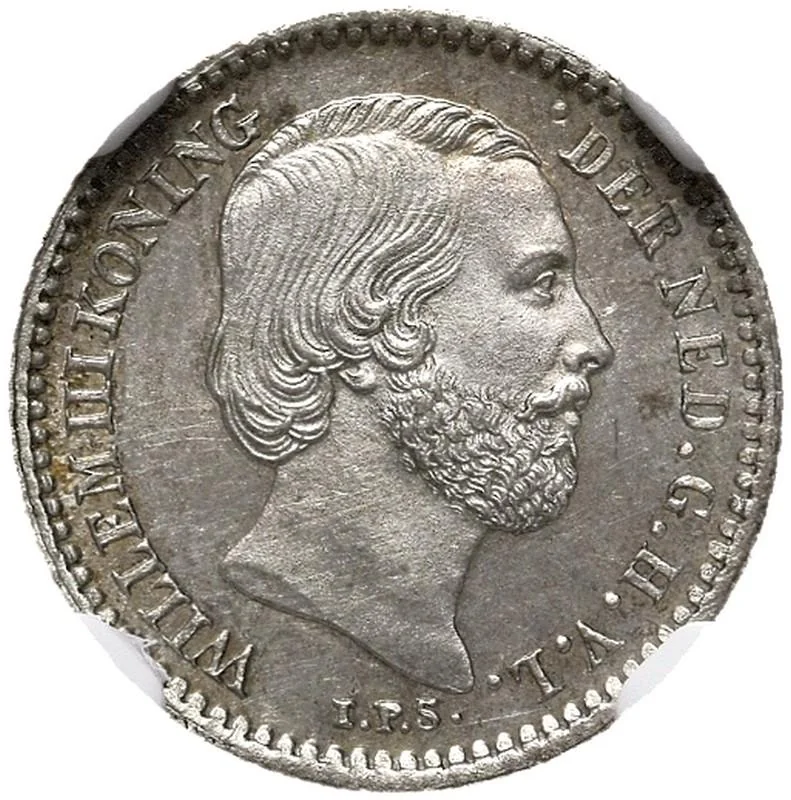
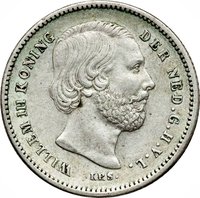
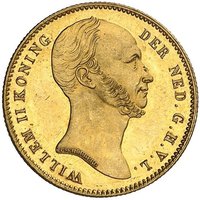
Bust of Willem III, right profile.
Inscription:
WILLEM III KONING DER NED.G.H.V.L.
I. P. S.
I. P. S.
Translation:
WILLIAM III KING OF THE NETHERLANDS GRAND DUKE OF LUXEMBOURG
BY THE FAVOR OF DIVINE PROVIDENCE
BY THE FAVOR OF DIVINE PROVIDENCE
Script: Latin
Engraver: Johannis Petrus Schouberg
Reverse
Edge
Reeded
Mints
| Name | Mark |
|---|---|
| Royal Dutch Mint | — |
Mintings
| Year | Mint Mark | Mintage | Quality | Collection |
|---|---|---|---|---|
| 1849 | — | 6,204,155 | ||
| 1850 | — | 7,270,000 | ||
| 1853 | — | 1,103,527 | ||
| 1855 | — | — | ||
| 1856 | — | 1,000,000 | ||
| 1859 | — | 1,000,000 | ||
| 1862 | — | 800,000 | ||
| 1863 | — | 1,240,000 | ||
| 1868 | — | 200,000 | ||
| 1869 | — | 1,000,000 | ||
| 1871 | — | 1,000,000 | ||
| 1873 | — | 1,000,000 | ||
| 1874 | — | 200,000 | ||
| 1876 | — | 1,000,000 | ||
| 1877 | — | 1,000,000 | ||
| 1878 | — | 1,000,000 | ||
| 1879 | — | 1,000,000 | ||
| 1880 | — | 1,000,000 | ||
| 1881 | — | — | ||
| 1882 | — | 2,000,000 | ||
| 1884 | — | 1,000,000 | ||
| 1885 | — | 2,000,000 | ||
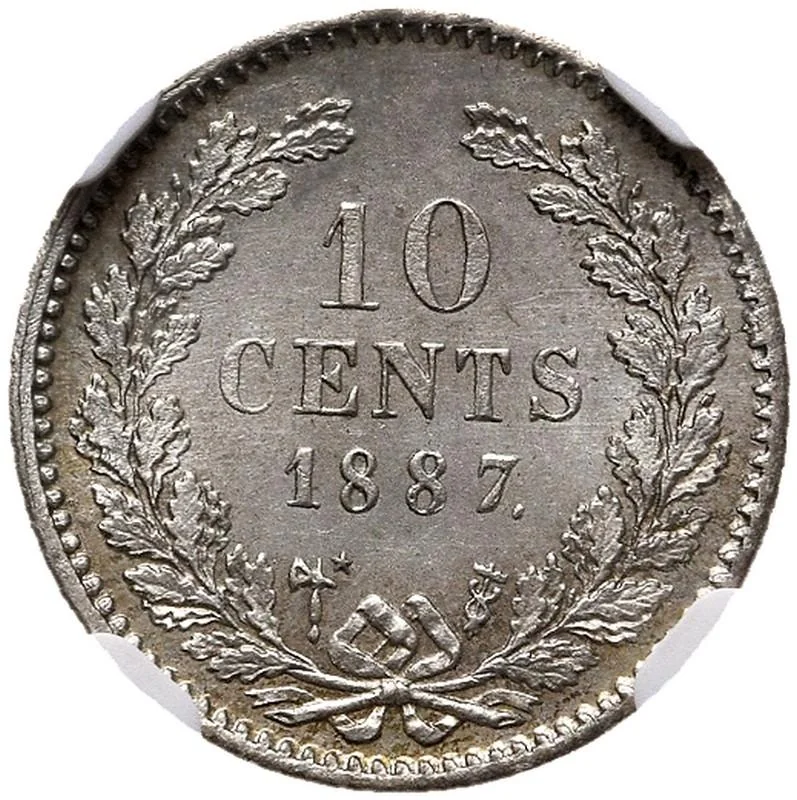
| 1887 | — | 1,600,000 | ||
| 1889 | — | 2,800,000 | ||
| 1890 | — | 2,600,000 |
Historical background
In 1849, the Netherlands was navigating a complex and transitional monetary landscape, caught between old regional systems and the push for national standardization. Following the Belgian Revolution of 1830 and subsequent separation, the country faced economic disruption and a need to redefine its financial order. The legal framework was the 1816 "Muntwet" (Coinage Act), which established the silver gulden (guilder) as the standard unit, but in practice, a bewildering array of foreign coins, particularly Prussian thalers and French francs, circulated alongside domestic issues, leading to confusion and inefficiency in trade.
This situation was exacerbated by the global shift in the relative value of gold and silver. The discovery of new gold supplies began to destabilize the traditional silver standard, making the fixed legal ratio between gold and silver coins increasingly unrealistic. Consequently, gold coins tended to be hoarded or exported, while less valuable silver flooded the market—a classic example of Gresham's Law, where "bad money drives out good." This created chronic shortages of reliable specie, hindering commerce and highlighting the fragility of the bimetallic system.
Therefore, the year 1849 found the Dutch government actively preparing a fundamental monetary reform. This effort would culminate in the new Coinage Act of 1850, which decisively abandoned bimetallism and placed the Netherlands on a silver monometallic standard. The 1849 period was thus the final chapter of an outdated system, characterized by monetary confusion and precious metal instability, immediately preceding a decisive legislative move to create a uniform, state-controlled currency necessary for modern economic development.
This situation was exacerbated by the global shift in the relative value of gold and silver. The discovery of new gold supplies began to destabilize the traditional silver standard, making the fixed legal ratio between gold and silver coins increasingly unrealistic. Consequently, gold coins tended to be hoarded or exported, while less valuable silver flooded the market—a classic example of Gresham's Law, where "bad money drives out good." This created chronic shortages of reliable specie, hindering commerce and highlighting the fragility of the bimetallic system.
Therefore, the year 1849 found the Dutch government actively preparing a fundamental monetary reform. This effort would culminate in the new Coinage Act of 1850, which decisively abandoned bimetallism and placed the Netherlands on a silver monometallic standard. The 1849 period was thus the final chapter of an outdated system, characterized by monetary confusion and precious metal instability, immediately preceding a decisive legislative move to create a uniform, state-controlled currency necessary for modern economic development.
🌱 Common