

1 inti – Peru
Add to wishlist
Peru
Context
Years: 1985–1988
Issuer: Peru
Issuing organization: Central Reserve Bank of Peru
Period:
(since 1822)
Currency:
(1985—1991)
Demonetization: 1 July 1991
Total mintage: 240,304,000
Material
Diameter: 25 mm
Weight: 7 g
Thickness: 2.05 mm
Shape: Round
Composition: Nickel brass
Magnetic: No
Technique: Milled
Alignment: Coin alignment
flip
References
KM: #
Numista: #5421
Value
Exchange value: 1 PEI
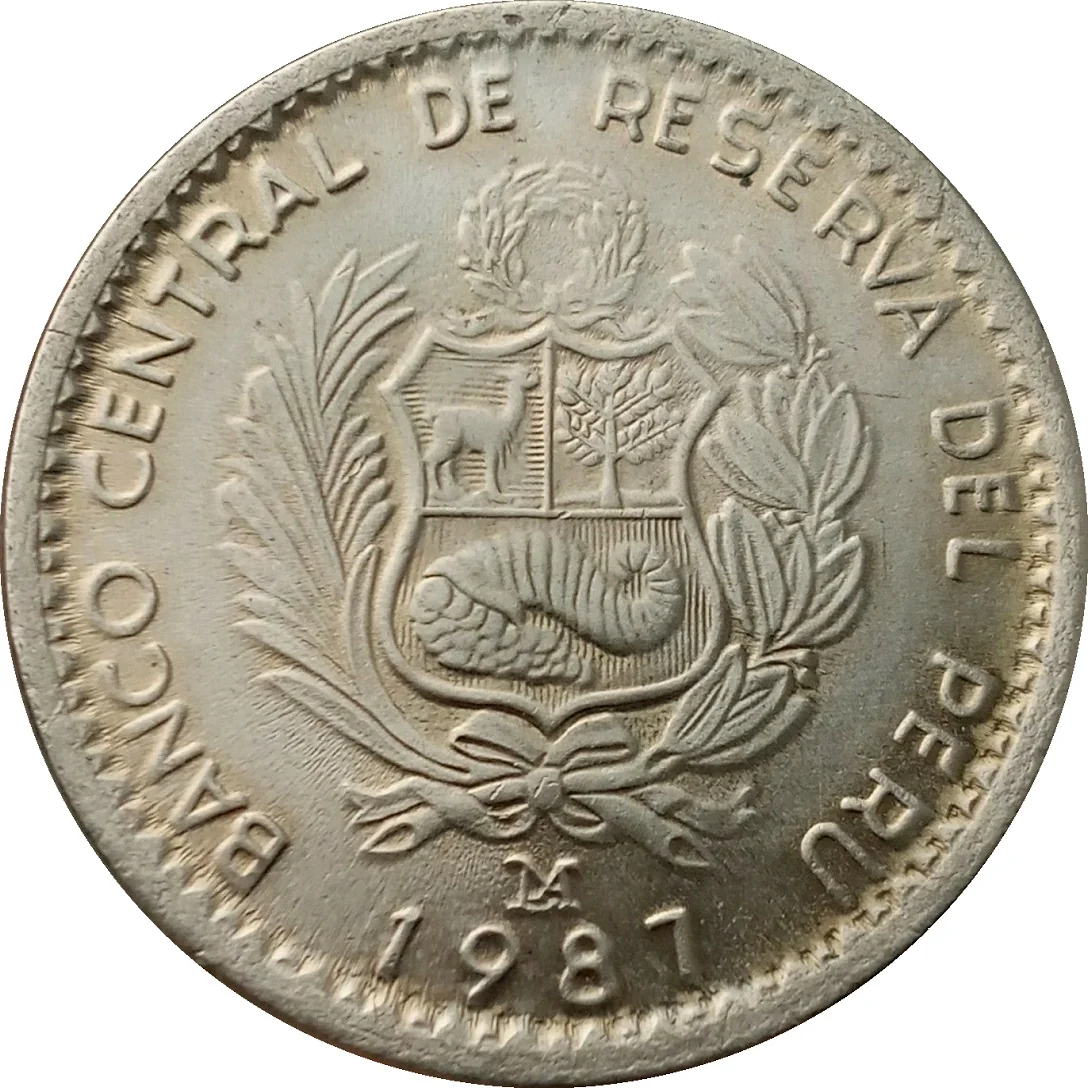
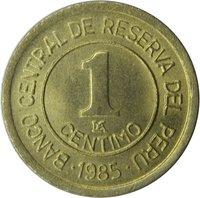
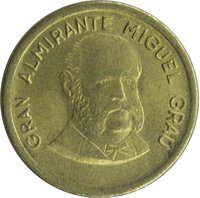
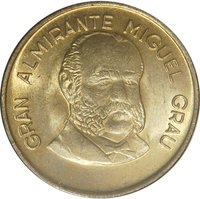
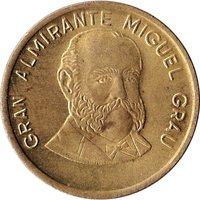
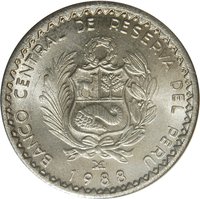
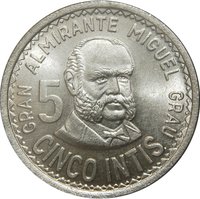
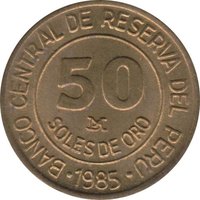
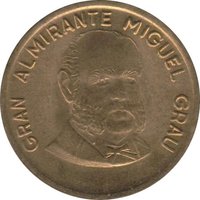
Obverse
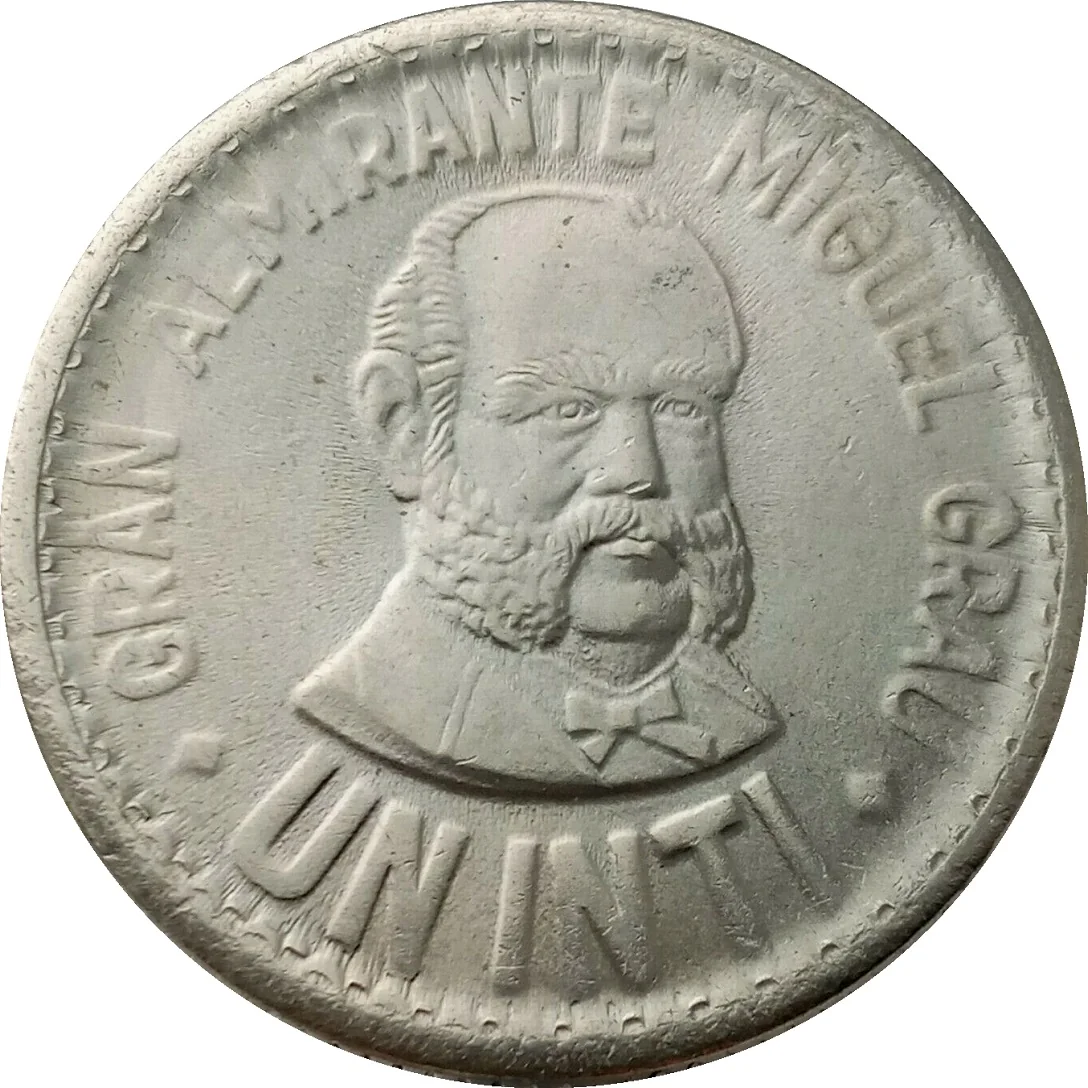
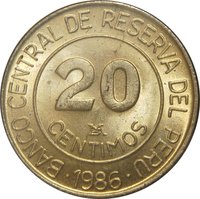
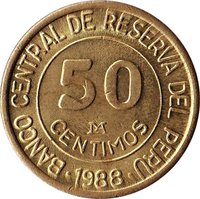
Reverse
Edge
Reeded
Categories
| Person> Military leader |
| Person> Politician |
| Symbols> Coat of Arms |
| Symbol> Cornucopia |
Mints
| Name | Mark |
|---|---|
| Lima | — |
Mintings
| Year | Mint Mark | Mintage | Quality | Collection |
|---|---|---|---|---|
| 1985 | LIMA | 15,760,000 | ||
| 1986 | LIMA | 87,240,000 | ||
| 1987 | LIMA | 120,000,000 | ||
| 1988 | LIMA | 17,304,000 |
Historical background
In 1985, Peru’s currency situation was defined by profound instability and the early stages of a hyperinflationary spiral. The country was emerging from a decade of economic mismanagement and external shocks, including the 1982 debt crisis. The national currency, the sol, was severely weakened, with inflation reaching 163% for the year—a alarming figure, yet only a precursor to the catastrophic levels to come. The government of President Fernando Belaúnde Terry, adhering to orthodox IMF-backed policies, maintained a system of multiple exchange rates, but confidence in the sol was evaporating as fiscal deficits were monetized.
The core of the crisis lay in structural problems: a massive public sector deficit financed by the central bank, a collapse in export revenues (particularly from key commodities like copper and silver), and a crushing external debt burden. This created a vicious cycle where the rapid printing of money to cover government shortfalls devalued the currency, which in turn drove prices higher. By mid-1985, the economy was in severe distress, setting the stage for a dramatic political shift.
This deteriorating monetary environment was the critical backdrop for the July 1985 election of Alan García and his American Popular Revolutionary Alliance (APRA), who won on a populist platform promising to break with orthodox economics. Upon taking office, García immediately introduced a new currency, the inti, to replace the devalued sol at a rate of 1 inti = 1,000 soles. This symbolic reform, however, was not accompanied by fiscal discipline, and the inti would soon embark on one of the most devastating hyperinflations in Latin American history throughout the late 1980s. Thus, 1985 represents the pivotal year when Peru’s chronic currency instability transitioned into an acute and full-blown economic crisis.
The core of the crisis lay in structural problems: a massive public sector deficit financed by the central bank, a collapse in export revenues (particularly from key commodities like copper and silver), and a crushing external debt burden. This created a vicious cycle where the rapid printing of money to cover government shortfalls devalued the currency, which in turn drove prices higher. By mid-1985, the economy was in severe distress, setting the stage for a dramatic political shift.
This deteriorating monetary environment was the critical backdrop for the July 1985 election of Alan García and his American Popular Revolutionary Alliance (APRA), who won on a populist platform promising to break with orthodox economics. Upon taking office, García immediately introduced a new currency, the inti, to replace the devalued sol at a rate of 1 inti = 1,000 soles. This symbolic reform, however, was not accompanied by fiscal discipline, and the inti would soon embark on one of the most devastating hyperinflations in Latin American history throughout the late 1980s. Thus, 1985 represents the pivotal year when Peru’s chronic currency instability transitioned into an acute and full-blown economic crisis.
Series: 1985 Peru circulation coins
🌱 Very Common