

Peru
Context

Material
References
KM: #Click to copy to clipboard206
Numista: #5413
Value
Exchange value: 0.05 PEH
Bullion value: $3.12
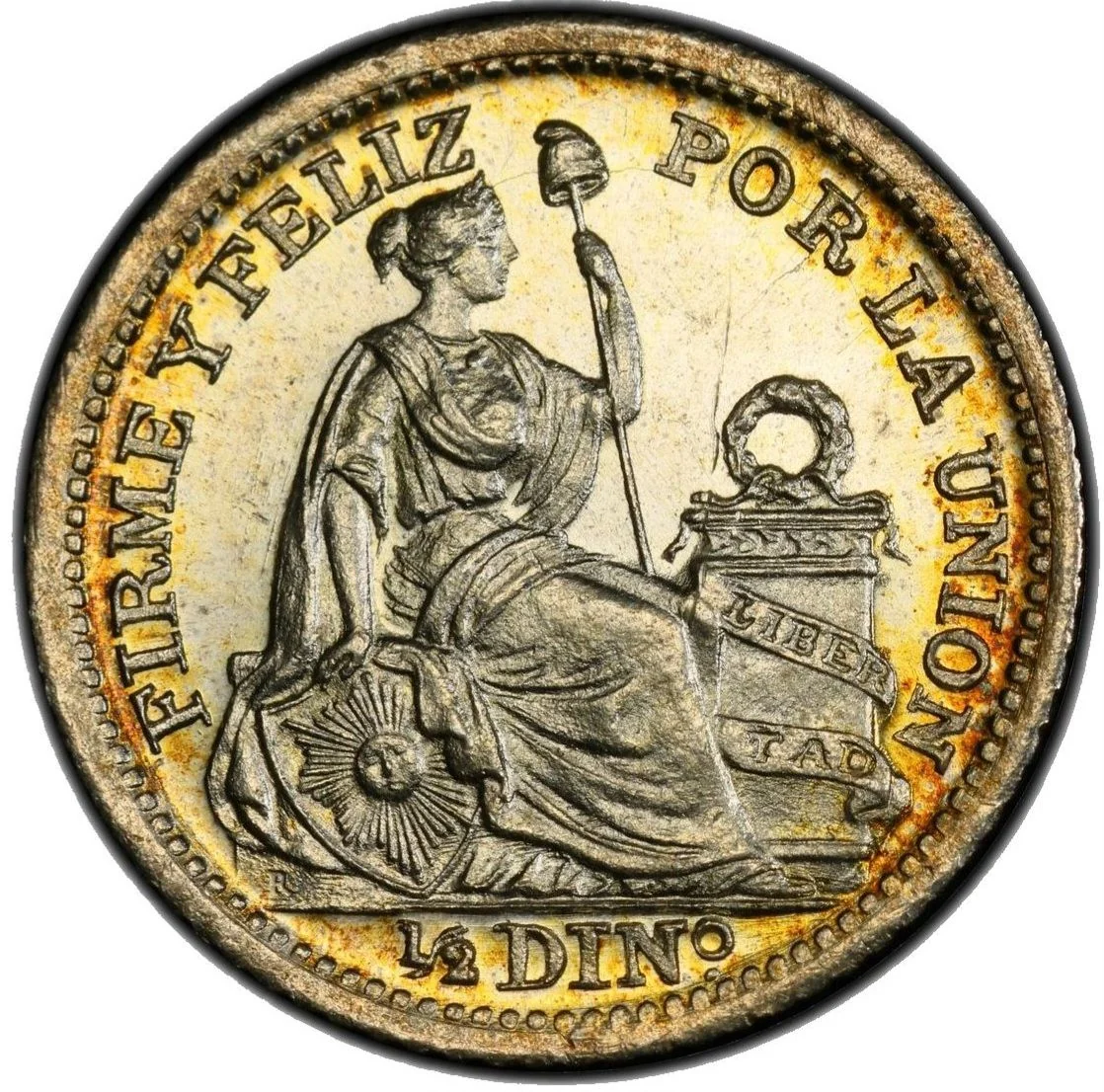
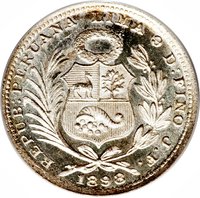
Obverse
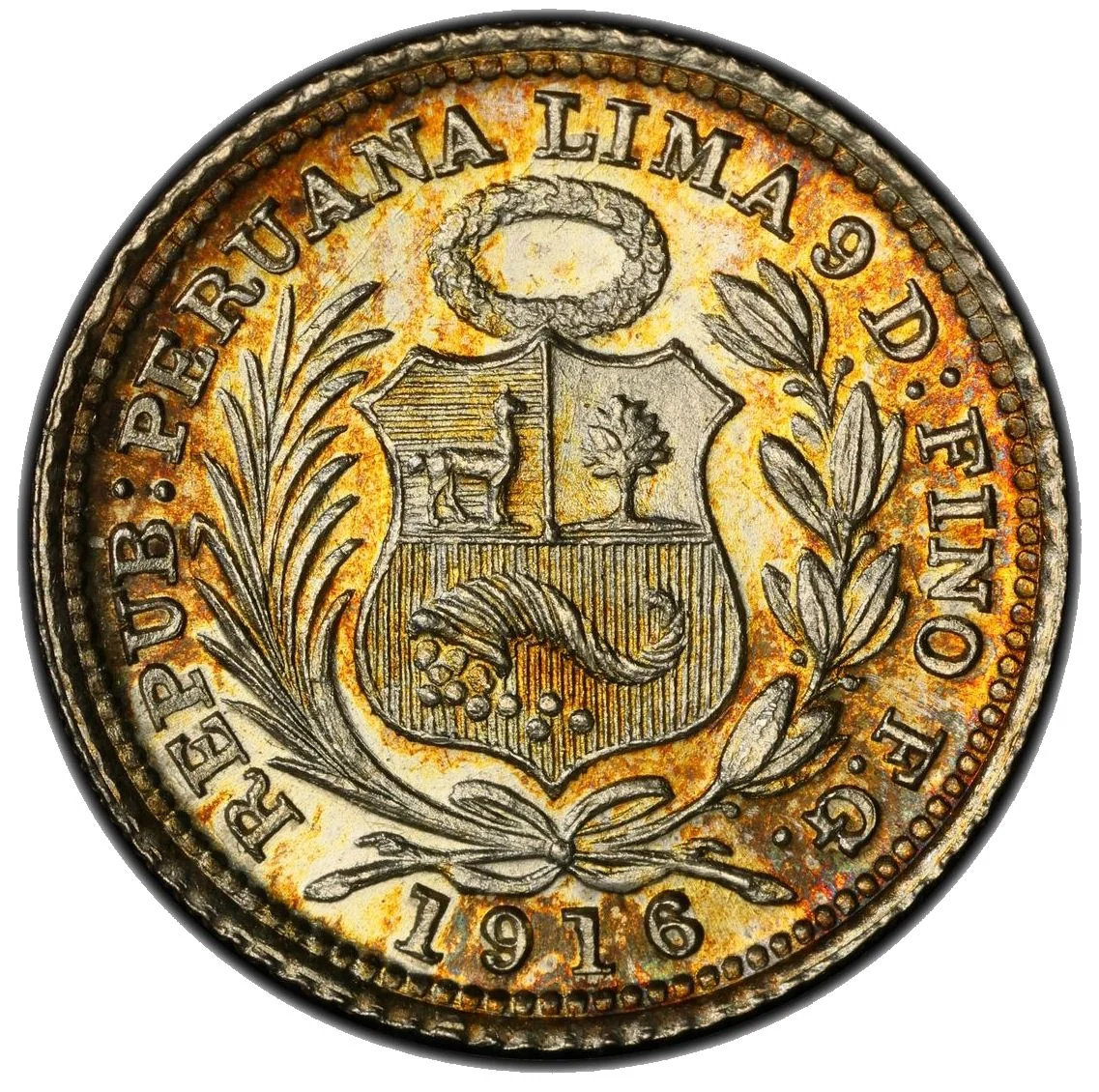
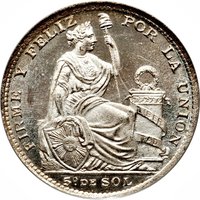
Reverse
Edge
Reeded
Categories
| Symbol> Wreath |
| Symbol> Phrygian cap |
| Symbol> Sun |
| Animal> Camel |
| Symbol> Allegory |
| Symbols> Coat of Arms |
| Symbol> Cornucopia |
Mintings
| Year | Mint Mark | Mintage | Quality | Collection |
|---|---|---|---|---|
| 1890 | TF | 870,000 | ||
| 1891 | TF | 160,000 | ||
| 1892 | TF | 228,000 | ||
| 1893 | TF | — | ||
| 1895 | TF | 422,000 | ||
| 1896 | TF | 456,000 | ||
| 1896 | F. | — | ||
| 1897 | JF | 320,000 | ||
| 1897 | VN | — | ||
| 1898 | JF | — | ||
| 1898 | VN | 600,000 | ||
| 1899 | JF | 500,000 | ||
| 1900 | JF | 400,000 | ||
| 1901 | JF | 500,000 | ||
| 1902 | JF | 616,000 | ||
| 1903 | JF | 1,798,000 | ||
| 1904 | JF | — | ||
| 1905 | JF | 1,400,000 | ||
| 1906 | JF | 900,000 | ||
| 1907 | FG | 600,000 | ||
| 1908 | FG | 200,000 | ||
| 1909 | FG | — | ||
| 1910 | FG | 640,000 | ||
| 1911 | FG | 460,000 | ||
| 1912 | FG | 120,000 | ||
| 1913 | FG | 480,000 | ||
| 1914 | FG | — | ||
| 1916 | FG | — | ||
| 1916 | FG | — | Matte | |
| 1917 | FG | 140,000 |
Historical background
By 1890, Peru was grappling with a severe and complex monetary crisis rooted in the financial aftermath of the War of the Pacific (1879-1884). The devastating loss to Chile had resulted in the occupation of Lima, the looting of the national treasury, and the loss of the nitrate-rich Tarapacá province, which had been Peru's primary source of fiscal revenue. To finance postwar reconstruction, the government had become heavily reliant on foreign loans, particularly from French and British creditors, leading to a crippling external debt. This period, known as the "Grace Contract" era (finalized in 1889), saw the government hand over control of its railways and guano exports to its creditors in exchange for debt relief, effectively mortgaging the nation's key assets.
The domestic currency situation was chaotic, characterized by a dual and unstable system. The official currency was the Peruvian sol, but its value had collapsed due to massive emissions of paper money (billetes fiscales) to cover government deficits during and after the war. This resulted in rampant inflation and a severe loss of public confidence. Alongside the devalued paper soles, the more trusted Peruvian silver libra (worth 10 soles) and foreign currencies, especially the British pound sterling and Chilean pesos, circulated widely for significant transactions. This fragmentation created a dysfunctional economy where everyday commerce was hampered by uncertainty over real value and exchange rates.
Consequently, 1890 found Peru at a monetary crossroads. The state's finances were under foreign supervision, its natural resources were pledged to creditors, and its circulating medium was unreliable. The pressing challenge for President Andrés A. Cáceres's government was to stabilize the currency, restore fiscal sovereignty, and attract new investment—all while navigating the strict conditions imposed by international bondholders. The decade that followed would see a painful but determined shift toward monetary reform, culminating in the adoption of the gold standard in 1897 in an effort to impose discipline and reconnect Peru with the global financial system.
The domestic currency situation was chaotic, characterized by a dual and unstable system. The official currency was the Peruvian sol, but its value had collapsed due to massive emissions of paper money (billetes fiscales) to cover government deficits during and after the war. This resulted in rampant inflation and a severe loss of public confidence. Alongside the devalued paper soles, the more trusted Peruvian silver libra (worth 10 soles) and foreign currencies, especially the British pound sterling and Chilean pesos, circulated widely for significant transactions. This fragmentation created a dysfunctional economy where everyday commerce was hampered by uncertainty over real value and exchange rates.
Consequently, 1890 found Peru at a monetary crossroads. The state's finances were under foreign supervision, its natural resources were pledged to creditors, and its circulating medium was unreliable. The pressing challenge for President Andrés A. Cáceres's government was to stabilize the currency, restore fiscal sovereignty, and attract new investment—all while navigating the strict conditions imposed by international bondholders. The decade that followed would see a painful but determined shift toward monetary reform, culminating in the adoption of the gold standard in 1897 in an effort to impose discipline and reconnect Peru with the global financial system.
🌱 Common