

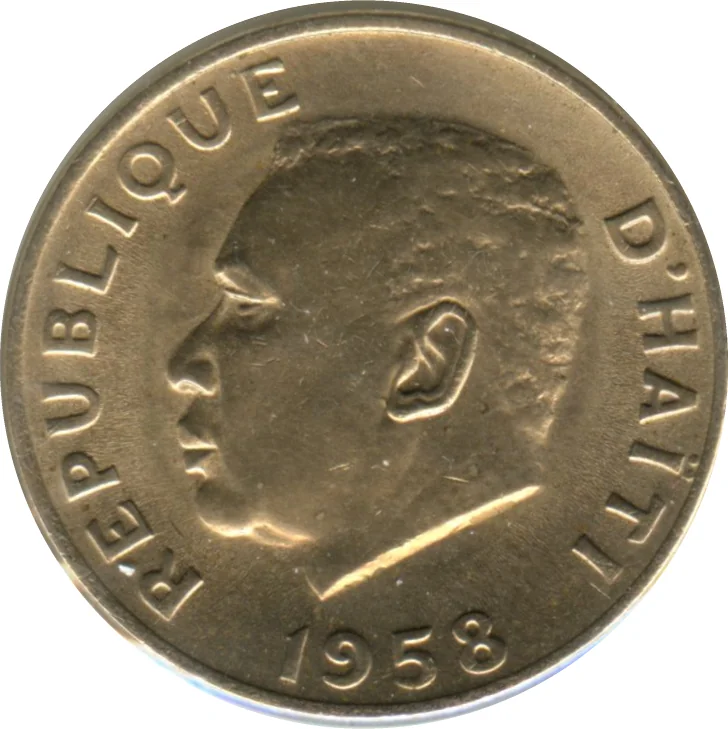
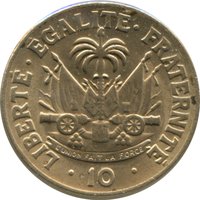
Obverse
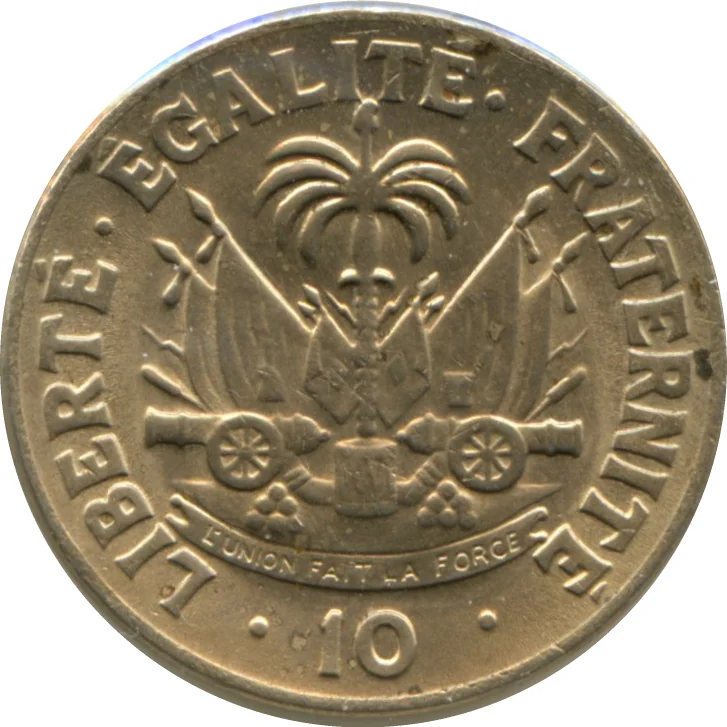
Reverse
Edge
Plain
Categories
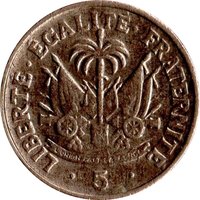
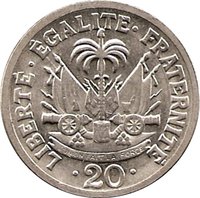
| Symbols> Coat of Arms |
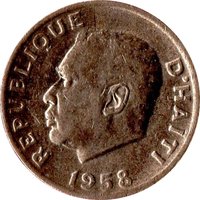
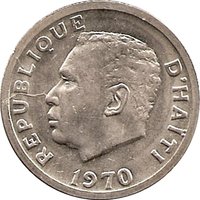
| Person> Politician |
Mints
| Name | Mark |
|---|---|
| United States Mint of Denver | — |
| United States Mint of Philadelphia | — |
Mintings
| Year | Mint Mark | Mintage | Quality | Collection |
|---|---|---|---|---|
| 1958 | — | 7,500,000 | ||
| 1970 | — | 2,500,000 |
Historical background
In 1958, Haiti's currency situation was characterized by instability and a reliance on the U.S. dollar, reflecting the nation's broader economic fragility under the authoritarian rule of President François "Papa Doc" Duvalier, who had taken power the previous year. The official currency was the Haitian gourde (HTG), which was pegged to the U.S. dollar at a fixed rate of 5 gourdes to 1 dollar, a parity established in 1912. However, this official peg often masked economic realities, as the country's chronic trade deficits, declining agricultural exports (particularly coffee), and political uncertainty created persistent pressure on the currency's value.
The formal banking system was limited and served primarily the urban elite and commercial interests, while the majority of the rural population operated outside of it. A significant black market for foreign exchange existed alongside the official banking channels, where the gourde would frequently trade at a depreciated rate. This parallel market emerged due to strict exchange controls, limited access to hard currency through official means, and a lack of confidence in the government's economic management. The disparity between the official and black-market rates encouraged capital flight and corruption, further draining the nation's scarce foreign reserves.
Overall, the currency situation in 1958 was a symptom of deeper structural problems: a weak, export-dependent economy vulnerable to commodity price swings, deteriorating infrastructure, and the early consolidation of a dictatorship that would prioritize political control over sound fiscal and monetary policy. While the gourde's official peg provided a veneer of stability for international accounting, the underlying pressures signaled the severe economic challenges that would intensify throughout Duvalier's regime, contributing to long-term underdevelopment and financial instability.
The formal banking system was limited and served primarily the urban elite and commercial interests, while the majority of the rural population operated outside of it. A significant black market for foreign exchange existed alongside the official banking channels, where the gourde would frequently trade at a depreciated rate. This parallel market emerged due to strict exchange controls, limited access to hard currency through official means, and a lack of confidence in the government's economic management. The disparity between the official and black-market rates encouraged capital flight and corruption, further draining the nation's scarce foreign reserves.
Overall, the currency situation in 1958 was a symptom of deeper structural problems: a weak, export-dependent economy vulnerable to commodity price swings, deteriorating infrastructure, and the early consolidation of a dictatorship that would prioritize political control over sound fiscal and monetary policy. While the gourde's official peg provided a veneer of stability for international accounting, the underlying pressures signaled the severe economic challenges that would intensify throughout Duvalier's regime, contributing to long-term underdevelopment and financial instability.
🌱 Common