

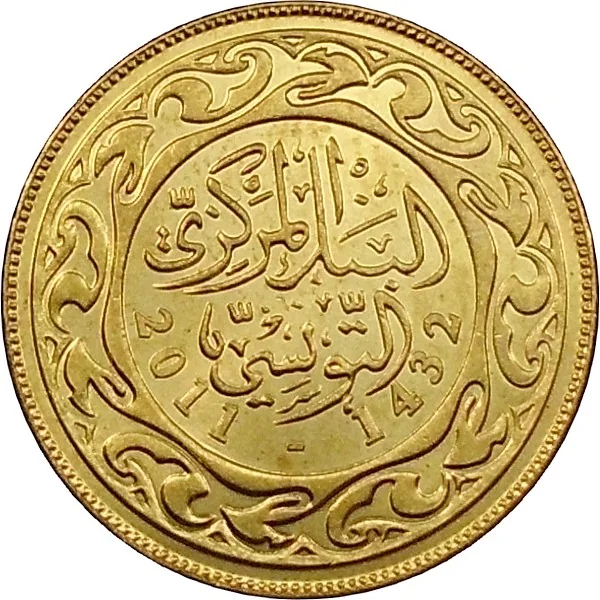
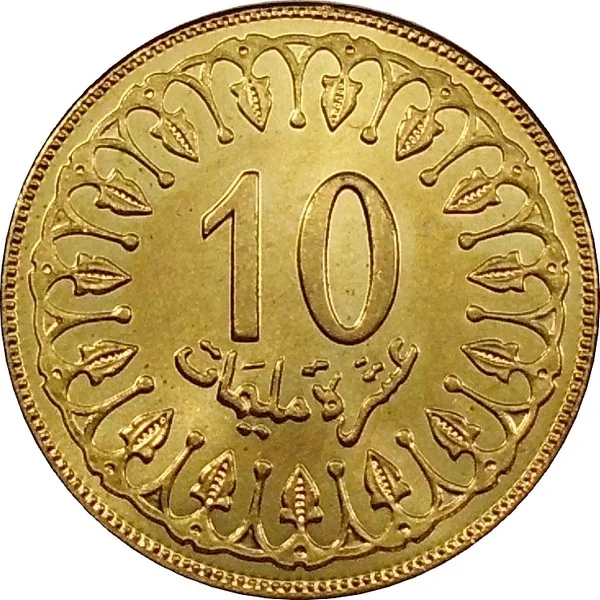
10 millimes – Tunisia
Add to wishlist
Tunisia
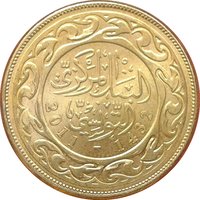
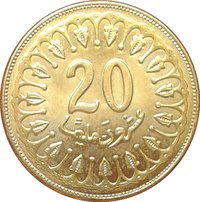
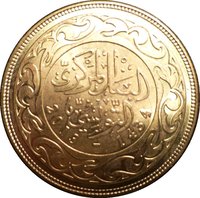
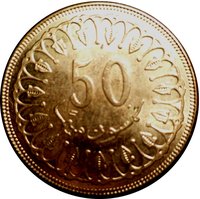
Obverse
Reverse
Edge
Reeded
Mintings
| Year | Mint Mark | Mintage | Quality | Collection |
|---|---|---|---|---|
| 2009 | — | — | ||
| 2011 | — | — | ||
| 2013 | — | — | ||
| 2017 | — | — |
Historical background
In 2009, Tunisia's currency situation was characterized by a tightly managed exchange rate regime and mounting economic pressures that foreshadowed future instability. The Tunisian dinar (TND) was pegged to a weighted currency basket, heavily dominated by the euro, which provided nominal stability but came at a significant cost. To maintain this peg, the Central Bank of Tunisia (BCT) frequently intervened in the foreign exchange market, drawing down foreign currency reserves to support the dinar and manage liquidity. This policy aimed to control inflation and foster trade with the European Union, Tunisia's primary economic partner, but it also made the economy vulnerable to external shocks and limited monetary policy tools.
Economically, the year was challenging due to the knock-on effects of the global financial crisis. Key sectors like tourism, textiles, and phosphate exports—vital sources of foreign currency—faced reduced European demand, leading to a widening current account deficit. Concurrently, the trade deficit grew as imports, particularly of energy and capital goods, remained high. These factors strained the country's foreign exchange reserves, which were being depleted to defend the peg. While official figures still showed moderate GDP growth, underlying structural weaknesses, including high unemployment and regional inequalities, were becoming more pronounced.
The 2009 currency and economic context was ultimately unsustainable and politically significant. The managed dinar was increasingly seen as overvalued, hurting export competitiveness and encouraging a growing black market for foreign currency. The pressures on reserves and the need for persistent central bank intervention highlighted the regime's fragile economic management. These simmering financial strains, combined with widespread social discontent over jobs and living standards, contributed to the broader economic grievances that would erupt in the Tunisian Revolution just over a year later, leading to a profound political and economic reckoning.
Economically, the year was challenging due to the knock-on effects of the global financial crisis. Key sectors like tourism, textiles, and phosphate exports—vital sources of foreign currency—faced reduced European demand, leading to a widening current account deficit. Concurrently, the trade deficit grew as imports, particularly of energy and capital goods, remained high. These factors strained the country's foreign exchange reserves, which were being depleted to defend the peg. While official figures still showed moderate GDP growth, underlying structural weaknesses, including high unemployment and regional inequalities, were becoming more pronounced.
The 2009 currency and economic context was ultimately unsustainable and politically significant. The managed dinar was increasingly seen as overvalued, hurting export competitiveness and encouraging a growing black market for foreign currency. The pressures on reserves and the need for persistent central bank intervention highlighted the regime's fragile economic management. These simmering financial strains, combined with widespread social discontent over jobs and living standards, contributed to the broader economic grievances that would erupt in the Tunisian Revolution just over a year later, leading to a profound political and economic reckoning.
🌱 Common