

1 Cruzeiro – Brazil
Brazil
Context
Year: 1990
Issuer: Brazil 
Period:
(since 1967)
Currency:
(1990—1993)
Demonetization: 1993
Total mintage: 377,000,000
Material
Diameter: 20.5 mm
Weight: 3.61 g
Thickness: 1.7 mm
Shape: Round
Composition: Stainless steel
Technique: Milled
Alignment: Coin alignment
flip
References
KM: #Click to copy to clipboard617
Numista: #5388
Value
Exchange value: 1 BRE
Inflation-adjusted value: 7621797.56 BRE
Obverse
Description:
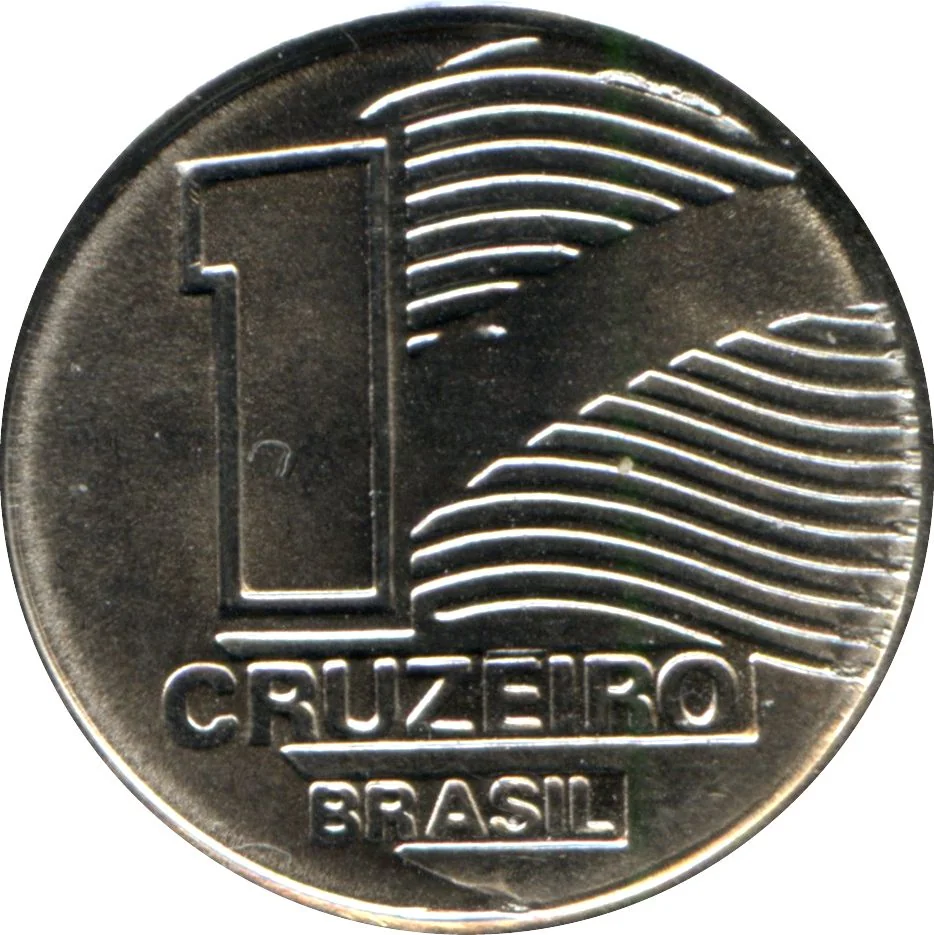
Wavy denomination design
Inscription:
1
CRUZEIRO
BRASIL
CRUZEIRO
BRASIL
Translation:
Cruzeiro
Brazil
Brazil
Script: Latin
Language: Portuguese
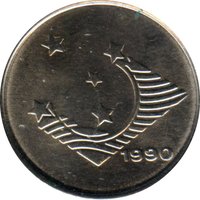
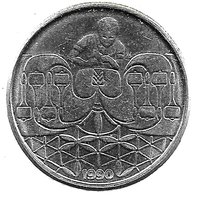
Reverse
Description:
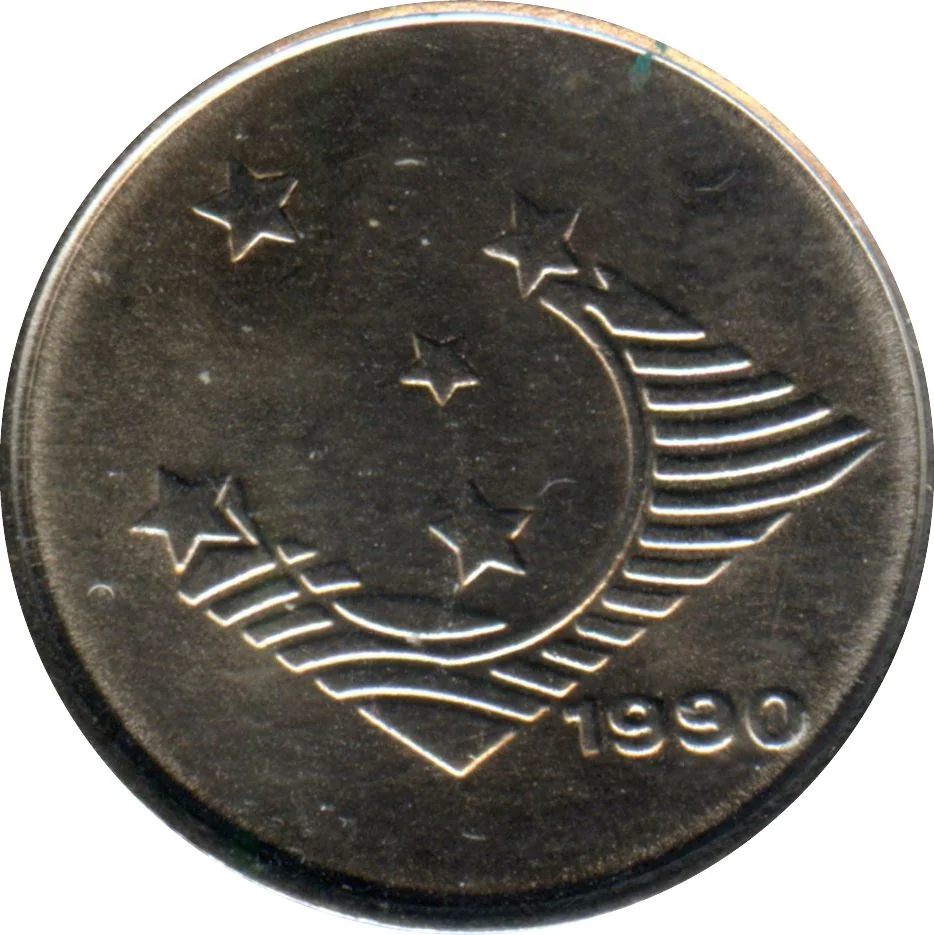
Geometric design with elements from Brazil's coat of arms: the Southern Cross stars, a globe, and a rhombus.
Inscription:
1990
Script: Latin
Edge
Plain
Categories
| Space |
Mintings
| Year | Mint Mark | Mintage | Quality | Collection |
|---|---|---|---|---|
| 1990 | — | 377,000,000 |
Historical background
In 1990, Brazil was engulfed in a profound monetary crisis, the culmination of a "lost decade" defined by hyperinflation, failed stabilization plans, and eroded public trust. The situation was dire: annual inflation soared to a staggering 7,000%, a rate so high it functioned as a daily economic tax, destroying savings, distorting prices, and forcing a frantic cycle of wage indexing and price adjustments. The root causes were deeply structural, stemming from massive public deficits financed by money creation, inertial inflation perpetuated by widespread indexation, and a legacy of external debt shocks from the 1980s.
President Fernando Collor de Mello, inaugurated in March 1990, responded with the radical and shocking "Collor Plan." Its most infamous measure was an 18-month freeze on roughly 80% of all private financial assets, including savings accounts, effectively confiscating liquidity to break inflationary expectations. The plan also introduced a new currency (the cruzeiro, replacing the cruzado novo), imposed temporary price freezes, and launched a program of trade liberalization and privatization. Initially, it succeeded in abruptly halting inflation, but at a tremendous social and economic cost, plunging the country into a severe recession.
However, the Collor Plan's success was short-lived. By the end of 1990, inflation had reignited because the government failed to address the fundamental fiscal imbalances driving the crisis. Public spending remained unchecked, and the temporary nature of the liquidity freeze meant the underlying inflationary pressures quickly returned. Thus, 1990 ended with the crisis unresolved, setting the stage for further failed plans and setting a precedent for extreme measures, until the eventual success of the Plano Real in 1994. The year stands as a stark example of the limits of shock therapy without sustained fiscal discipline.
President Fernando Collor de Mello, inaugurated in March 1990, responded with the radical and shocking "Collor Plan." Its most infamous measure was an 18-month freeze on roughly 80% of all private financial assets, including savings accounts, effectively confiscating liquidity to break inflationary expectations. The plan also introduced a new currency (the cruzeiro, replacing the cruzado novo), imposed temporary price freezes, and launched a program of trade liberalization and privatization. Initially, it succeeded in abruptly halting inflation, but at a tremendous social and economic cost, plunging the country into a severe recession.
However, the Collor Plan's success was short-lived. By the end of 1990, inflation had reignited because the government failed to address the fundamental fiscal imbalances driving the crisis. Public spending remained unchecked, and the temporary nature of the liquidity freeze meant the underlying inflationary pressures quickly returned. Thus, 1990 ended with the crisis unresolved, setting the stage for further failed plans and setting a precedent for extreme measures, until the eventual success of the Plano Real in 1994. The year stands as a stark example of the limits of shock therapy without sustained fiscal discipline.
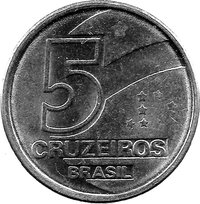
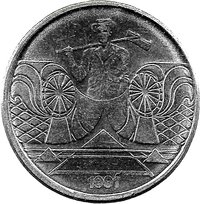
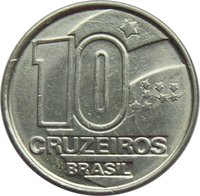
Series: 1990 Brazil circulation coins
🌱 Very Common