

20 centavos – Brazil
Add to wishlist
Brazil
Obverse
Description:
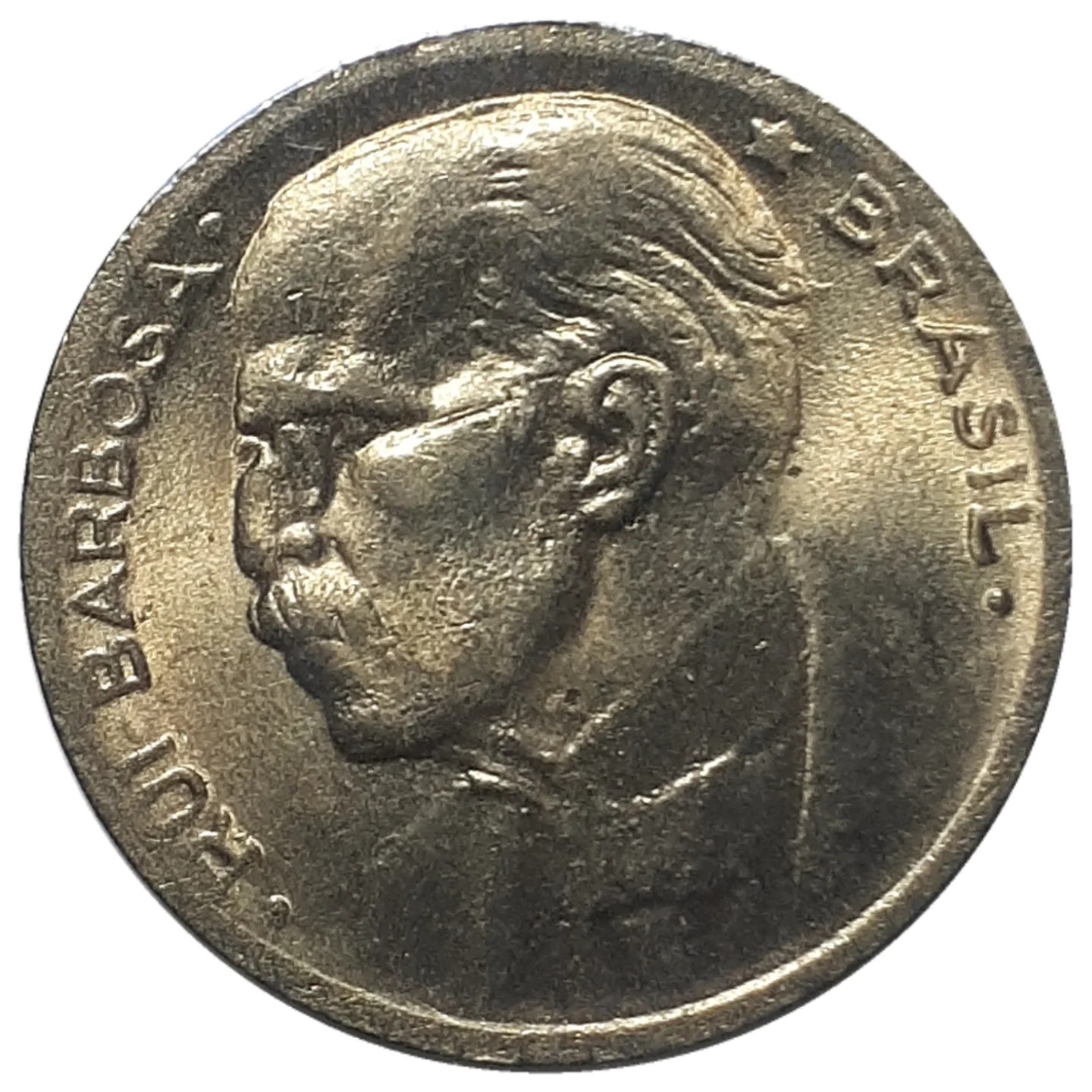
Bust of Ruy Barbosa (1849-1923), facing left.
Inscription:
·RUI BARBOSA· * BRASIL·
Translation:
Rui Barbosa * Brazil
Script: Latin
Language: Portuguese
Engraver: Leopoldo Campos
Reverse
Description:
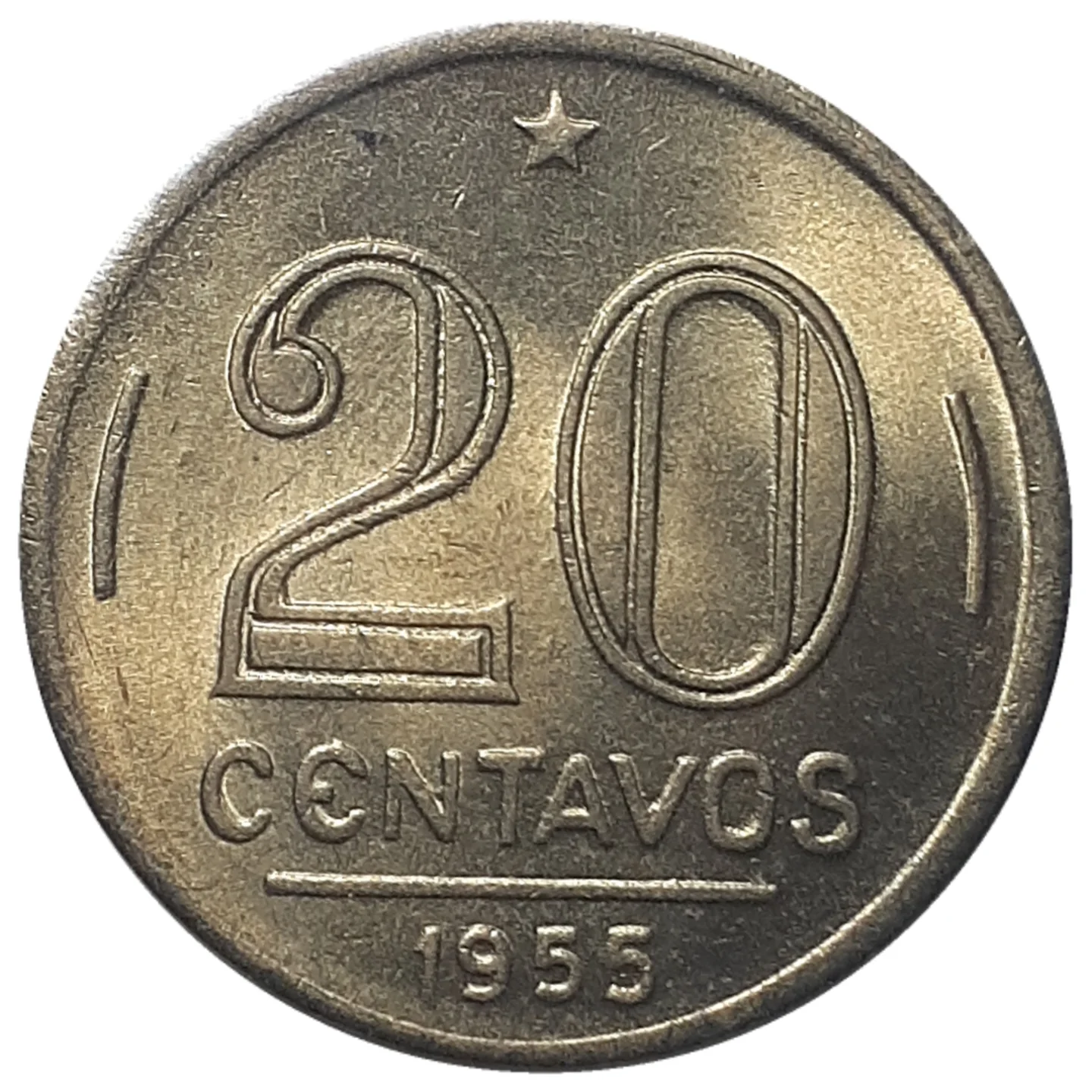
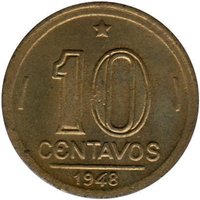
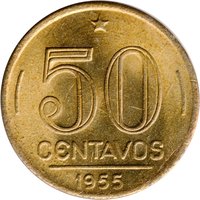
Denomination top, date bottom, star above line.
Inscription:
20
CENTAVOS
-------------
1955
CENTAVOS
-------------
1955
Script: Latin
Engraver: Leopoldo Campos
Edge
Plain
Categories
| Person> Politician |
Mints
| Name | Mark |
|---|---|
| Casa da Moeda do Brasil | — |
Mintings
| Year | Mint Mark | Mintage | Quality | Collection |
|---|---|---|---|---|
| 1948 | — | 39,450,000 | ||
| 1949 | — | 24,805,000 | ||
| 1950 | — | 15,145,000 | ||
| 1951 | — | 14,964,000 | ||
| 1952 | — | 10,942,000 | ||
| 1953 | — | 25,585,000 | ||
| 1954 | — | 16,477,000 | ||
| 1955 | — | 25,122,000 | ||
| 1956 | — | 6,716,000 |
Historical background
In 1948, Brazil's currency situation was characterized by the ongoing struggle with inflation and multiple exchange rates, a legacy of the Estado Novo period and the economic disruptions of World War II. The official currency was the cruzeiro, introduced in 1942 to replace the old réis. However, the post-war period saw persistent fiscal deficits financed by money creation, leading to rising inflation. The government maintained a complex system of multiple exchange rates, a policy designed to control the flow of foreign trade and protect reserves, but which created distortions, encouraged corruption, and hindered efficient economic planning.
The administration of President Eurico Gaspar Dutra (1946-1951) initially pursued a liberal import policy, drawing down substantial foreign exchange reserves accumulated during the war. By 1947, facing a reserves crisis, the government abruptly reversed course and imposed strict exchange controls and import licensing. In 1948, the Sumoc (Superintendency of Money and Credit), a forerunner to the Central Bank, was actively managing these controls, setting different cruzeiro-to-dollar rates for various transaction types (e.g., coffee exports versus essential imports). This aimed to subsidize industrialization but often created a lucrative black market for dollars.
Overall, the 1948 currency environment was one of controlled instability. While providing short-term protection for Brazil's nascent industrial sector and managing the balance of payments, the system of inflationary financing and administrative exchange rates stored up significant problems. It laid the groundwork for the chronic inflation and repeated currency reforms that would define the Brazilian economy for much of the remainder of the 20th century.
The administration of President Eurico Gaspar Dutra (1946-1951) initially pursued a liberal import policy, drawing down substantial foreign exchange reserves accumulated during the war. By 1947, facing a reserves crisis, the government abruptly reversed course and imposed strict exchange controls and import licensing. In 1948, the Sumoc (Superintendency of Money and Credit), a forerunner to the Central Bank, was actively managing these controls, setting different cruzeiro-to-dollar rates for various transaction types (e.g., coffee exports versus essential imports). This aimed to subsidize industrialization but often created a lucrative black market for dollars.
Overall, the 1948 currency environment was one of controlled instability. While providing short-term protection for Brazil's nascent industrial sector and managing the balance of payments, the system of inflationary financing and administrative exchange rates stored up significant problems. It laid the groundwork for the chronic inflation and repeated currency reforms that would define the Brazilian economy for much of the remainder of the 20th century.
🌱 Very Common