

25 Fils – Bahrain
Bahrain
Context

Material
Diameter: 20 mm
Weight: 3.5 g
Thickness: 1.5 mm
Shape: Round
Composition: Copper-nickel
Technique: Milled
Alignment: Medal alignment
flip
References
KM: #Click to copy to clipboard18
Numista: #5372
Value
Exchange value: 0.025 BHD
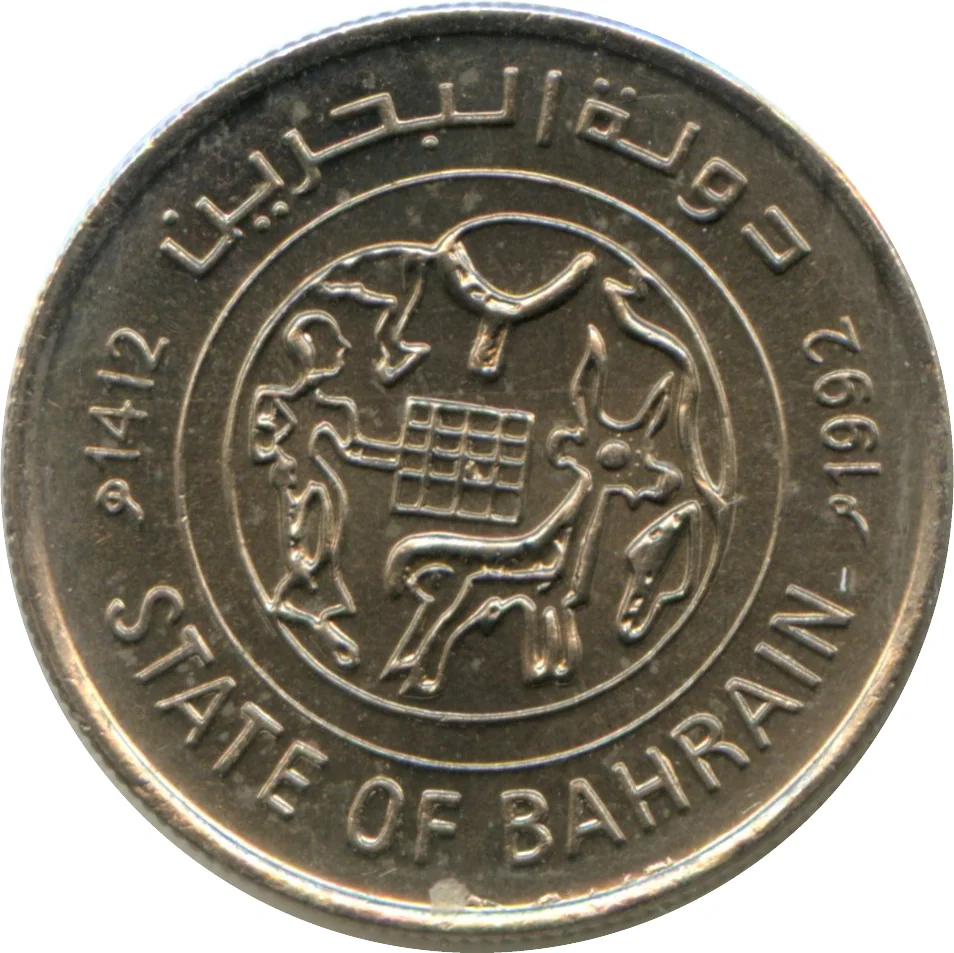
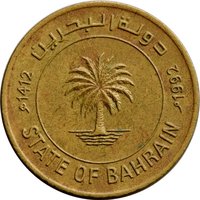
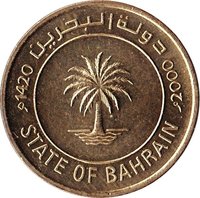
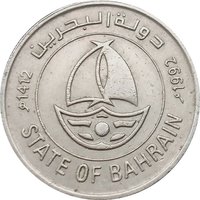
Obverse
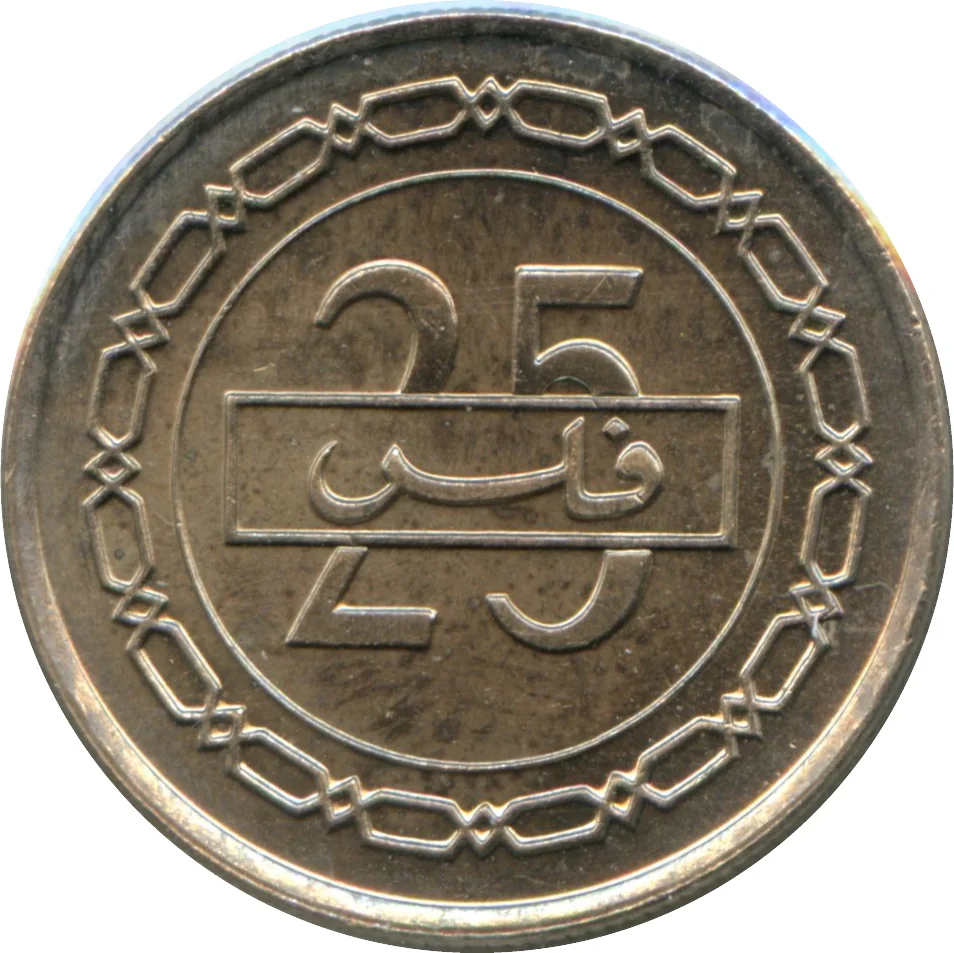
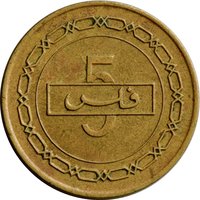
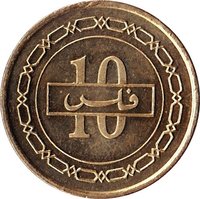
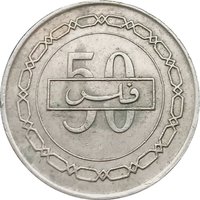
Reverse
Edge
Reeded
Mints
| Name | Mark |
|---|---|
| Royal Mint | — |
Mintings
| Year | Mint Mark | Mintage | Quality | Collection |
|---|---|---|---|---|
| 1992 | — | — | ||
| 2000 | — | — |
Historical background
In 1992, Bahrain's currency situation was defined by its long-standing and stable peg to the US Dollar, a policy established in 1965. The Bahraini Dinar (BHD) was, and remains, one of the world's most valuable currency units, with its value firmly anchored to the greenback. This fixed exchange rate regime, managed by the Bahrain Monetary Agency (the precursor to the Central Bank of Bahrain), provided critical stability for the kingdom's open, oil-dependent economy. It anchored inflation, facilitated predictable foreign trade and investment, and was a cornerstone of financial confidence, especially important given Bahrain's role as an emerging regional banking hub.
The broader economic context in 1992 was one of cautious recovery and fiscal pressure. The First Gulf War (1990-91) had concluded, and while Bahrain benefited from increased regional economic activity and allied financial support, it faced the lingering challenge of relatively low oil prices compared to the 1980s peak. Furthermore, the nation's finite hydrocarbon reserves, especially when compared to its Gulf neighbours, underscored the importance of its non-oil sectors, particularly finance and tourism. The stable currency was essential for nurturing these sectors, as it protected against the volatility that could deter international business.
Consequently, there was no serious consideration of devaluing or altering the peg in 1992. The debate in policy circles was not about the currency's value but about managing its implications. The dollar peg imported US monetary policy, limiting independent tools to stimulate the domestic economy. The focus, therefore, was on fiscal policy and structural reforms to diversify the economy within the framework of a strong, predictable currency. This steadfast commitment to the peg, maintained for decades, proved to be a defining feature of Bahrain's economic resilience.
The broader economic context in 1992 was one of cautious recovery and fiscal pressure. The First Gulf War (1990-91) had concluded, and while Bahrain benefited from increased regional economic activity and allied financial support, it faced the lingering challenge of relatively low oil prices compared to the 1980s peak. Furthermore, the nation's finite hydrocarbon reserves, especially when compared to its Gulf neighbours, underscored the importance of its non-oil sectors, particularly finance and tourism. The stable currency was essential for nurturing these sectors, as it protected against the volatility that could deter international business.
Consequently, there was no serious consideration of devaluing or altering the peg in 1992. The debate in policy circles was not about the currency's value but about managing its implications. The dollar peg imported US monetary policy, limiting independent tools to stimulate the domestic economy. The focus, therefore, was on fiscal policy and structural reforms to diversify the economy within the framework of a strong, predictable currency. This steadfast commitment to the peg, maintained for decades, proved to be a defining feature of Bahrain's economic resilience.
Series: 1992 Bahrain circulation coins
🌱 Very Common