

10 bolivars – Venezuela
Add to wishlist
Venezuela
Obverse
Description:
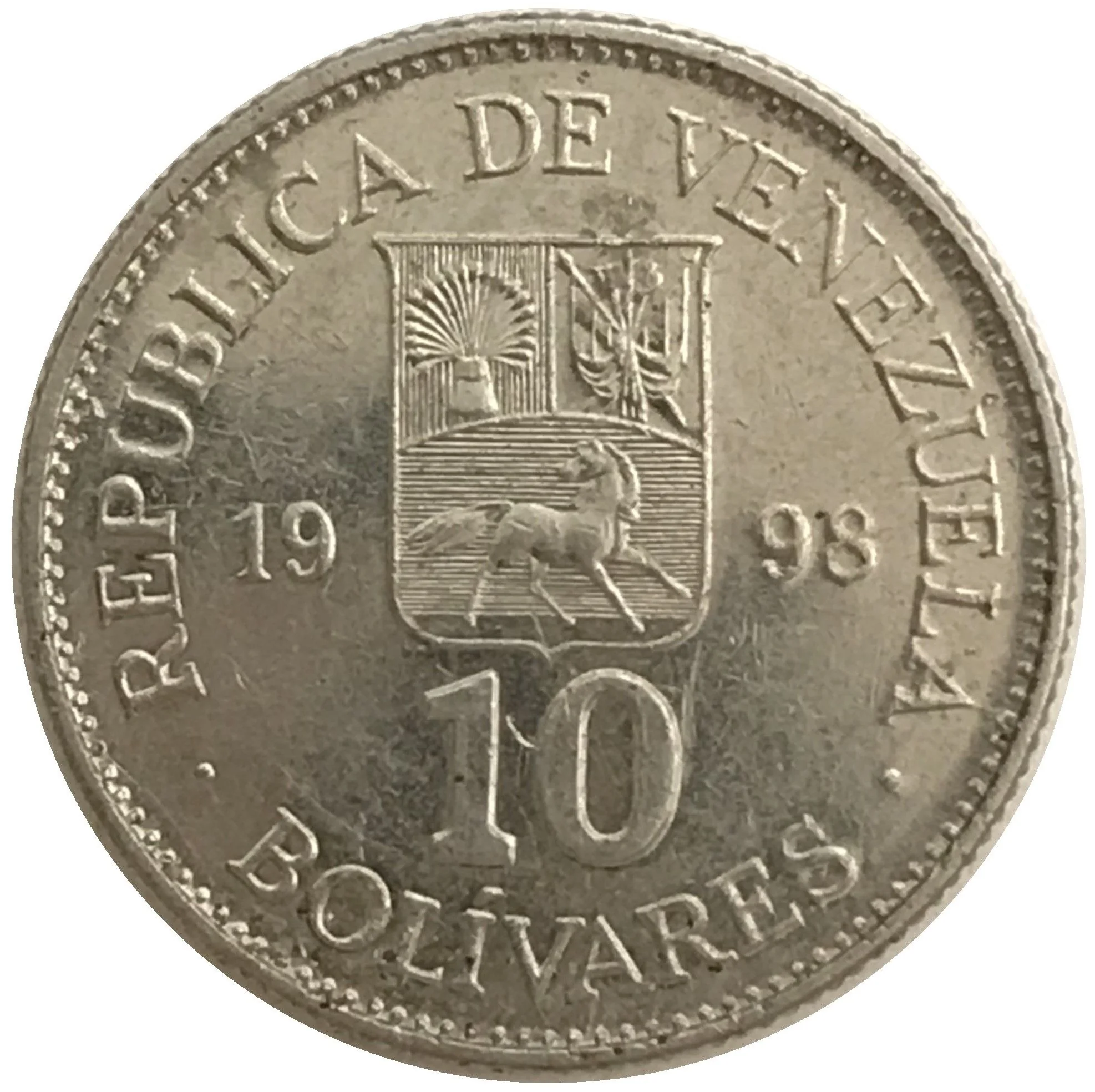
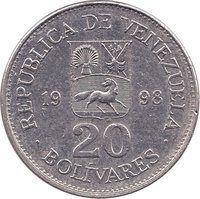
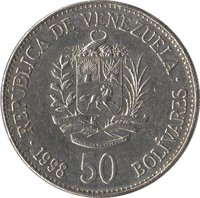
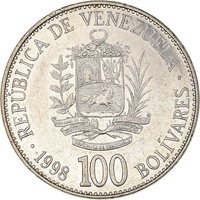
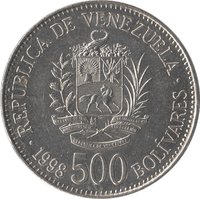
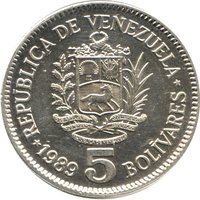
Coat of arms with date, legend above, value below.
Inscription:
• REPÚBLICA DE VENEZUELA •
1998
10
BOLÍVARES
1998
10
BOLÍVARES
Translation:
REPUBLIC OF VENEZUELA
1998
10
BOLIVARS
1998
10
BOLIVARS
Script: Latin
Language: Spanish
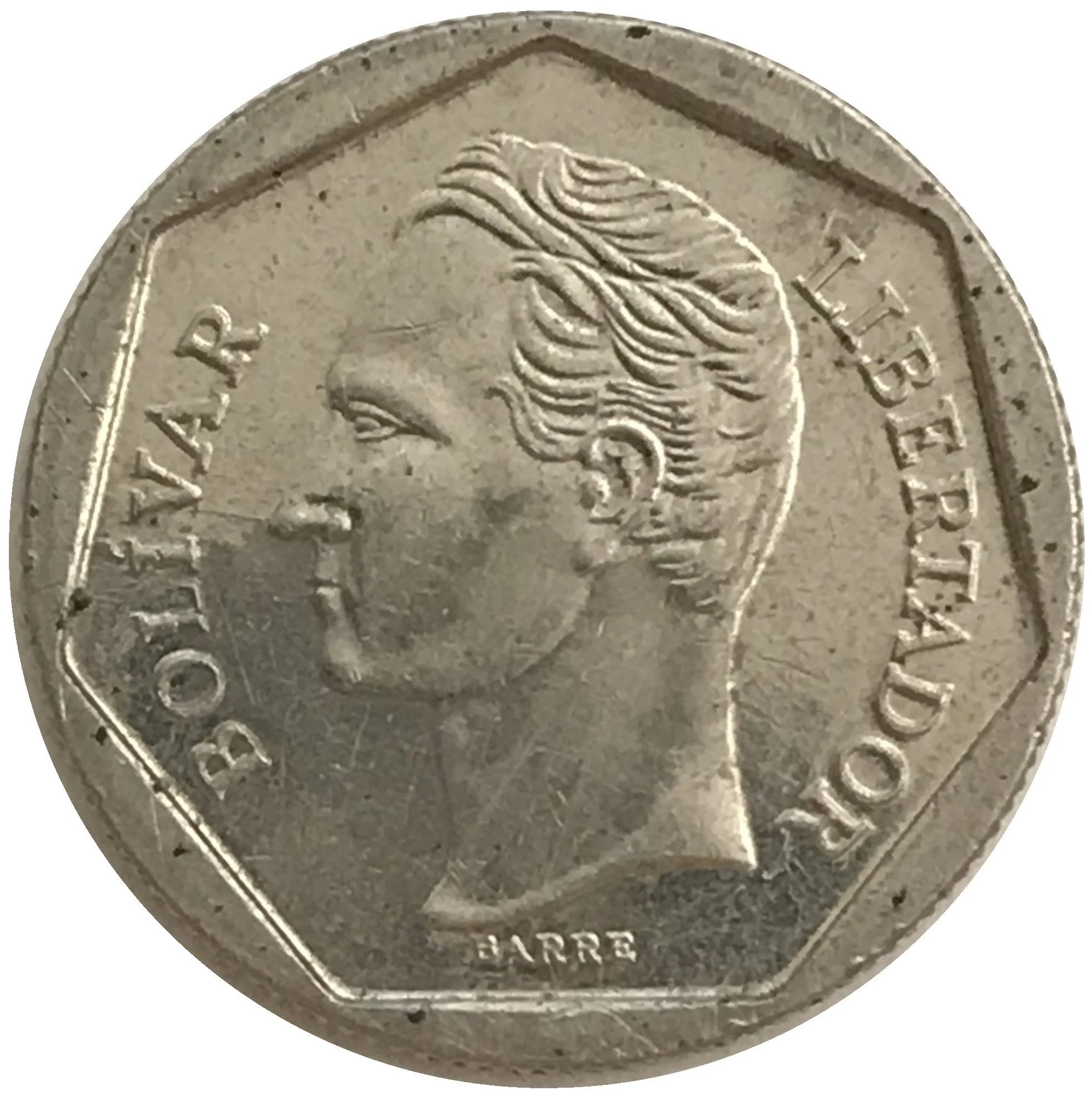
Engraver: Désiré-Albert Barre
Reverse
Edge
Reeded
Categories
| Symbols> Coat of Arms |
| Animal> Horse |
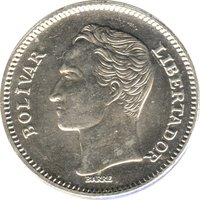
| Person> Military leader |
| Person> Politician |
Mints
| Name | Mark |
|---|---|
| Czech Mint | — |
| Hungarian mint | — |
Mintings
| Year | Mint Mark | Mintage | Quality | Collection |
|---|---|---|---|---|
| 1998 | — | 100,000,000 |
Historical background
In 1998, Venezuela was on the precipice of profound political change, but its currency situation was characterized by a deceptive and fragile stability. Following a severe banking crisis and economic contraction in 1994-1995, the government of President Rafael Caldera had abandoned a brief experiment with a floating exchange rate. In 1996, it implemented an IMF-backed austerity package and introduced a new currency, the bolívar, which replaced the "bolívar fuerte" at a rate of 1,000 to 1. Crucially, it established a crawling peg exchange rate regime, where the bolívar was allowed to depreciate within a pre-announced band. This policy, managed by the Central Bank, succeeded in taming hyperinflation—which had reached over 100% in 1996—down to a still-high but more manageable 35.8% in 1998.
However, this stability was superficial and under immense strain. The economy was overwhelmingly dependent on oil revenues, which comprised roughly 80% of exports and half of government income. In 1998, global oil prices collapsed to historic lows, averaging around $12 per barrel. This crash devastated fiscal revenues and foreign exchange reserves, creating a massive gap between the official exchange rate and the currency's real market value. While the official rate was held at around 578 bolívares to the US dollar by year's end, a thriving parallel black market for dollars emerged, signaling a severe loss of confidence in the national currency and the government's ability to maintain the peg.
This currency fragility was both a symptom and a cause of a deeper socioeconomic crisis. Years of economic mismanagement, corruption, and declining per capita income had led to widespread poverty and inequality. The bolívar's artificial stability was maintained at the cost of deep spending cuts and high interest rates, which stifled growth and exacerbated social discontent. As Hugo Chávez campaigned for the presidency in 1998, he channeled this anger, promising to dismantle the corrupt political establishment. His landslide victory in December 1998 was, in part, a verdict on an economic model whose seemingly stable currency masked profound vulnerabilities soon to be unleashed.
However, this stability was superficial and under immense strain. The economy was overwhelmingly dependent on oil revenues, which comprised roughly 80% of exports and half of government income. In 1998, global oil prices collapsed to historic lows, averaging around $12 per barrel. This crash devastated fiscal revenues and foreign exchange reserves, creating a massive gap between the official exchange rate and the currency's real market value. While the official rate was held at around 578 bolívares to the US dollar by year's end, a thriving parallel black market for dollars emerged, signaling a severe loss of confidence in the national currency and the government's ability to maintain the peg.
This currency fragility was both a symptom and a cause of a deeper socioeconomic crisis. Years of economic mismanagement, corruption, and declining per capita income had led to widespread poverty and inequality. The bolívar's artificial stability was maintained at the cost of deep spending cuts and high interest rates, which stifled growth and exacerbated social discontent. As Hugo Chávez campaigned for the presidency in 1998, he channeled this anger, promising to dismantle the corrupt political establishment. His landslide victory in December 1998 was, in part, a verdict on an economic model whose seemingly stable currency masked profound vulnerabilities soon to be unleashed.
Series: 1998 Venezuela circulation coins
🌱 Common