

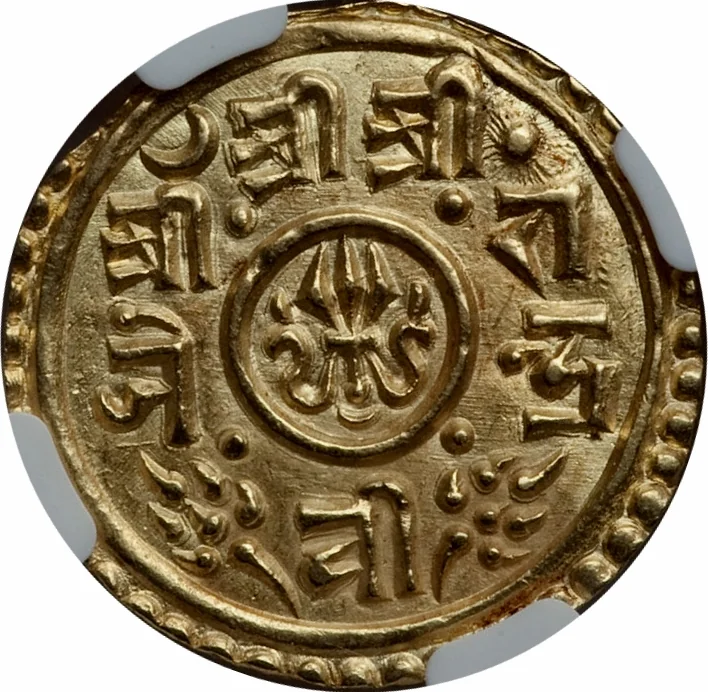
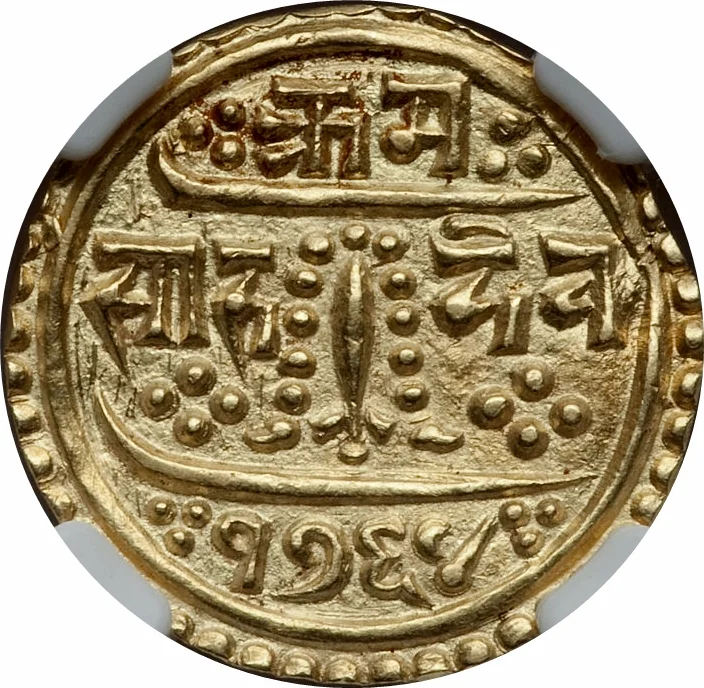
½ Mohar – Nepal
Nepal
Context

Material
References
KM: #Click to copy to clipboard578
Numista: #53467
Value
Bullion value: $467.03
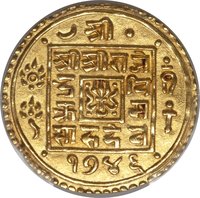
Obverse
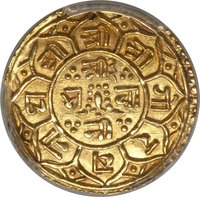
Reverse
Edge
Mintings
| Year | Mint Mark | Mintage | Quality | Collection |
|---|---|---|---|---|
| 1835 | — | — | ||
| 1836 | — | — | ||
| 1840 | — | — | ||
| 1842 | — | — | ||
| 1844 | — | — |
Historical background
In 1835, Nepal's currency situation was defined by the aftermath of the Anglo-Nepalese War (1814-1816) and the subsequent Treaty of Sugauli. The treaty imposed a heavy annual indemnity of 200,000 rupees on the Kingdom of Nepal, payable to the British East India Company. This financial burden placed immense strain on the state treasury and directly influenced monetary policy, pushing the administration of Prime Minister Bhimsen Thapa to seek ways to increase revenue and manage specie outflow to British India.
The monetary system itself was a complex bimetallic structure of silver and copper coins, with the silver Mohar as the principal coin. However, the period was marked by chronic debasement and inconsistent minting. To meet war debts and internal expenses, the state frequently reduced the silver content in its coins, leading to inflation and a loss of public confidence. This debasement also created practical difficulties in trade with British India, which used a more stable silver rupee, causing unfavorable exchange rates and further economic pressure.
Furthermore, the era saw limited minting activity and a scarcity of precious metals. The main mints in Kathmandu (Kathmandu, Lalitpur, Bhaktapur) operated under royal authority, but production was often insufficient. This scarcity, combined with the outflow of silver for tributes and trade deficits, resulted in a shortage of legal tender within the hill regions, sometimes forcing reliance on barter or the use of irregular and forged coins in local economies, highlighting a period of significant monetary instability.
The monetary system itself was a complex bimetallic structure of silver and copper coins, with the silver Mohar as the principal coin. However, the period was marked by chronic debasement and inconsistent minting. To meet war debts and internal expenses, the state frequently reduced the silver content in its coins, leading to inflation and a loss of public confidence. This debasement also created practical difficulties in trade with British India, which used a more stable silver rupee, causing unfavorable exchange rates and further economic pressure.
Furthermore, the era saw limited minting activity and a scarcity of precious metals. The main mints in Kathmandu (Kathmandu, Lalitpur, Bhaktapur) operated under royal authority, but production was often insufficient. This scarcity, combined with the outflow of silver for tributes and trade deficits, resulted in a shortage of legal tender within the hill regions, sometimes forcing reliance on barter or the use of irregular and forged coins in local economies, highlighting a period of significant monetary instability.
✨ Legendary