

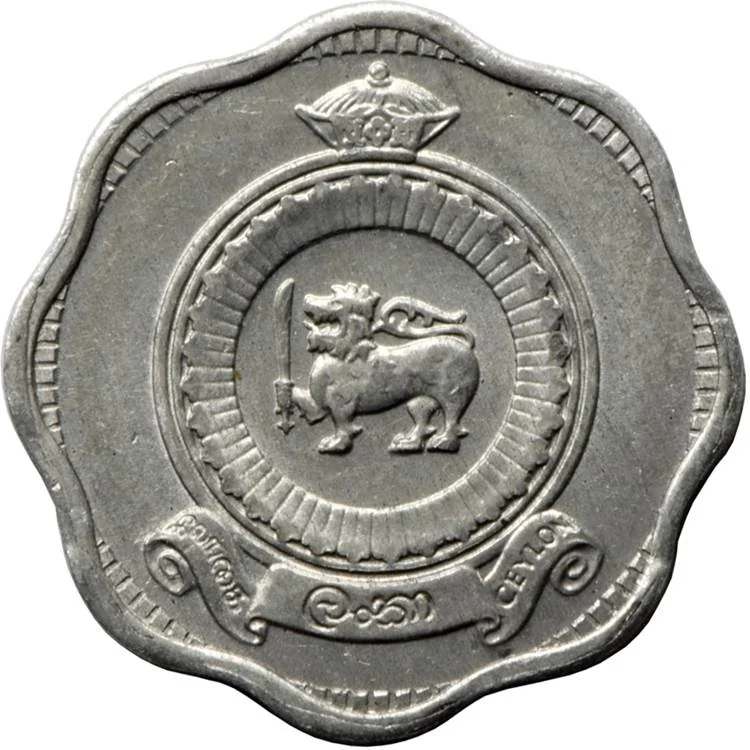
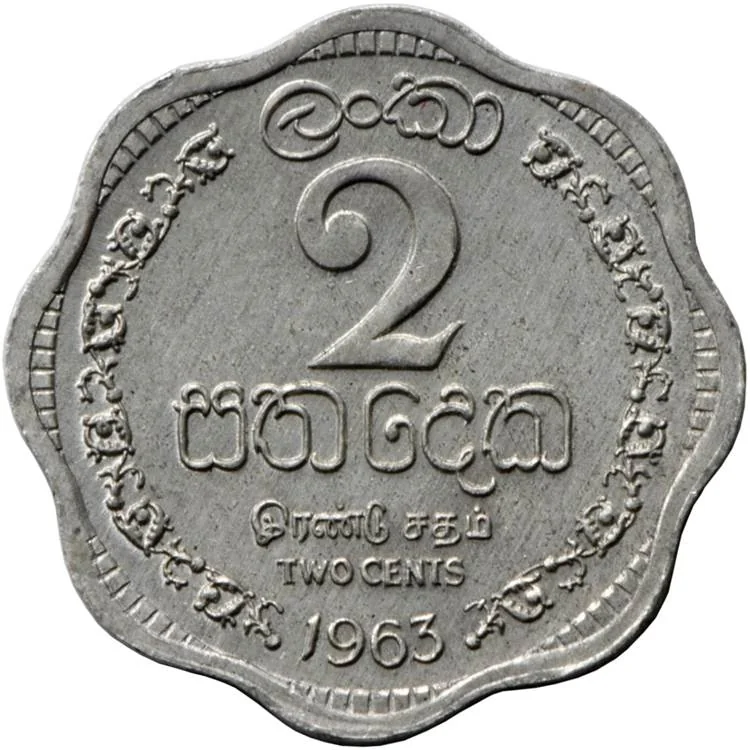
2 cents – Ceylon
Add to wishlist
Sri Lanka
Context
Years: 1963–1971
Country: Sri Lanka
Issuer: Ceylon
Ruler: Elizabeth II
Currency:
(1871—1972)
Demonetized: Yes
Total mintage: 121,020,000
Material
References
KM: #
Numista: #5339
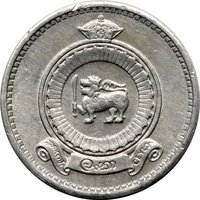
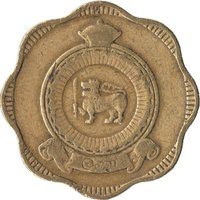
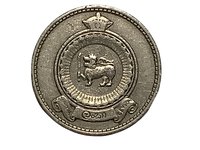
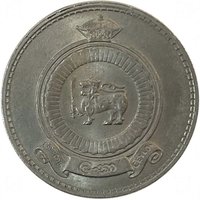
Obverse
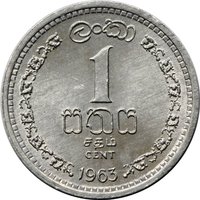
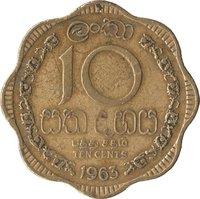
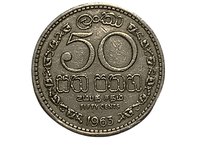
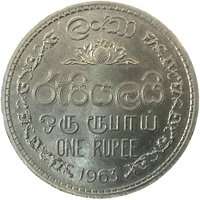
Reverse
Edge
Plain
Mints
| Name | Mark |
|---|---|
| Royal Mint (Tower Hill) | — |
| Royal Mint | — |
Mintings
| Year | Mint Mark | Mintage | Quality | Collection |
|---|---|---|---|---|
| 1963 | — | 26,000,000 | ||
| 1965 | — | 7,000,000 | ||
| 1967 | — | 15,000,000 | ||
| 1968 | — | 15,000,000 | ||
| 1970 | — | 13,000,000 | ||
| 1971 | — | 45,000,000 | ||
| 1971 | — | 20,000 | Proof |
Historical background
In 1963, Ceylon (now Sri Lanka) operated under a fixed exchange rate system, with its currency, the Ceylonese Rupee, pegged to the British Pound Sterling as a member of the Sterling Area. This arrangement provided stability but also tied the island's monetary policy closely to the United Kingdom. The economy was heavily dependent on the export of three primary commodities—tea, rubber, and coconut—whose volatile global prices directly impacted foreign exchange reserves. By the early 1960s, a persistent and widening trade deficit, coupled with declining terms of trade, was placing severe strain on these reserves, creating a chronic balance of payments problem.
The government of Prime Minister Sirimavo Bandaranaike, pursuing socialist-oriented policies, responded with stringent import and exchange controls to conserve scarce foreign currency. A complex system of licensing and quotas restricted imports of "non-essential" goods, while foreign travel allowances for citizens were tightly limited. These measures aimed to promote import-substitution industrialization and self-sufficiency but led to shortages of certain consumer goods and industrial inputs. The controlled economic environment also fostered a burgeoning black market for foreign exchange, where the rupee traded at a significant discount to the official rate.
This precarious currency situation was fundamentally a symptom of structural economic weaknesses. The reliance on a narrow export base, combined with rising import bills for food and capital goods, made the economy vulnerable. While the fixed peg and controls provided a short-term buffer, they could not address the underlying lack of diversification. The pressures of 1963 were part of a continuing trend that would eventually lead to a major devaluation of the rupee in 1967 and a gradual move towards a more flexible exchange rate regime in the following decades.
The government of Prime Minister Sirimavo Bandaranaike, pursuing socialist-oriented policies, responded with stringent import and exchange controls to conserve scarce foreign currency. A complex system of licensing and quotas restricted imports of "non-essential" goods, while foreign travel allowances for citizens were tightly limited. These measures aimed to promote import-substitution industrialization and self-sufficiency but led to shortages of certain consumer goods and industrial inputs. The controlled economic environment also fostered a burgeoning black market for foreign exchange, where the rupee traded at a significant discount to the official rate.
This precarious currency situation was fundamentally a symptom of structural economic weaknesses. The reliance on a narrow export base, combined with rising import bills for food and capital goods, made the economy vulnerable. While the fixed peg and controls provided a short-term buffer, they could not address the underlying lack of diversification. The pressures of 1963 were part of a continuing trend that would eventually lead to a major devaluation of the rupee in 1967 and a gradual move towards a more flexible exchange rate regime in the following decades.
Series: 1963 Ceylon circulation coins
🌱 Very Common