

25 Dollars (Discovery of the New World) – Jamaica
Non-circulating coins
Commemoration: 500th Anniversary of the Discovery of the New World
Series: Landfall
Jamaica
Context
Material
References
KM: #Click to copy to clipboard150
Numista: #53244
Value
Exchange value: 25 JMD
Bullion value: $60.48
Obverse
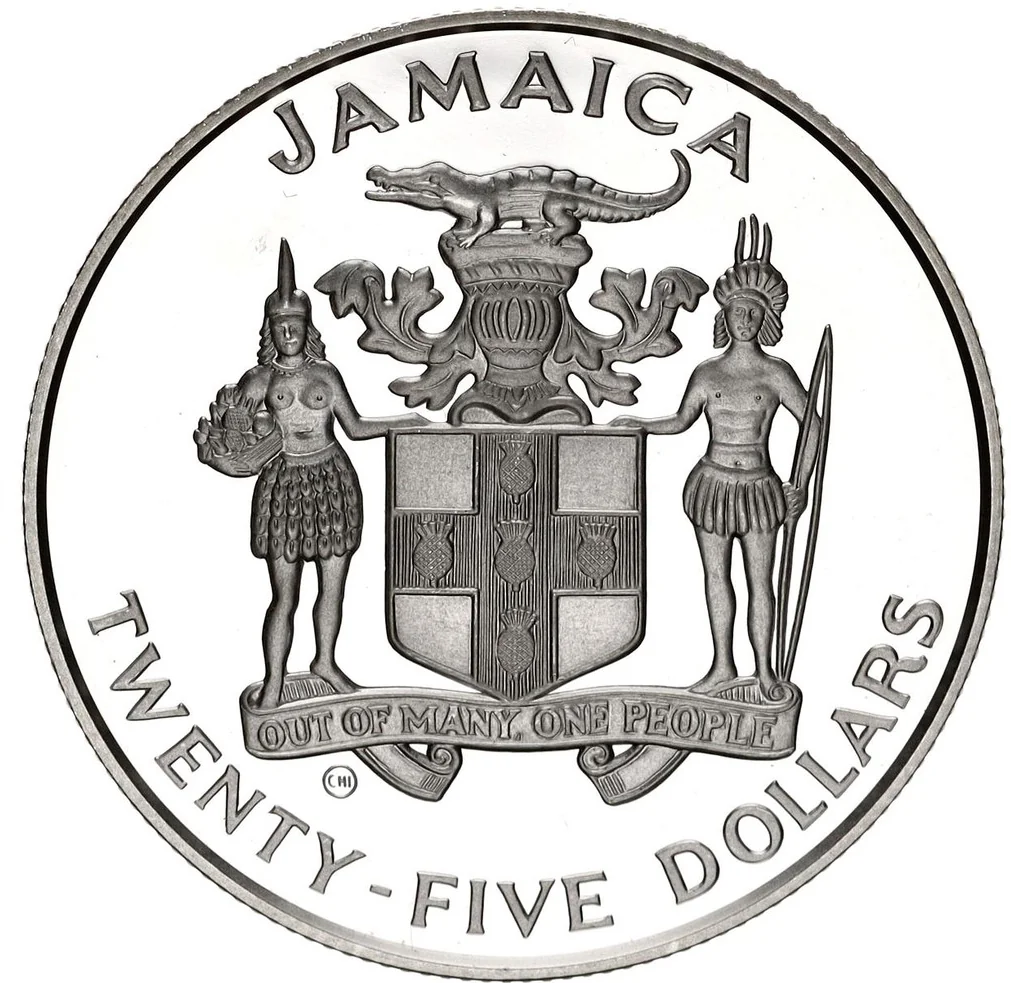
Reverse
Description:
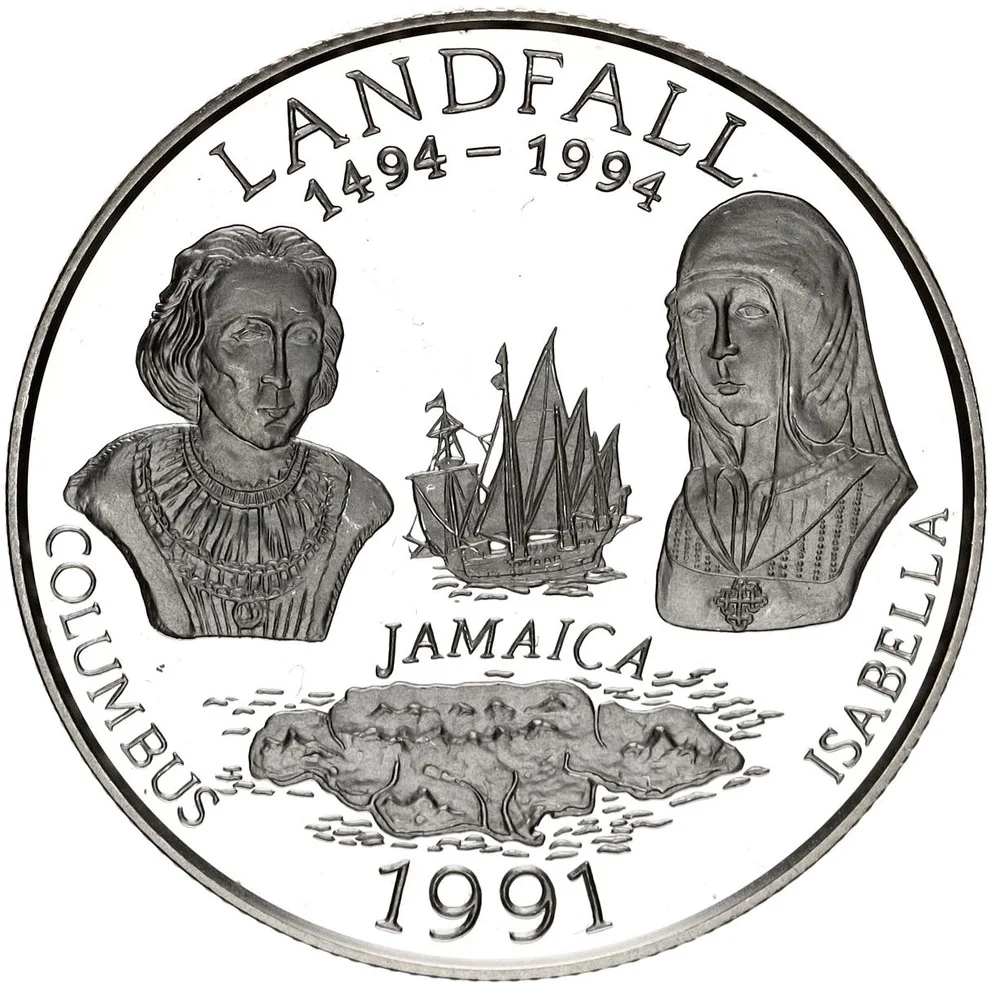
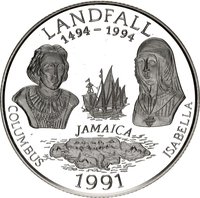
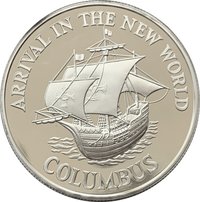
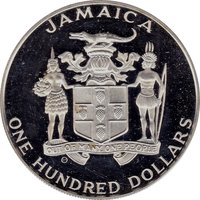
Columbus and Isabella flank a ship; Jamaica below.
Inscription:
LANDFALL 1494 - 1994
COLUMBUS ISABELLA
JAMAICA
1991
COLUMBUS ISABELLA
JAMAICA
1991
Script: Latin
Edge
Reeded
Categories
| Transportation> Watercraft |
| Map |
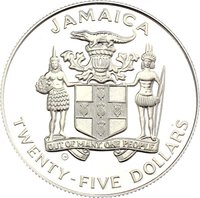
| Symbols> Coat of Arms |
| Person> Explorer |
| Person> Monarch |
Mints
| Name | Mark |
|---|---|
| Valcambi | CHI |
Mintings
| Year | Mint Mark | Mintage | Quality | Collection |
|---|---|---|---|---|
| 1991 | CHI | 25,000 | Proof |
Historical background
In 1991, Jamaica's currency situation was defined by a critical transition within a long-standing framework of economic reform. The country was operating under a managed floating exchange rate system, a structure implemented in the early 1980s to move away from a fixed parity with the US dollar. However, this system was heavily managed by the Bank of Jamaica, which frequently intervened in the market, leading to a complex dual-rate system. An official rate was set for government transactions and key imports, while a more depreciated parallel "street" market rate reflected the true scarcity of foreign exchange, creating distortions, encouraging a black market, and undermining confidence.
The core pressures stemmed from deep-seated macroeconomic imbalances. Chronic trade deficits, high public debt servicing costs, and low levels of foreign direct investment led to persistent shortages of US dollars. Inflation remained high, eroding the Jamaican dollar's domestic purchasing power and fueling further depreciation pressure. These conditions were exacerbated by the structural adjustment programmes agreed with the International Monetary Fund (IMF), which, while providing essential financing, often prescribed austerity measures that constrained growth in the short term and added to social strain.
Consequently, 1991 was a year of intense pressure and pivotal change. The gap between the official and parallel market rates widened significantly, making the system increasingly unsustainable. In response, the government, under Prime Minister Michael Manley and Finance Minister P. J. Patterson, took a decisive step in September 1991 by unifying the exchange rates. This move involved a substantial devaluation of the official rate, bringing it closer to the market rate, and was a condition for securing continued IMF support. This painful but necessary adjustment aimed to eliminate distortions, restore balance of payments viability, and lay the groundwork for a more market-determined valuation of the Jamaican dollar, setting the stage for the financial liberalisation of the following years.
The core pressures stemmed from deep-seated macroeconomic imbalances. Chronic trade deficits, high public debt servicing costs, and low levels of foreign direct investment led to persistent shortages of US dollars. Inflation remained high, eroding the Jamaican dollar's domestic purchasing power and fueling further depreciation pressure. These conditions were exacerbated by the structural adjustment programmes agreed with the International Monetary Fund (IMF), which, while providing essential financing, often prescribed austerity measures that constrained growth in the short term and added to social strain.
Consequently, 1991 was a year of intense pressure and pivotal change. The gap between the official and parallel market rates widened significantly, making the system increasingly unsustainable. In response, the government, under Prime Minister Michael Manley and Finance Minister P. J. Patterson, took a decisive step in September 1991 by unifying the exchange rates. This move involved a substantial devaluation of the official rate, bringing it closer to the market rate, and was a condition for securing continued IMF support. This painful but necessary adjustment aimed to eliminate distortions, restore balance of payments viability, and lay the groundwork for a more market-determined valuation of the Jamaican dollar, setting the stage for the financial liberalisation of the following years.
Series: Landfall

💎 Extremely Rare