

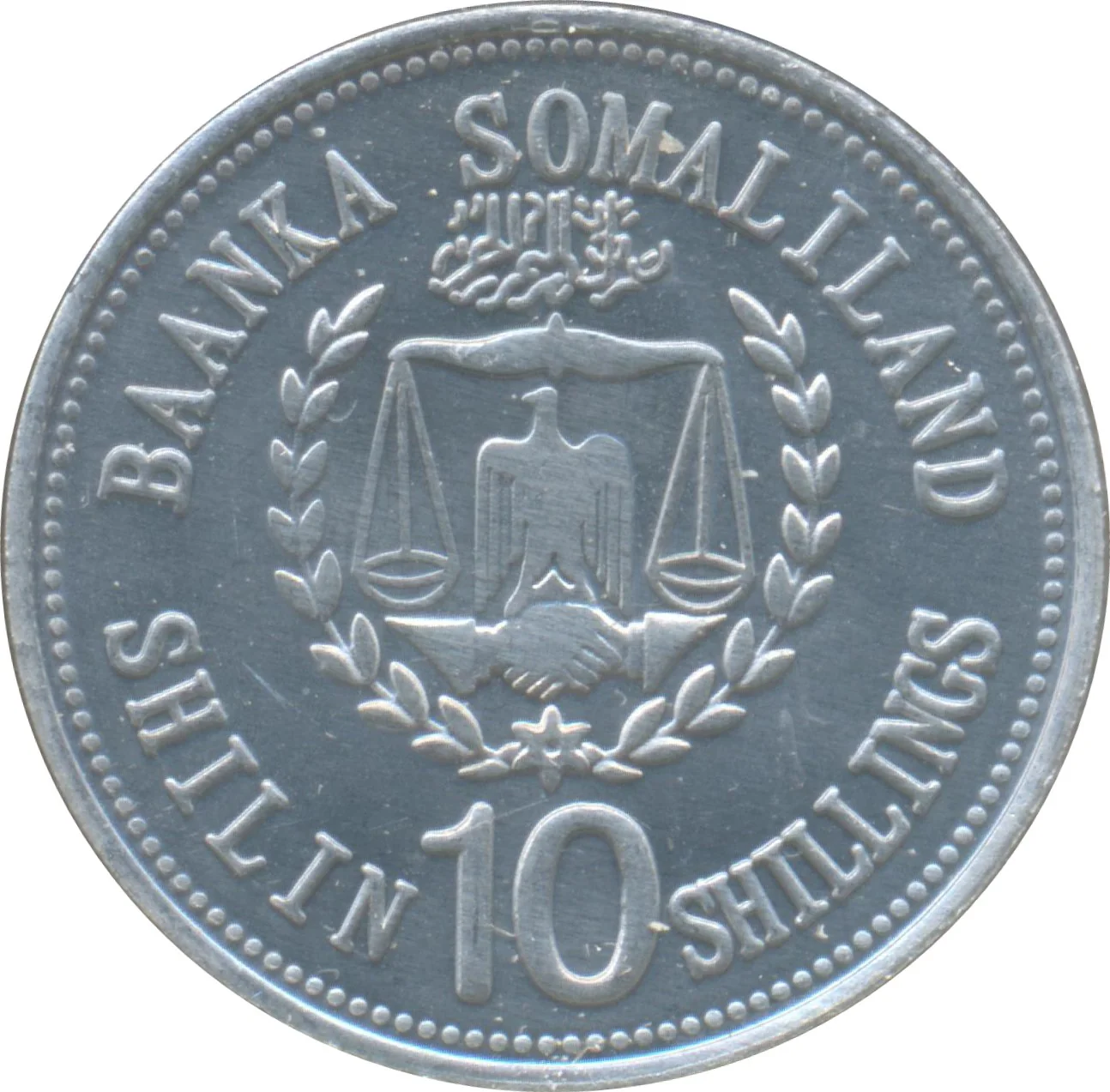
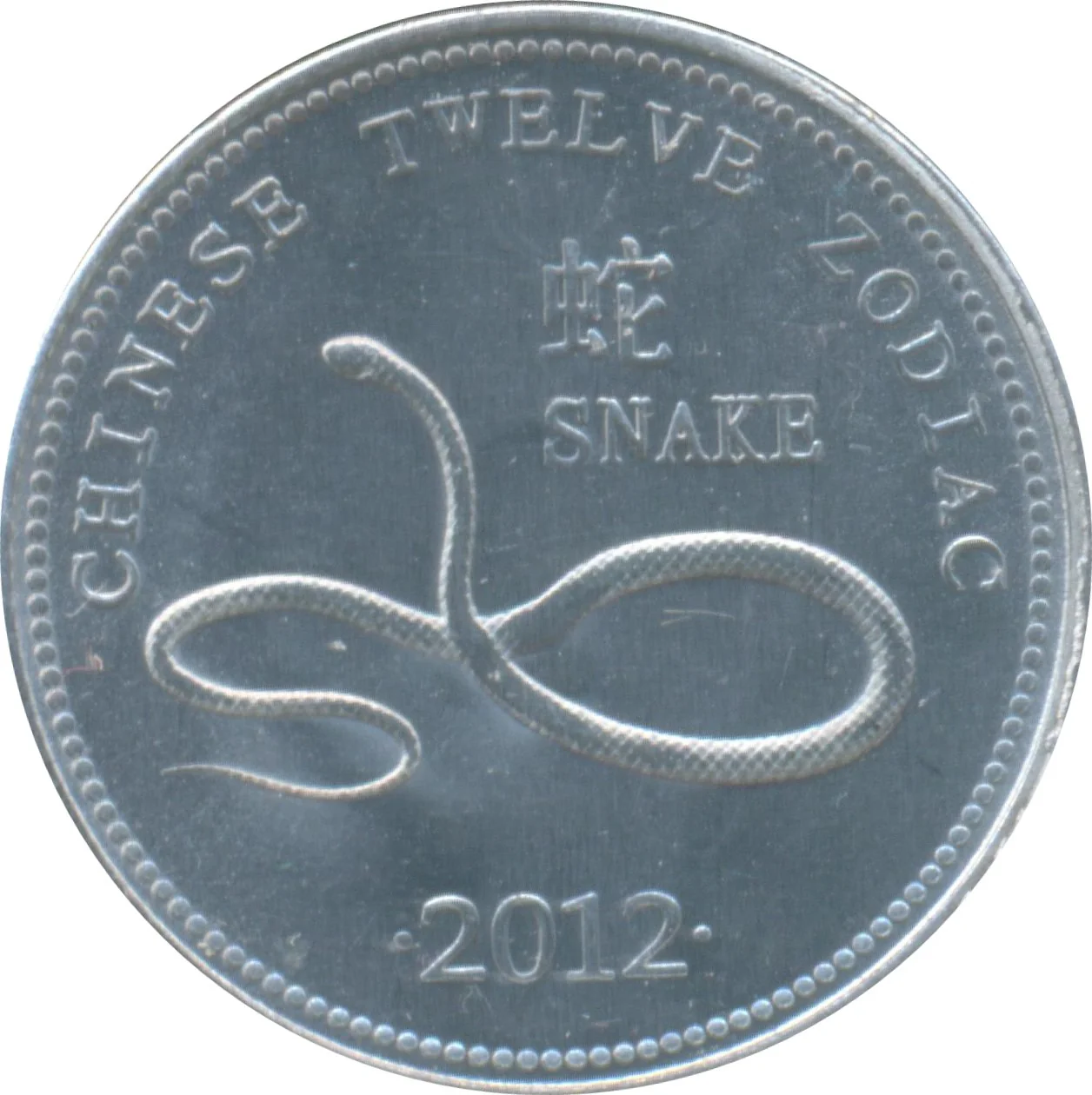
10 shillings – Somaliland
Add to wishlist
Somalia
Context
Material
References
KM: #
Numista: #53120
Value
Exchange value: 10 SLS
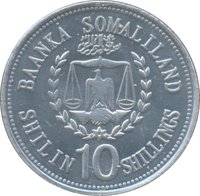
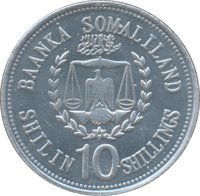
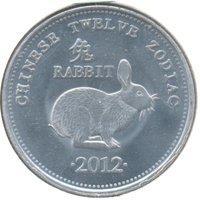
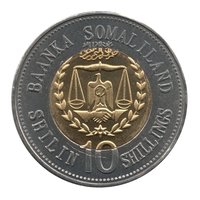
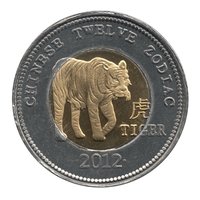
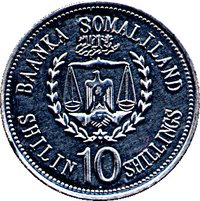
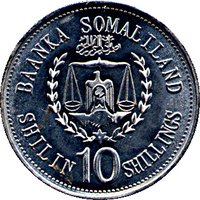
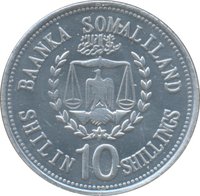
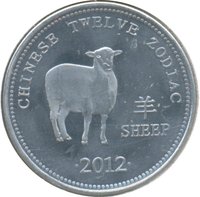
Obverse
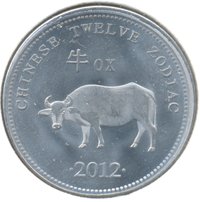
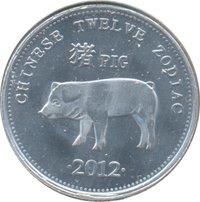
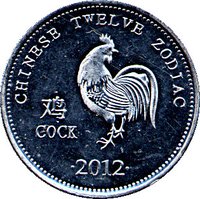
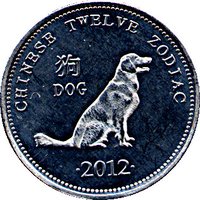
Reverse
Edge
Plain
Categories
| Animal> Reptile |
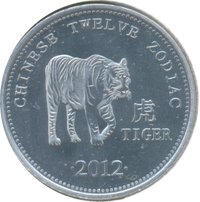
| Astrology> Chinese calendar |
| Symbols> Coat of Arms |
Mintings
| Year | Mint Mark | Mintage | Quality | Collection |
|---|---|---|---|---|
| 2012 | — | — |
Historical background
In 2012, Somaliland’s currency situation was defined by a protracted and unresolved crisis of confidence in the Somaliland shilling (SLSH). The local currency, not internationally recognized, suffered from severe inflation and widespread counterfeiting, which eroded public trust. A significant factor was the circulation of large quantities of forged banknotes, particularly the 500 and 1000 shilling notes, believed to be printed abroad and smuggled into the region. This flooded the money supply, drastically devaluing the currency and causing prices for basic goods to become highly unstable, frustrating both businesses and citizens.
The government in Hargeisa faced a critical dilemma. Its preferred solution was to introduce a new series of banknotes to replace the forged ones, a complex and expensive undertaking requiring external technical and financial support. However, this plan was consistently blocked by the Somalia Federal Government (SFG) in Mogadishu, which viewed any separate currency issuance as a challenge to its sovereignty and a step toward formal secession. The international community, adhering to the principle of Somali unity, refused to assist Somaliland’s currency reform, leaving the administration without the means to implement a decisive monetary policy.
Consequently, the economy adapted through de facto dollarization. The US dollar became the preferred currency for large transactions, savings, and major business deals, providing a stable store of value. The Somaliland shilling was relegated to small-scale daily purchases, creating a dual-currency system. This pragmatic shift by the market provided temporary stability but underscored the fundamental challenges of Somaliland’s unrecognized statehood, as its government lacked the central banking tools to control its own monetary destiny, leaving its financial system vulnerable and informal.
The government in Hargeisa faced a critical dilemma. Its preferred solution was to introduce a new series of banknotes to replace the forged ones, a complex and expensive undertaking requiring external technical and financial support. However, this plan was consistently blocked by the Somalia Federal Government (SFG) in Mogadishu, which viewed any separate currency issuance as a challenge to its sovereignty and a step toward formal secession. The international community, adhering to the principle of Somali unity, refused to assist Somaliland’s currency reform, leaving the administration without the means to implement a decisive monetary policy.
Consequently, the economy adapted through de facto dollarization. The US dollar became the preferred currency for large transactions, savings, and major business deals, providing a stable store of value. The Somaliland shilling was relegated to small-scale daily purchases, creating a dual-currency system. This pragmatic shift by the market provided temporary stability but underscored the fundamental challenges of Somaliland’s unrecognized statehood, as its government lacked the central banking tools to control its own monetary destiny, leaving its financial system vulnerable and informal.
Series: Chinese twelve zodiac
⭐ Somewhat Rare