

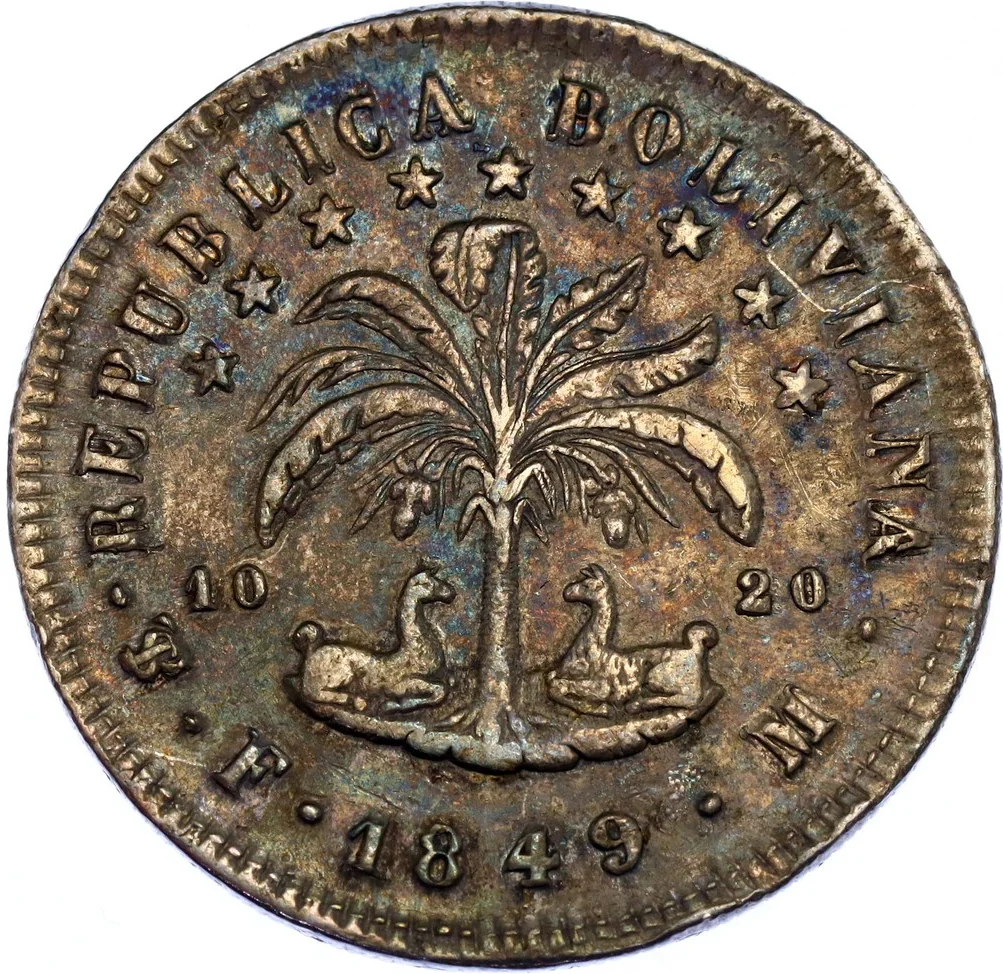
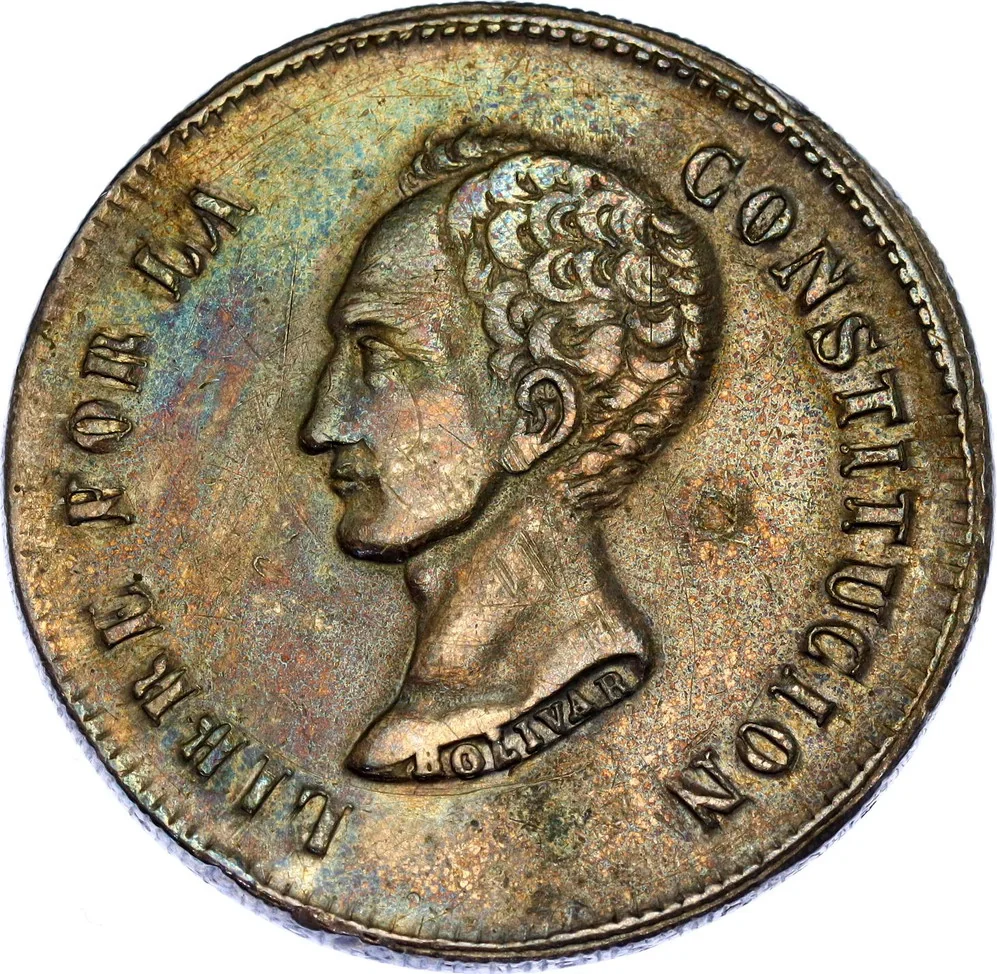
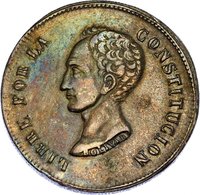
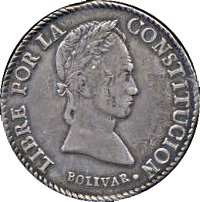
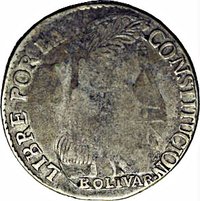
Obverse
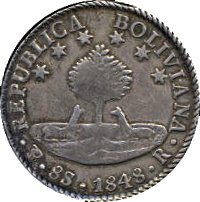
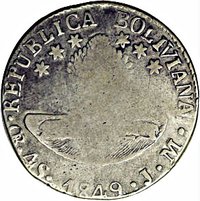
Reverse
Edge
Reeded
Legend:
AYACUCHO*SUCRE *1824*
Categories
| Animal> Camel |
| Person> Military leader |
| Person> Politician |
| Plant> Tree |
Mints
| Name | Mark |
|---|---|
| Potosi | PTS |
Historical background
In 1848, Bolivia's currency situation was characterized by severe instability and fragmentation, a direct legacy of the economic devastation following its independence from Spain in 1825. The young republic, having endured the costly Potosí campaign of the War of the Confederation (1836-1839), faced a crippling lack of precious metals for coinage and an empty treasury. This scarcity led to a chaotic monetary environment where a variety of coins circulated, primarily foreign silver from Peru, Chile, and Argentina, alongside worn and clipped remnants of the colonial Spanish colonial real. The absence of a strong, unified national currency severely hampered domestic trade and state finances.
The government's response was largely ineffective and contributed to the problem. Attempts to introduce fiduciary coinage, such as the debased silver moneda feble (weak coinage) in the 1830s, had failed disastrously, eroding public trust. By 1848, the state under President José Miguel de Velasco had limited capacity to reform the system. The primary economic activity, silver mining, was in a prolonged slump, depriving the nation of its traditional source of mintable wealth. Consequently, the state's ability to collect taxes and pay its debts was paralyzed, and international commerce was complicated by the need to constantly assay and negotiate the value of disparate coins.
This monetary chaos was a microcosm of Bolivia's broader political and economic fragility in the mid-19th century. The lack of a stable currency reflected the weakness of central state authority and the country's struggle to integrate into global markets. It would not be until the later discovery of vast silver deposits, particularly at the Cerro Rico de Potosí's new veins and later at Huanchaca, that Bolivia would acquire the bullion necessary to implement a more stable monetary system in the subsequent decades, beginning with the introduction of the boliviano in 1864.
The government's response was largely ineffective and contributed to the problem. Attempts to introduce fiduciary coinage, such as the debased silver moneda feble (weak coinage) in the 1830s, had failed disastrously, eroding public trust. By 1848, the state under President José Miguel de Velasco had limited capacity to reform the system. The primary economic activity, silver mining, was in a prolonged slump, depriving the nation of its traditional source of mintable wealth. Consequently, the state's ability to collect taxes and pay its debts was paralyzed, and international commerce was complicated by the need to constantly assay and negotiate the value of disparate coins.
This monetary chaos was a microcosm of Bolivia's broader political and economic fragility in the mid-19th century. The lack of a stable currency reflected the weakness of central state authority and the country's struggle to integrate into global markets. It would not be until the later discovery of vast silver deposits, particularly at the Cerro Rico de Potosí's new veins and later at Huanchaca, that Bolivia would acquire the bullion necessary to implement a more stable monetary system in the subsequent decades, beginning with the introduction of the boliviano in 1864.
⭐ Rare