

1 Dime – United States
United States
Context
Years: 1965–2025
Issuer: United States 
Period:
(since 1776)
Currency:
(since 1785)
Subdivision: 1 Dime = 10 Cents
Total mintage: 101,103,345,691
Material
References
KM: #Click to copy to clipboard195a
Numista: #53
Value
Exchange value: 0.1 USD = $0.10
Inflation-adjusted value: 1.04 USD
Obverse
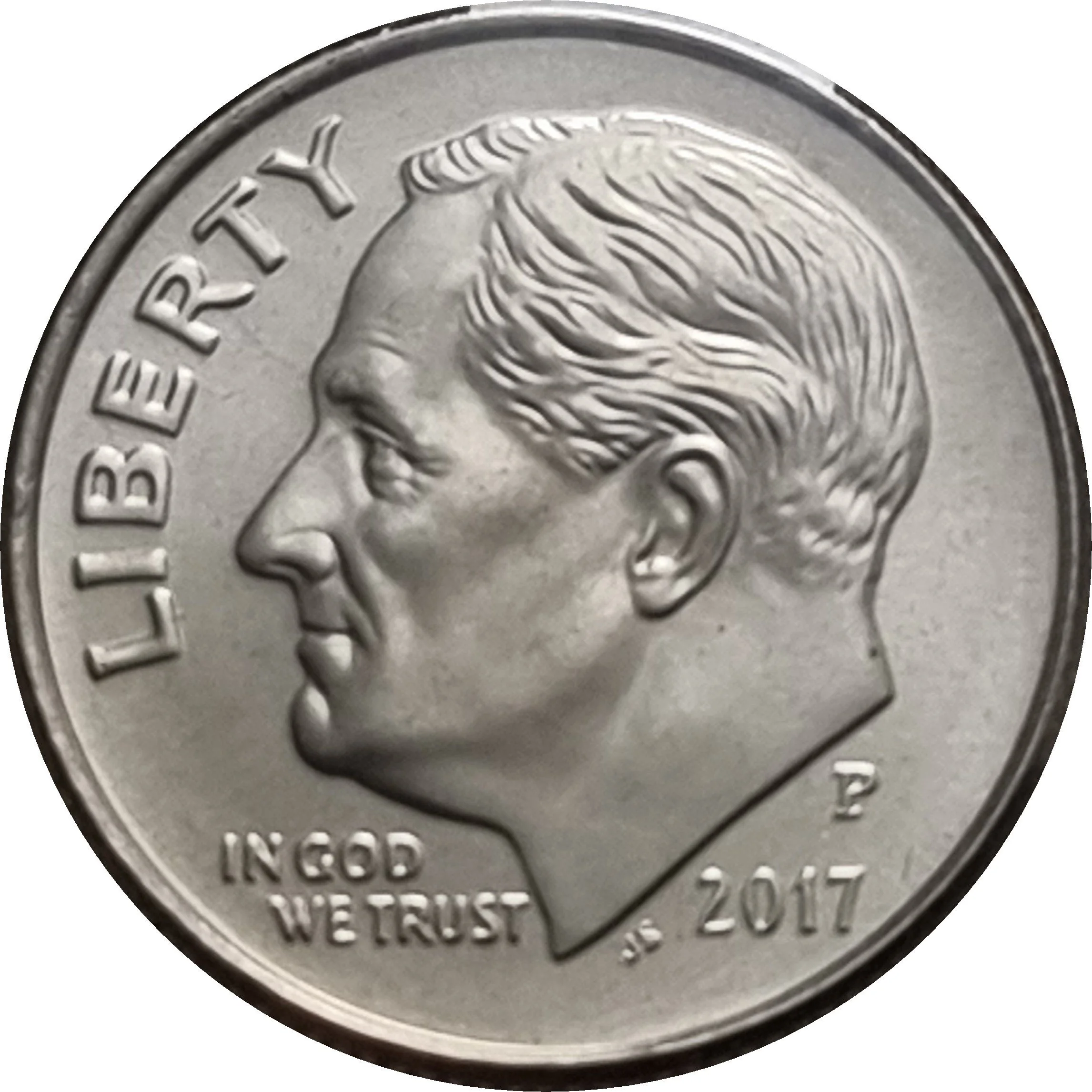
Description:
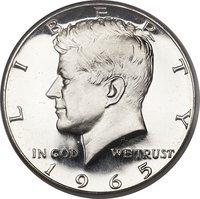
FDR facing left, with "IN GOD WE TRUST" and "LIBERTY."
Inscription:
LIBERTY
IN GOD WE TRUST
2017 P
JS
IN GOD WE TRUST
2017 P
JS
Script: Latin
Designer and engraver: John R. Sinnock
Reverse
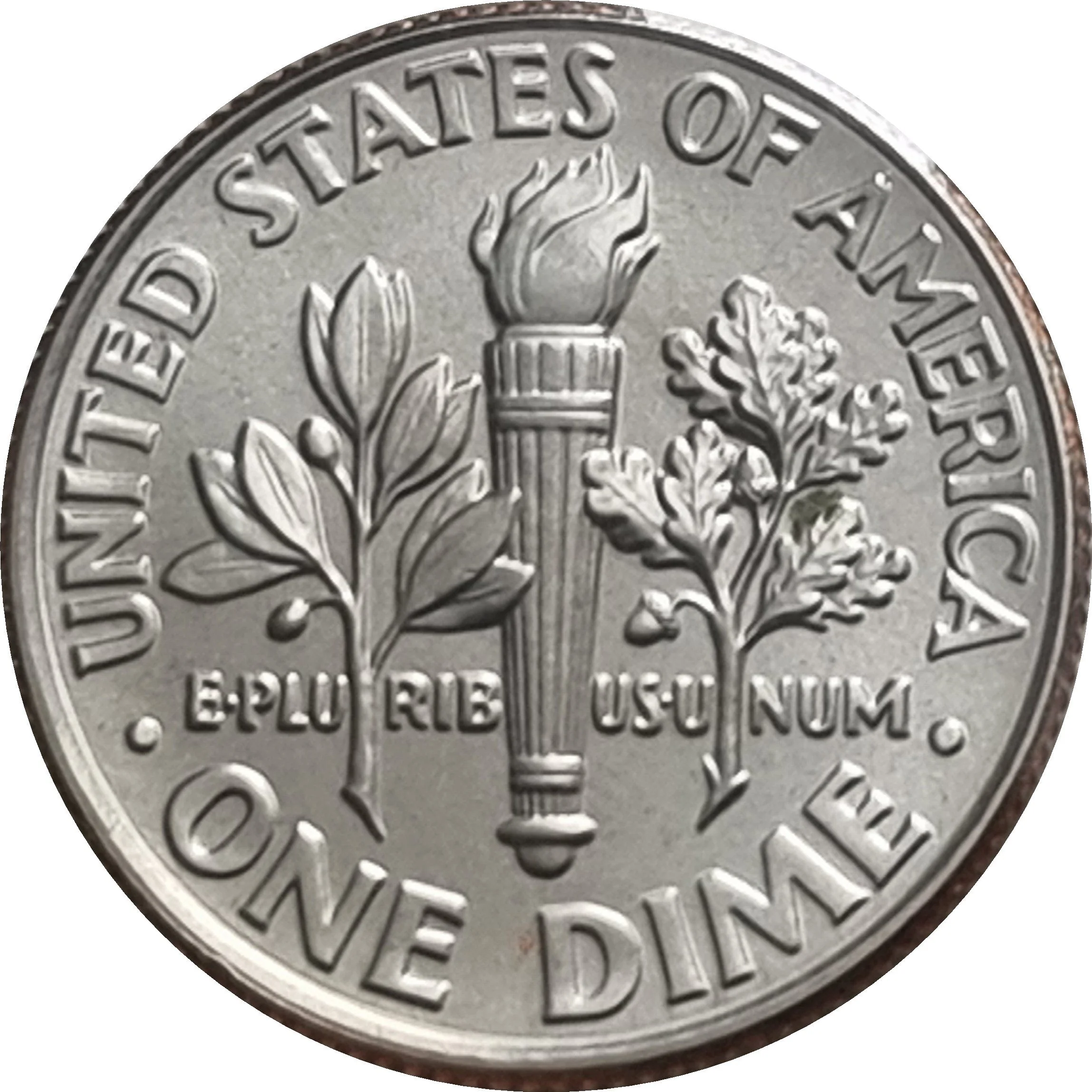
Description:
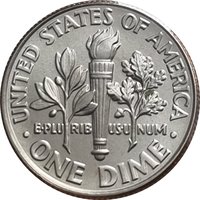
An olive branch, torch, and oak branch—symbolizing peace, liberty, and victory—frame the motto “E • PLURIBUS • UNUM” on this coin, encircled by “UNITED STATES OF AMERICA” and its face value.
Inscription:
E • PLURIBUS • UNUM
UNITED STATES OF AMERICA
• ONE DIME •
UNITED STATES OF AMERICA
• ONE DIME •
Translation:
Out of many, one
United States of America
One Dime
United States of America
One Dime
Script: Latin
Language: Latin
Designer and engraver: John R. Sinnock
Edge
Reeded (118 reeds)
Categories
| Person> Politician |
Mints
Mintings
| Year | Mint Mark | Mintage | Quality | Collection |
|---|---|---|---|---|
| 1965 | — | 2,360,000 | ||
| 1966 | — | 2,261,583 | ||
| 1967 | — | 1,863,344 | ||
| 1968 | — | 424,470,000 | ||
| 1968 | — | — | Proof | |
| 1968 | D | 480,748,280 | ||
| 1968 | S | 3,041,506 | Proof | |
| 1969 | — | 145,790,000 | ||
| 1969 | D | 563,323,870 | ||
| 1969 | S | 2,394,631 | Proof | |
| 1970 | — | 345,570,000 | ||
| 1970 | — | — | Proof | |
| 1970 | D | 754,942,100 | ||
| 1970 | S | 2,632,810 | Proof | |
| 1971 | — | 162,690,000 | ||
| 1971 | D | 377,914,240 | ||
| 1971 | S | 3,220,733 | Proof | |
| 1972 | — | 431,540,000 | ||
| 1972 | D | 330,290,000 | ||
| 1972 | S | 3,260,996 | Proof | |
| 1973 | — | 315,670,000 | ||
| 1973 | D | 455,032,426 | ||
| 1973 | S | 2,760,339 | Proof | |
| 1974 | — | 470,248,000 | ||
| 1974 | D | 571,083,000 | ||
| 1974 | S | 2,612,568 | Proof | |
| 1975 | — | 585,673,900 | ||
| 1975 | — | — | Proof | |
| 1975 | D | 313,705,300 | ||
| 1975 | S | 2,845,450 | Proof | |
| 1976 | — | 568,760,000 | ||
| 1976 | D | 695,222,774 | ||
| 1976 | S | 4,149,730 | Proof | |
| 1977 | — | 796,930,000 | ||
| 1977 | D | 376,607,228 | ||
| 1977 | S | 3,251,152 | Proof | |
| 1978 | — | 663,980,000 | ||
| 1978 | D | 282,847,540 | ||
| 1978 | S | 3,127,781 | Proof | |
| 1979 | — | 315,440,000 | ||
| 1979 | D | 390,921,184 | ||
| 1979 | S | 3,677,175 | Proof | |
| 1980 | D | 719,354,321 | ||
| 1980 | P | 735,170,000 | ||
| 1980 | S | 3,554,806 | Proof | |
| 1981 | D | 712,284,143 | ||
| 1981 | P | 676,650,000 | ||
| 1981 | S | 4,063,083 | Proof | |
| 1982 | — | — | ||
| 1982 | D | 542,713,584 | ||
| 1982 | P | 519,475,000 | ||
| 1982 | S | 3,857,479 | Proof | |
| 1983 | — | — | ||
| 1983 | D | 730,129,224 | ||
| 1983 | P | 647,025,000 | ||
| 1983 | S | 3,279,126 | Proof | |
| 1984 | D | 704,803,976 | ||
| 1984 | P | 856,669,000 | ||
| 1984 | S | 3,065,110 | Proof | |
| 1985 | D | 587,979,970 | ||
| 1985 | P | 705,200,962 | ||
| 1985 | S | 3,362,821 | Proof | |
| 1986 | D | 473,326,970 | ||
| 1986 | P | 682,649,970 | ||
| 1986 | S | 3,010,497 | Proof | |
| 1987 | D | 653,203,402 | ||
| 1987 | P | 762,709,481 | ||
| 1987 | S | 4,227,728 | Proof | |
| 1988 | D | 962,385,489 | ||
| 1988 | P | 1,030,550,000 | ||
| 1988 | S | 3,262,948 | Proof | |
| 1989 | D | 896,535,597 | ||
| 1989 | P | 1,298,400,000 | ||
| 1989 | S | 3,220,194 | Proof | |
| 1990 | D | 839,995,824 | ||
| 1990 | P | 1,034,340,000 | ||
| 1990 | S | 3,299,559 | Proof | |
| 1991 | D | 601,241,114 | ||
| 1991 | P | 927,220,000 | ||
| 1991 | S | 2,867,787 | Proof | |
| 1992 | D | 616,273,932 | ||
| 1992 | P | 593,500,000 | ||
| 1992 | S | 2,858,981 | Proof | |
| 1993 | D | 750,110,166 | ||
| 1993 | P | 766,180,000 | ||
| 1993 | S | 2,633,439 | Proof | |
| 1994 | D | 1,303,268,110 | ||
| 1994 | P | 1,189,000,000 | ||
| 1994 | S | 2,484,594 | Proof | |
| 1995 | D | 1,274,890,000 | ||
| 1995 | P | 1,125,500,000 | ||
| 1995 | S | 2,117,496 | Proof | |
| 1996 | D | 1,400,300,000 | ||
| 1996 | P | 1,421,163,000 | ||
| 1996 | S | 1,750,244 | Proof | |
| 1996 | W | 1,457,000 | ||
| 1997 | D | 979,810,000 | ||
| 1997 | P | 991,640,000 | ||
| 1997 | S | 2,055,000 | Proof | |
| 1998 | D | 1,172,250,000 | ||
| 1998 | P | 1,163,000,000 | ||
| 1998 | S | 2,086,507 | Proof | |
| 1999 | D | 1,397,750,000 | ||
| 1999 | P | 2,164,000,000 | ||
| 1999 | S | 2,543,401 | Proof | |
| 2000 | D | 1,818,700,000 | ||
| 2000 | P | 1,842,500,000 | ||
| 2000 | S | 3,082,483 | Proof | |
| 2001 | S | 2,294,043 | Proof | |
| 2001 | D | 1,412,800,000 | ||
| 2001 | P | 1,369,590,000 | ||
| 2002 | D | 1,379,500,000 | ||
| 2002 | P | 1,187,500,000 | ||
| 2002 | S | 2,319,766 | Proof | |
| 2003 | D | 986,500,000 | ||
| 2003 | P | 1,085,500,000 | ||
| 2003 | S | 2,172,684 | Proof | |
| 2004 | D | 1,159,500,000 | ||
| 2004 | P | 1,328,000,000 | ||
| 2004 | S | 1,804,396 | Proof | |
| 2005 | D | 1,423,500,000 | ||
| 2005 | P | 1,412,000,000 | ||
| 2005 | S | 2,275,000 | Proof | |
| 2006 | D | 1,447,000,000 | ||
| 2006 | P | 1,381,000,000 | ||
| 2006 | S | 2,000,428 | Proof | |
| 2007 | D | 1,012,000,000 | ||
| 2007 | P | 995,000,000 | ||
| 2007 | S | 1,384,797 | Proof | |
| 2008 | D | 745,464 | ||
| 2008 | P | 745,464 | ||
| 2008 | S | 1,405,674 | Proof | |
| 2009 | D | 49,500,000 | ||
| 2009 | P | 96,500,000 | ||
| 2009 | S | 1,482,502 | Proof | |
| 2010 | D | 562,000,000 | ||
| 2010 | P | 557,000,000 | ||
| 2010 | S | 1,103,815 | Proof | |
| 2011 | D | 754,000,000 | ||
| 2011 | P | 748,000,000 | ||
| 2011 | S | 1,098,835 | Proof | |
| 2012 | S | 794,002 | Proof | |
| 2012 | D | 539,500,000 | ||
| 2012 | P | 519,000,000 | ||
| 2013 | D | 1,025,500,000 | ||
| 2013 | P | 1,086,500,000 | ||
| 2013 | S | 854,785 | Proof | |
| 2014 | D | 1,177,000,000 | ||
| 2014 | P | 1,125,500,000 | ||
| 2014 | S | 760,876 | Proof | |
| 2015 | D | 1,543,500,000 | ||
| 2015 | P | 1,497,510,000 | ||
| 2015 | S | 711,952 | Proof | |
| 2016 | D | 1,437,000,000 | ||
| 2016 | P | 1,517,000,000 | ||
| 2016 | S | 655,171 | Proof | |
| 2017 | D | 1,290,500,000 | ||
| 2017 | P | 1,437,500,000 | ||
| 2017 | S | 621,384 | Proof | |
| 2017 | S | 225,000 | ||
| 2018 | D | 1,006,000,000 | ||
| 2018 | P | 1,193,000,000 | ||
| 2018 | S | 535,221 | Proof | |
| 2019 | D | 1,001,500,000 | ||
| 2019 | P | 1,147,500,000 | ||
| 2019 | S | 606,274 | Proof | |
| 2020 | D | 1,294,000,000 | ||
| 2020 | P | 1,247,500,000 | ||
| 2020 | S | — | Proof | |
| 2021 | D | 1,066,500,000 | ||
| 2021 | P | 987,000,000 | ||
| 2021 | S | — | Proof | |
| 2022 | D | 1,583,000,000 | ||
| 2022 | P | 1,551,000,000 | ||
| 2022 | S | — | Proof | |
| 2023 | D | 1,295,000,000 | ||
| 2023 | P | 1,410,500,000 | ||
| 2023 | S | — | Proof | |
| 2024 | D | 248,000,000 | ||
| 2024 | P | 307,000,000 | ||
| 2024 | S | — | Proof | |
| 2025 | D | — | ||
| 2025 | P | — | ||
| 2025 | S | — | Proof |
Historical background
In 1965, the United States was at a pivotal moment in its monetary history, operating under the Bretton Woods system established after World War II. This framework fixed the U.S. dollar to gold at $35 per ounce and tied other major currencies to the dollar, making it the world's primary reserve currency. Domestically, circulating currency was a mix of Silver Certificates, United States Notes, and Federal Reserve Notes, with much of the coinage still containing significant silver content. This link to precious metals, however, was becoming increasingly strained due to the growing costs of the Vietnam War and Great Society programs, which fueled inflation and a persistent balance of payments deficit.
The year itself was marked by a significant legislative response to a growing coin shortage driven by the rising market value of silver, which began to exceed the face value of coins. The Coinage Act of 1965, signed by President Lyndon B. Johnson in July, eliminated silver from the dime and quarter and reduced the silver content in the half-dollar from 90% to 40%. This act marked the end of the era of circulating silver coinage for everyday transactions, transitioning the nation to a clad coinage of copper-nickel over a copper core. The intent was to stop the hoarding and melting of coins and ensure a stable supply of currency.
Concurrently, the pressures on the dollar internationally were intensifying. Foreign governments, notably France, began to question the dollar's convertibility as U.S. gold reserves dwindled. While the full collapse of the Bretton Woods system would not occur until 1971, the conditions of 1965—domestic coinage reform and mounting external pressure on the dollar-gold link—were clear harbingers of the move away from metallic backing. Thus, 1965 stands as a year of transition, where the U.S. took concrete steps toward a fiat currency system, setting the stage for the monetary landscape of the late 20th century.
The year itself was marked by a significant legislative response to a growing coin shortage driven by the rising market value of silver, which began to exceed the face value of coins. The Coinage Act of 1965, signed by President Lyndon B. Johnson in July, eliminated silver from the dime and quarter and reduced the silver content in the half-dollar from 90% to 40%. This act marked the end of the era of circulating silver coinage for everyday transactions, transitioning the nation to a clad coinage of copper-nickel over a copper core. The intent was to stop the hoarding and melting of coins and ensure a stable supply of currency.
Concurrently, the pressures on the dollar internationally were intensifying. Foreign governments, notably France, began to question the dollar's convertibility as U.S. gold reserves dwindled. While the full collapse of the Bretton Woods system would not occur until 1971, the conditions of 1965—domestic coinage reform and mounting external pressure on the dollar-gold link—were clear harbingers of the move away from metallic backing. Thus, 1965 stands as a year of transition, where the U.S. took concrete steps toward a fiat currency system, setting the stage for the monetary landscape of the late 20th century.

🌱 Very Common