

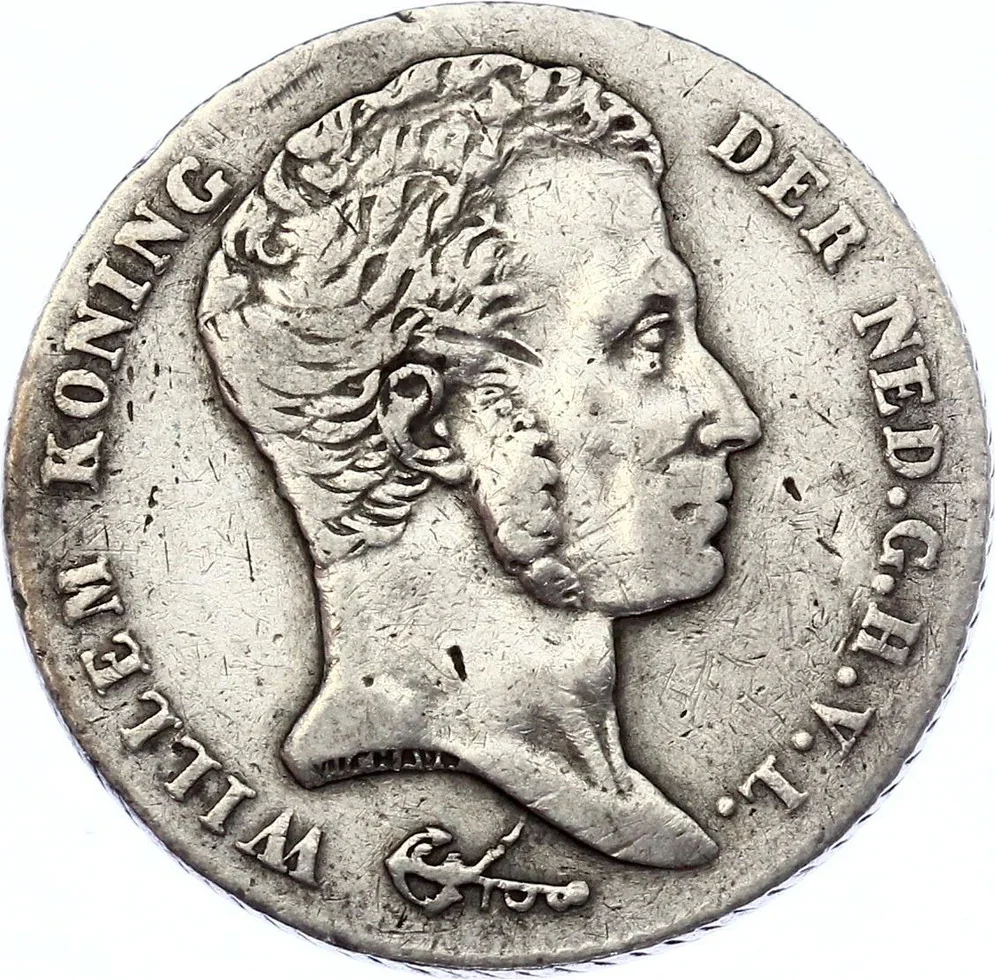
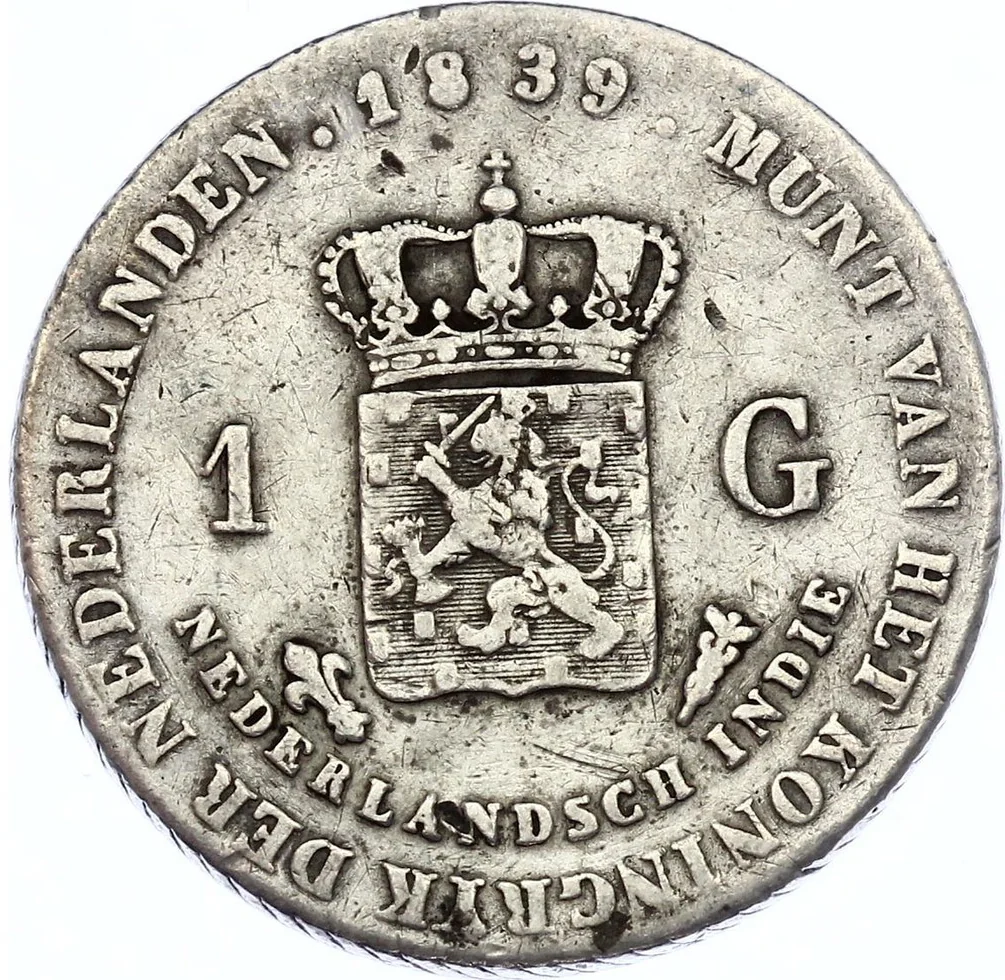
1 gulden – Netherlands East Indies
Add to wishlist
Indonesia
Context
Years: 1839–1840
Country: Indonesia
Issuer: Netherlands East Indies
Ruler: William I
Currency:
(1726—1854)
Demonetized: Yes
Total mintage: 4,198,517
Material
References
KM: #
Numista: #52512
Value
Bullion value: $24.15
Obverse
Description:
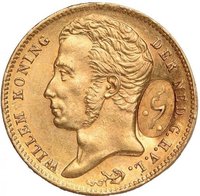
King William I facing right
Inscription:
WILLEM KONING DER NED. G.H.V.L.
Translation:
William King of the Netherlands, Grand Duke of Luxembourg
Script: Latin
Language: Dutch
Engraver: Auguste-François Michaut
Reverse
Edge
Reeding slanted left
Categories
| Symbol> Anchor |
| Symbols> Coat of Arms |
Mints
| Name | Mark |
|---|---|
| Royal Dutch Mint | — |
Mintings
| Year | Mint Mark | Mintage | Quality | Collection |
|---|---|---|---|---|
| 1839 | — | 2,217,250 | ||
| 1840 | — | 1,981,267 |
Historical background
In 1839, the currency system of the Netherlands East Indies (NEI) was a complex and problematic dual system, caught between the inherited past and the demands of a growing colonial export economy. The official currency was the Netherlands Indies gulden, issued by the Java Bank (established in 1828). However, it circulated alongside a vast and chaotic array of physical Spanish American silver dollars (mainly Mexican pesos) and their fractional coins, which were legally accepted at officially set rates. This created a de facto bimetallic system where the value of silver coinage against the paper gulden could fluctuate, leading to instability.
The core issue was a severe shortage of reliable small-change currency for daily transactions, which was exacerbated by the "cultivation system" (cultuurstelsel) implemented in 1830. This system, which forced farmers to dedicate land to cash crops like coffee and sugar for the colonial government, monetized the rural economy and increased the demand for coinage. The gap was filled by a flood of often debased and worn foreign silver and copper coins, leading to confusion, counterfeiting, and localised exchange rate disparities that hampered commerce.
Consequently, the colonial administration was under increasing pressure to rationalise the monetary system. The year 1839 fell within a period of intense debate and gradual transition toward a unified, silver-based standard fully controlled by the Java Bank. This effort would culminate in the Currency Act of 1854, which finally demonetised the foreign silver and established the silver NEI gulden as the sole legal tender, laying the foundation for a more modern and stable colonial currency system.
The core issue was a severe shortage of reliable small-change currency for daily transactions, which was exacerbated by the "cultivation system" (cultuurstelsel) implemented in 1830. This system, which forced farmers to dedicate land to cash crops like coffee and sugar for the colonial government, monetized the rural economy and increased the demand for coinage. The gap was filled by a flood of often debased and worn foreign silver and copper coins, leading to confusion, counterfeiting, and localised exchange rate disparities that hampered commerce.
Consequently, the colonial administration was under increasing pressure to rationalise the monetary system. The year 1839 fell within a period of intense debate and gradual transition toward a unified, silver-based standard fully controlled by the Java Bank. This effort would culminate in the Currency Act of 1854, which finally demonetised the foreign silver and established the silver NEI gulden as the sole legal tender, laying the foundation for a more modern and stable colonial currency system.
⭐ Rare