

10 gulden – Netherlands East Indies
Add to wishlist
Indonesia
Context
Year: 1840
Country: Indonesia
Issuer: Netherlands East Indies
Ruler: William I
Currency:
(1726—1854)
Demonetized: Yes
Material
Diameter: 22.5 mm
Weight: 6.72 g
Gold Weight:: 6.05 g
Shape: Round
Composition: 90% Gold
Magnetic: No
Technique: Countermarked
Alignment: Coin alignment
flip
References
Numista: #308930
Value
Bullion value: $929.15
Obverse
Description:
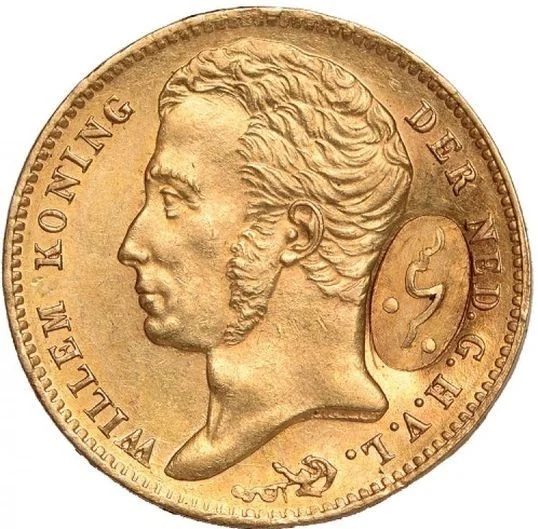
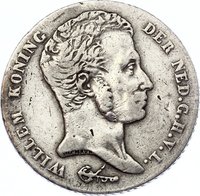
Bust left, Arabic countermark "Banjar."
Inscription:
WILLEM KONING DER NED G H V L
Engraver: Auguste-François Michaut
Reverse
Description:
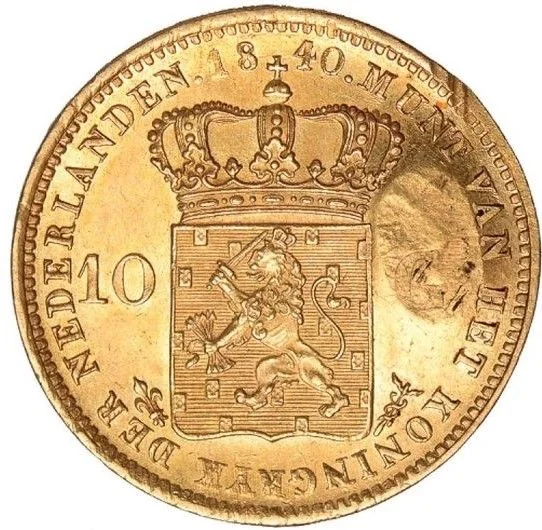
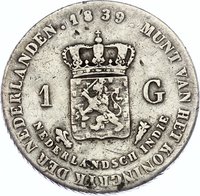
Arms with crown, value, and date.
Inscription:
1840
MUNT VAN HET KONINGRYK DER NEDERLANDEN
10 G
MUNT VAN HET KONINGRYK DER NEDERLANDEN
10 G
Script: Latin
Engraver: Auguste-François Michaut
Edge
Mints
| Name | Mark |
|---|---|
| Royal Dutch Mint | — |
Mintings
| Year | Mint Mark | Mintage | Quality | Collection |
|---|---|---|---|---|
| 1840 | — | — |
Historical background
In the 1840s, the currency system of the Netherlands East Indies (NEI) was a complex and often chaotic bimetallic system, officially based on the Dutch guilder but heavily influenced by the global silver market and local practices. The legal standard was the silver gulden (guilder), with copper duit and stuiver coins for small change, and gold dukaton coins also in circulation. However, the fixed official ratio between silver and gold did not match the shifting market rates, leading to the frequent disappearance of undervalued coins from circulation—a classic example of Gresham's Law. This scarcity of small coinage, essential for daily wages and market trade, caused significant practical hardship for the Javanese population and hampered local commerce.
This monetary instability was exacerbated by the colony's adoption of the cultuurstelsel (Cultivation System) in 1830, which was in full operation by the 1840s. This forced cultivation system required peasants to use village land to grow lucrative export crops like coffee and sugar for the Dutch government. Taxes and payments to cultivators were handled in this unreliable currency, often leading to exploitation and deepening the system's oppressive nature. Furthermore, a substantial portion of the world's silver production was flowing from the NEI to Europe as profit from this system, ironically draining the very metal that underpinned the colony's own official currency.
Consequently, the 1840s were a decade of transition and mounting pressure for reform. The government attempted to manage the shortage by importing and minting vast quantities of copper duiten, but these were often of poor quality and easily counterfeited, further eroding public trust. The chronic disorder and its negative impact on the colonial economy ultimately led to the landmark Currency Act of 1854, which would finally demonetize gold and establish a stable silver standard. Thus, the 1840s can be seen as the turbulent final chapter of an unsustainable bimetallic system, directly shaped by the extractive colonial policies of the cultuurstelsel.
This monetary instability was exacerbated by the colony's adoption of the cultuurstelsel (Cultivation System) in 1830, which was in full operation by the 1840s. This forced cultivation system required peasants to use village land to grow lucrative export crops like coffee and sugar for the Dutch government. Taxes and payments to cultivators were handled in this unreliable currency, often leading to exploitation and deepening the system's oppressive nature. Furthermore, a substantial portion of the world's silver production was flowing from the NEI to Europe as profit from this system, ironically draining the very metal that underpinned the colony's own official currency.
Consequently, the 1840s were a decade of transition and mounting pressure for reform. The government attempted to manage the shortage by importing and minting vast quantities of copper duiten, but these were often of poor quality and easily counterfeited, further eroding public trust. The chronic disorder and its negative impact on the colonial economy ultimately led to the landmark Currency Act of 1854, which would finally demonetize gold and establish a stable silver standard. Thus, the 1840s can be seen as the turbulent final chapter of an unsustainable bimetallic system, directly shaped by the extractive colonial policies of the cultuurstelsel.

✨ Legendary