

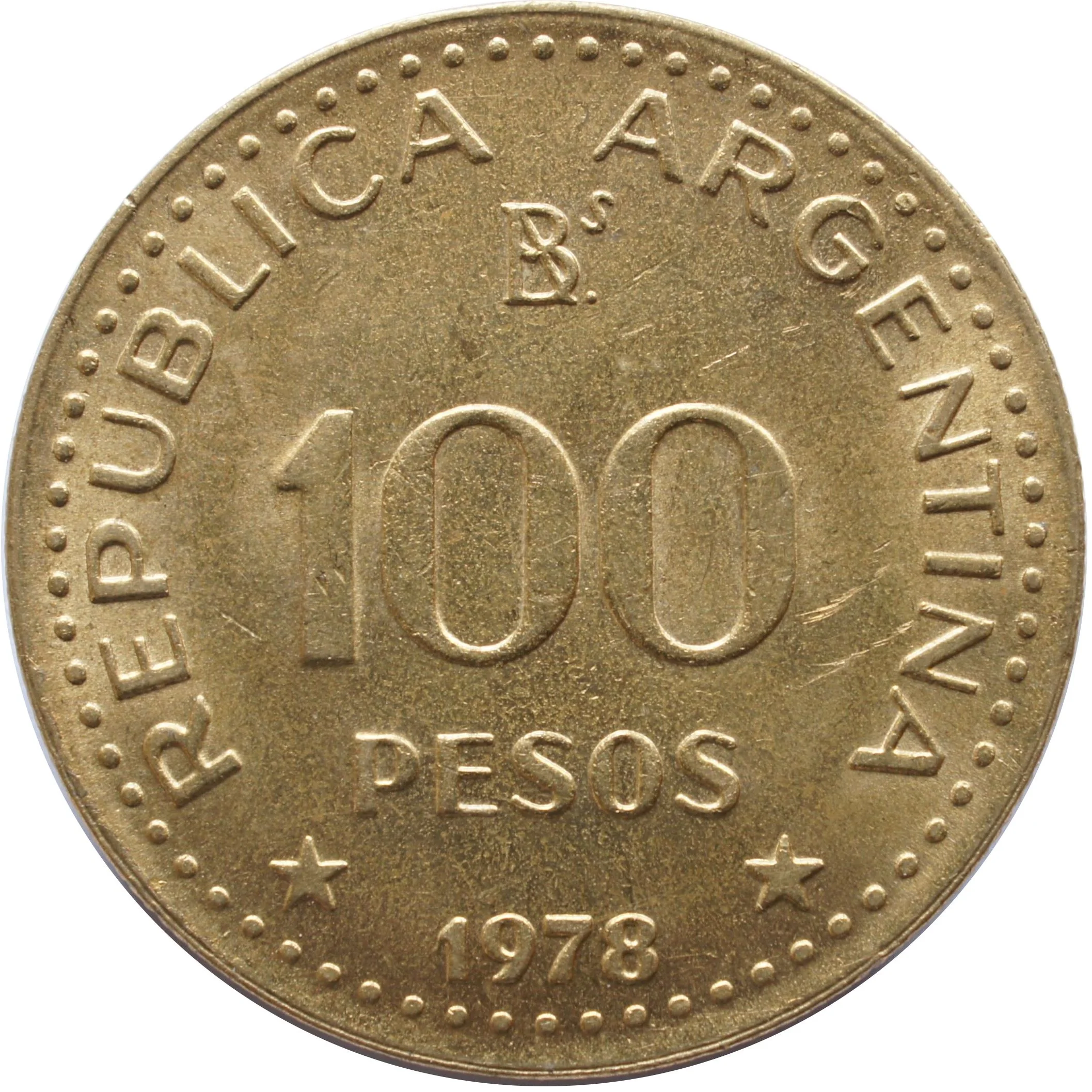
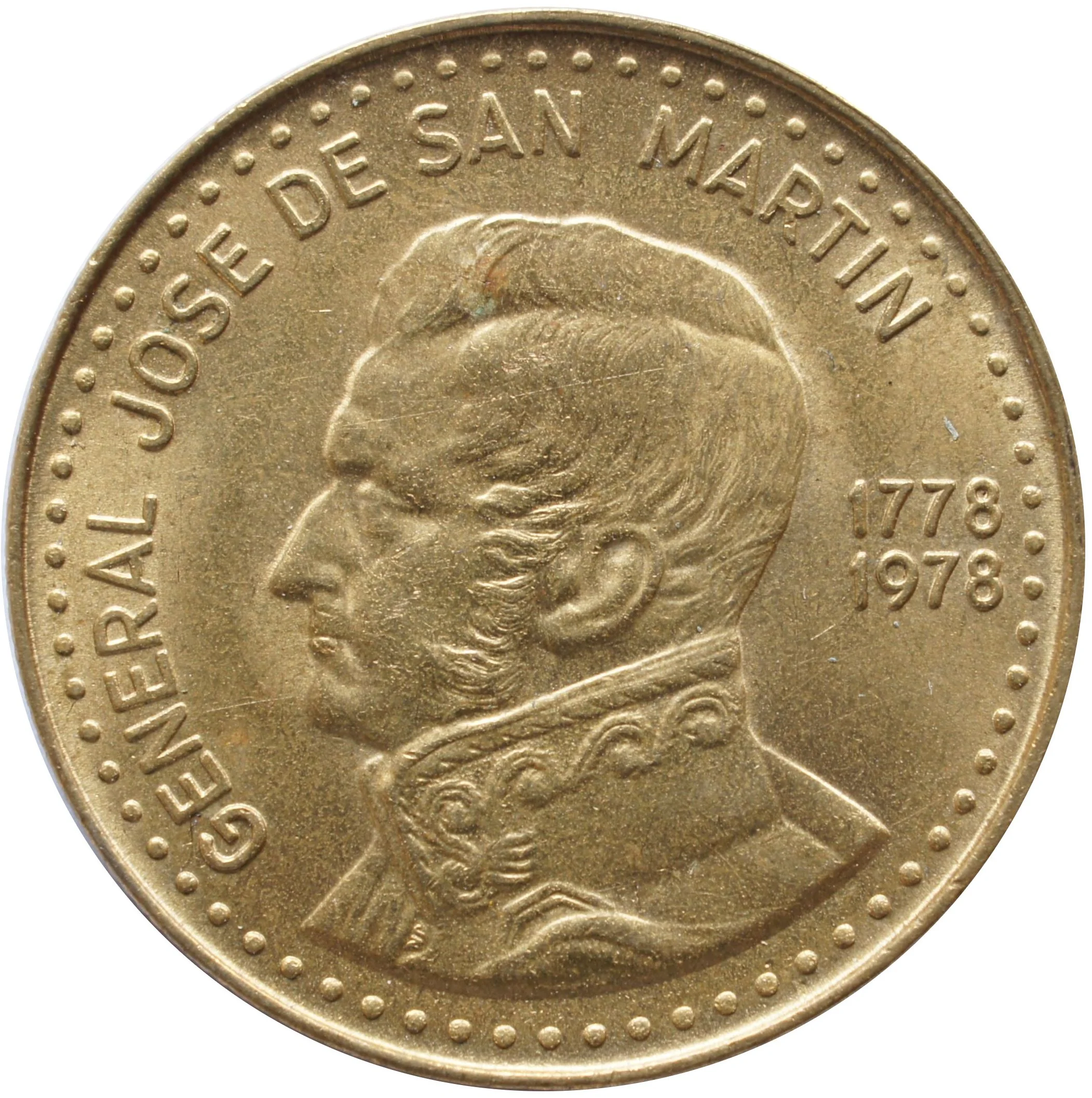
100 pesos (Jose de San Martín) – Argentina
Add to wishlist
Circulating commemorative coins
Commemoration: 200th Anniversary of Jose de San Martín's birth
Argentina
Context
Years: 1978–1979
Issuer: Argentina
Period:
(since 1861)
Currency:
(1970—1983)
Demonetization: 30 March 1984
Total mintage: 113,826,499
Material
References
KM: #
Numista: #5234
Value
Exchange value: 100 ARL
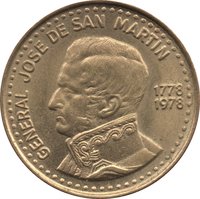
Obverse
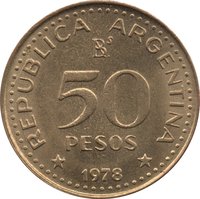
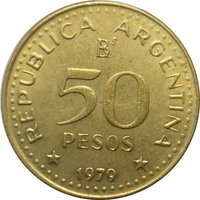
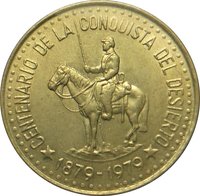
Reverse
Description:
Armored bust of San Martín, left profile.
Inscription:
GENERAL JOSE DE SAN MARTIN
1778 1978
1778 1978
Script: Latin
Edge
Milled
Categories
| Event> Birth anniversary |
| Person> Military leader |
| Person> Politician |
Mints
| Name | Mark |
|---|---|
| Buenos Aires | BAˢ |
Historical background
In 1978, Argentina was under the rule of a military junta, which had seized power in 1976. The economic policy, led by Minister José Alfredo Martínez de Hoz, was characterized by a radical and contradictory approach known as the "Tablita" (Tablita Cambiaria). This was a pre-announced, gradual devaluation schedule for the Argentine peso against the US dollar, intended to curb rampant inflation by managing expectations and attracting foreign capital. The policy created an artificially strong and overvalued peso, which initially generated a sense of stability and a consumption boom, particularly in imported goods.
However, this overvaluation created severe distortions. Argentine exports became prohibitively expensive on the world market, damaging the agricultural and industrial sectors, while cheap imports flooded the country, further hurting local industry. The growing trade deficit was financed by massive foreign borrowing, leading to a rapid increase in the country's external debt. Crucially, the pre-announced devaluation rate was far slower than the actual domestic inflation rate, creating a large and growing gap between the official exchange rate and the underlying economic reality.
This unsustainable situation culminated in a profound crisis. By late 1978, the overvaluation was evident, leading to massive capital flight as investors lost confidence. The government was forced to spend dwindling foreign reserves in a futile attempt to defend the Tablita. The policy ultimately collapsed in early 1981, precipitating a massive devaluation, a banking crisis, and a default on the external debt. The currency regime of 1978 thus set the stage for the devastating economic turmoil of the early 1980s in Argentina.
However, this overvaluation created severe distortions. Argentine exports became prohibitively expensive on the world market, damaging the agricultural and industrial sectors, while cheap imports flooded the country, further hurting local industry. The growing trade deficit was financed by massive foreign borrowing, leading to a rapid increase in the country's external debt. Crucially, the pre-announced devaluation rate was far slower than the actual domestic inflation rate, creating a large and growing gap between the official exchange rate and the underlying economic reality.
This unsustainable situation culminated in a profound crisis. By late 1978, the overvaluation was evident, leading to massive capital flight as investors lost confidence. The government was forced to spend dwindling foreign reserves in a futile attempt to defend the Tablita. The policy ultimately collapsed in early 1981, precipitating a massive devaluation, a banking crisis, and a default on the external debt. The currency regime of 1978 thus set the stage for the devastating economic turmoil of the early 1980s in Argentina.
🌱 Very Common