

1 peso – Argentina
Add to wishlist
Argentina
Context
Years: 1974–1976
Issuer: Argentina
Period:
(since 1861)
Currency:
(1970—1983)
Demonetization: 30 March 1984
Total mintage: 600,367,659
Material
Diameter: 22 mm
Weight: 5 g
Thickness: 2 mm
Shape: Round
Composition: Aluminium bronze
Magnetic: No
Technique: Milled
Alignment: Coin alignment
flip
References
KM: #
Numista: #5227
Value
Exchange value: 1 ARL
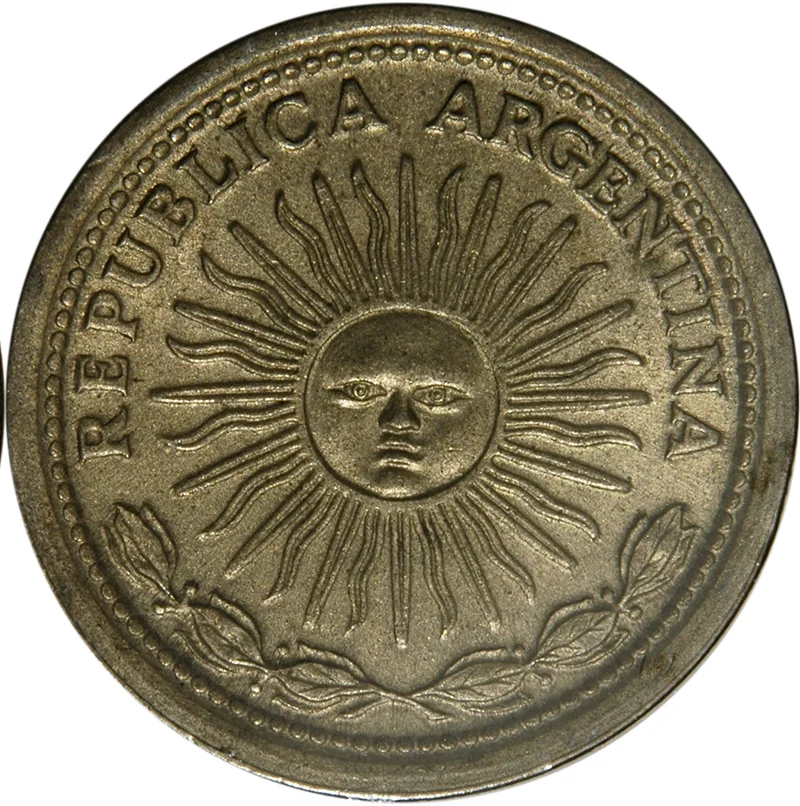
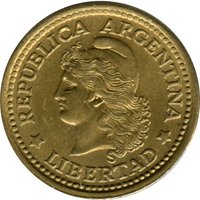
Obverse
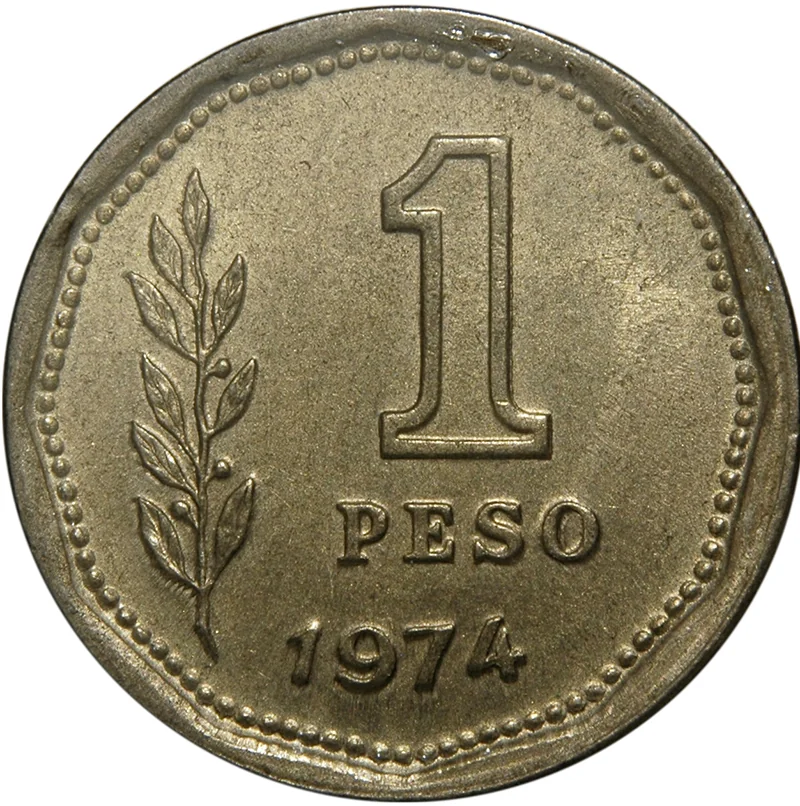
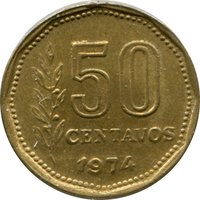
Reverse
Edge
Reeded
Mints
| Name | Mark |
|---|---|
| Buenos Aires | — |
| Casa de Moneda de Chile | — |
Mintings
| Year | Mint Mark | Mintage | Quality | Collection |
|---|---|---|---|---|
| 1974 | — | 77,292,377 | ||
| 1975 | — | 423,000,000 | ||
| 1976 | — | 100,075,282 |
Historical background
Argentina in 1974 stood at a precipice, marking the end of a fleeting period of economic stability and the violent return of the inflationary crises that would define the country for decades. The Peronist government, led by President Juan Perón until his death in July and then by his wife and vice president, Isabel Martínez de Perón, inherited an economy already under strain. The 1973 "Social Pact" between the government, unions, and businesses had initially tamed hyperinflation by freezing prices and wages, and a new currency, the Peso Ley (replacing the Peso Moneda Nacional at a rate of 1:100), was introduced to signal a fresh start. However, this stability was artificial and crumbling under massive fiscal deficits, rampant public sector spending, and a global oil shock.
The currency situation deteriorated rapidly as the government financed its expenditures by printing money, directly fueling inflation. The fixed exchange rate and price controls became unsustainable, creating severe distortions, black markets for dollars, and shortages of goods. By year's end, the annual inflation rate surged past 40%, eroding purchasing power and shattering the Social Pact. Wage demands escalated in a desperate chase against prices, leading to a vicious cycle of devaluations and further money creation.
This monetary chaos unfolded within a context of intense political violence and instability, which destroyed any possibility of coherent economic policy. The regime, lacking Perón's authority, resorted to even more populist measures and money printing to maintain a fragile social peace. The failure to control the currency in 1974 set the stage for the complete economic collapse that would follow in 1975, including a massive devaluation and an inflation rate that would exceed 300%, plunging Argentina into one of its deepest crises and paving the way for the 1976 military coup.
The currency situation deteriorated rapidly as the government financed its expenditures by printing money, directly fueling inflation. The fixed exchange rate and price controls became unsustainable, creating severe distortions, black markets for dollars, and shortages of goods. By year's end, the annual inflation rate surged past 40%, eroding purchasing power and shattering the Social Pact. Wage demands escalated in a desperate chase against prices, leading to a vicious cycle of devaluations and further money creation.
This monetary chaos unfolded within a context of intense political violence and instability, which destroyed any possibility of coherent economic policy. The regime, lacking Perón's authority, resorted to even more populist measures and money printing to maintain a fragile social peace. The failure to control the currency in 1974 set the stage for the complete economic collapse that would follow in 1975, including a massive devaluation and an inflation rate that would exceed 300%, plunging Argentina into one of its deepest crises and paving the way for the 1976 military coup.
🌱 Very Common