

2 Centavos – Argentina
Argentina
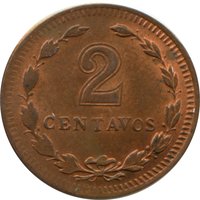
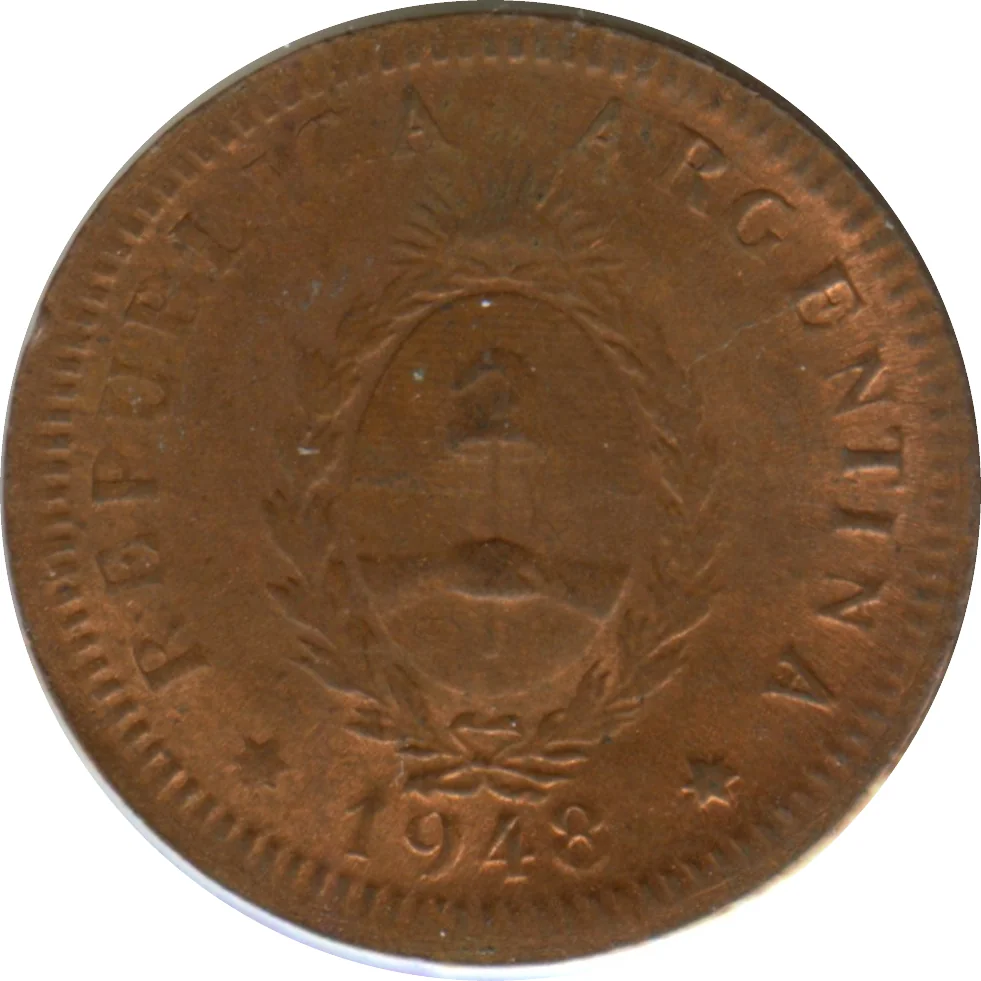
Obverse
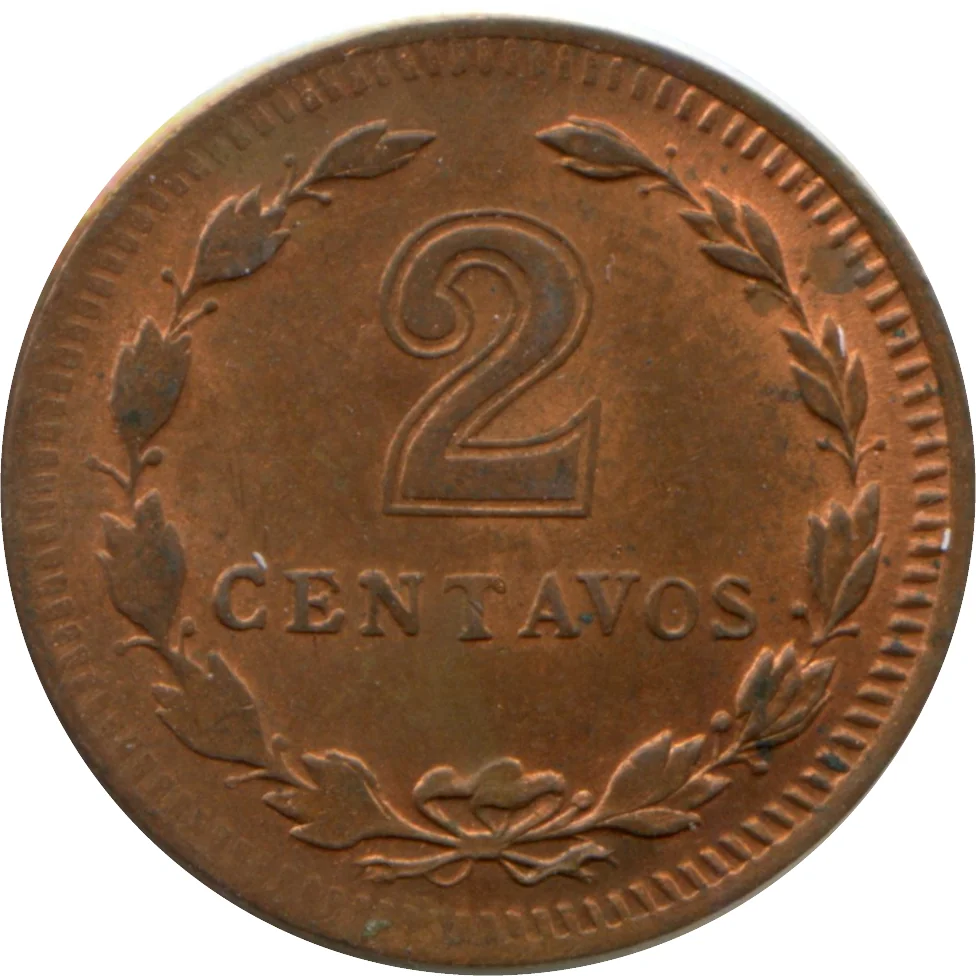
Reverse
Edge
Plain
Categories
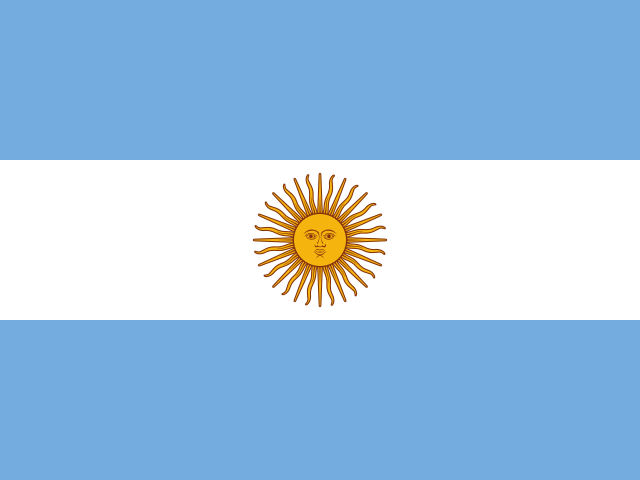
| Symbol> Sun |
| Symbols> Coat of Arms |
| Symbol> Phrygian cap |
Mintings
| Year | Mint Mark | Mintage | Quality | Collection |
|---|---|---|---|---|
| 1947 | — | — | ||
| 1948 | — | 3,645,000 | ||
| 1949 | — | 7,290,000 | ||
| 1950 | — | 903,070 |
Historical background
Argentina's currency situation in 1947 was defined by the early economic policies of President Juan Domingo Perón, who had taken office in 1946. The period was marked by a transition from the substantial foreign exchange reserves and trade surpluses accumulated during World War II to a state of increasing strain. Perón's government pursued a policy of economic nationalism and industrialization, financed by these reserves, to fund massive public works, nationalize key industries (like the Central Bank and railways), and expand social programs. This heavy spending, combined with a decline in agricultural export earnings as European markets recovered, began to put significant pressure on the peso and the country's gold and foreign currency holdings.
The government maintained a system of multiple exchange rates, a tool used to control the flow of currency and subsidize specific sectors. Essential imports for industrialization were granted a favorable, overvalued official rate, while other transactions faced less favorable rates. This created distortions, encouraged a black market for dollars (mercado negro), and effectively taxed the powerful agricultural export sector by giving them fewer pesos for their dollar earnings. While price and exchange controls were enforced to contain inflation, the underlying fiscal imbalances—funded by Central Bank credit—were laying the groundwork for persistent inflationary pressures that would escalate in the coming years.
In summary, 1947 represents a pivotal moment where the Peronist economic model was in full implementation but beginning to show its structural weaknesses. The currency regime was tightly controlled to serve political and industrial goals, masking the depletion of wartime reserves and the growing disequilibrium between domestic consumption and export-led income. This set the stage for the chronic balance of payments crises, spiraling inflation, and currency devaluations that would plague the Argentine economy in the subsequent decades.
The government maintained a system of multiple exchange rates, a tool used to control the flow of currency and subsidize specific sectors. Essential imports for industrialization were granted a favorable, overvalued official rate, while other transactions faced less favorable rates. This created distortions, encouraged a black market for dollars (mercado negro), and effectively taxed the powerful agricultural export sector by giving them fewer pesos for their dollar earnings. While price and exchange controls were enforced to contain inflation, the underlying fiscal imbalances—funded by Central Bank credit—were laying the groundwork for persistent inflationary pressures that would escalate in the coming years.
In summary, 1947 represents a pivotal moment where the Peronist economic model was in full implementation but beginning to show its structural weaknesses. The currency regime was tightly controlled to serve political and industrial goals, masking the depletion of wartime reserves and the growing disequilibrium between domestic consumption and export-led income. This set the stage for the chronic balance of payments crises, spiraling inflation, and currency devaluations that would plague the Argentine economy in the subsequent decades.


🌱 Common