

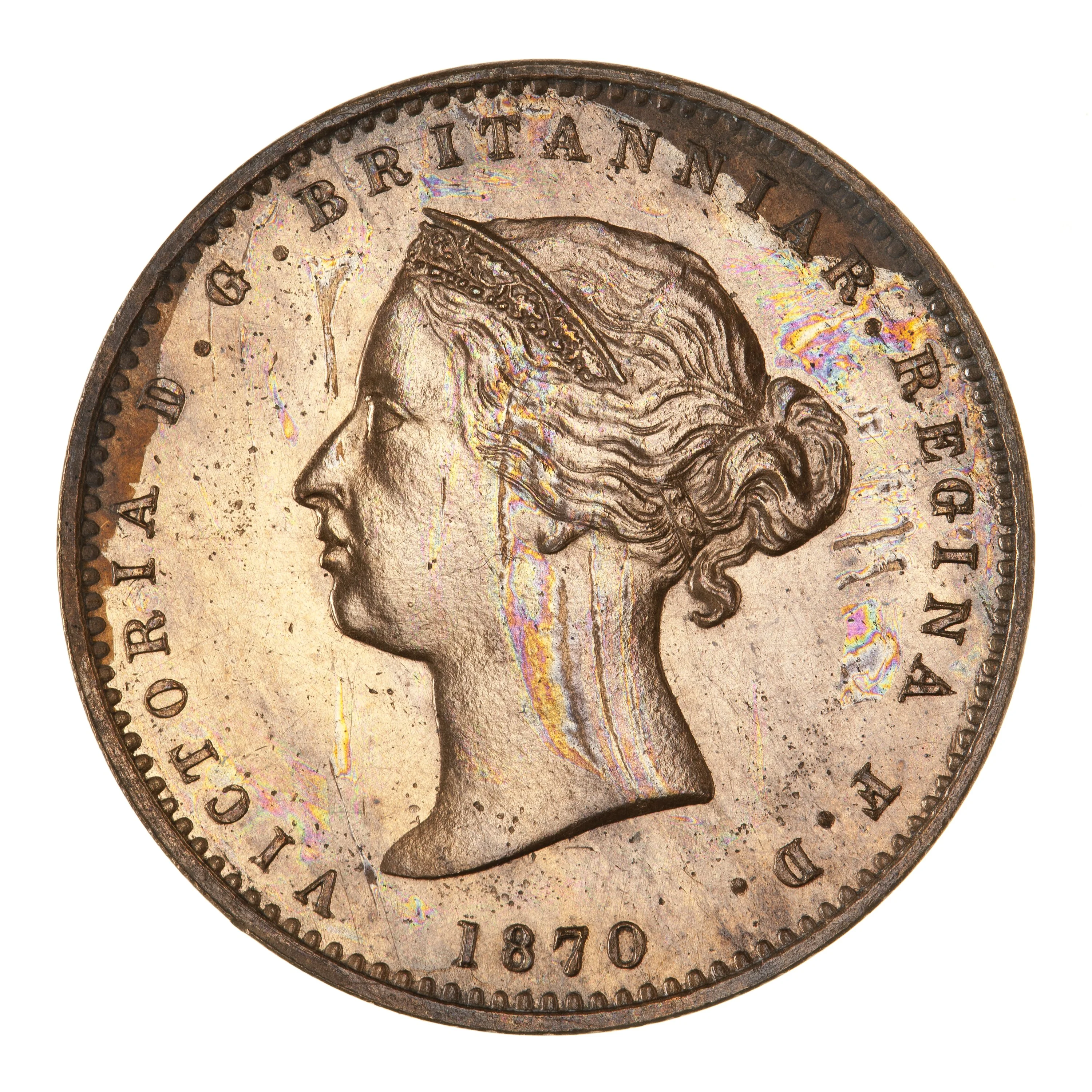
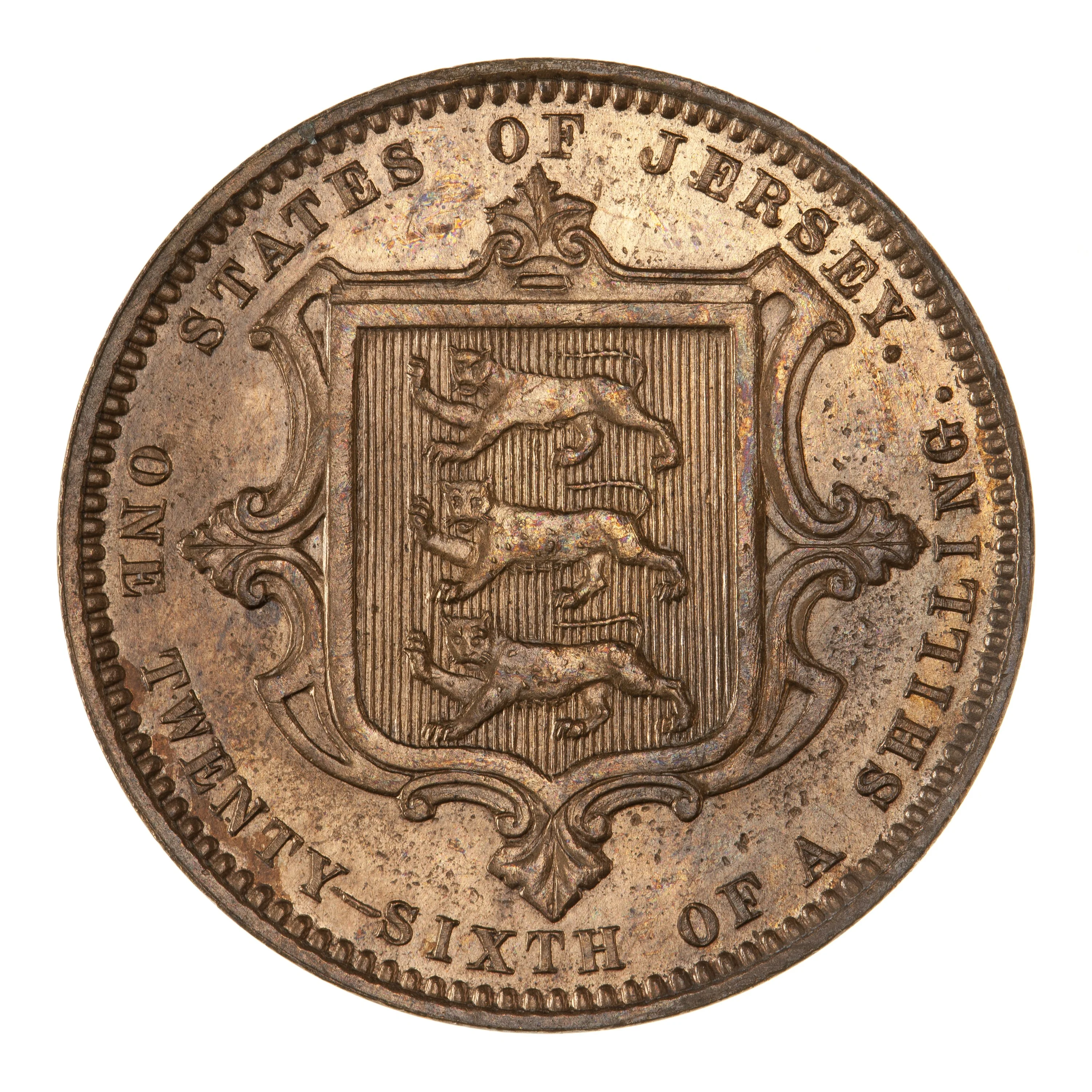
1⁄26 Shilling – Jersey
Context
Years: 1866–1871
Country: British Crown dependencies
Issuer: Jersey 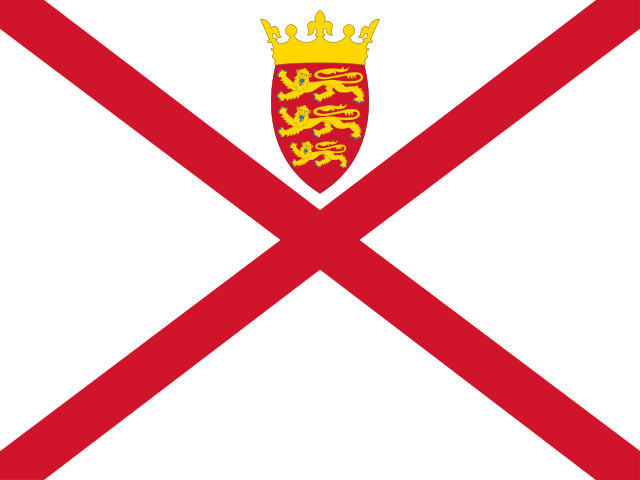
Ruler: Victoria
Currency:
(1813—1971)
Demonetization: 31 December 1876
Total mintage: 493,333
Material
References
KM: #Click to copy to clipboard4
Numista: #5219
Obverse
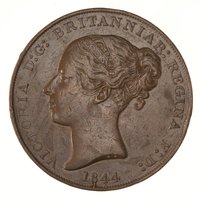
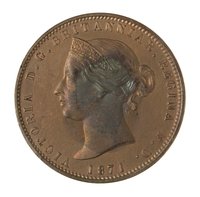
Description:
King left, date below.
Inscription:
VICTORIA D.G. BRITANNIAR.REGINA F.D.
1871
1871
Script: Latin
Engraver: Leonard Charles Wyon
Reverse
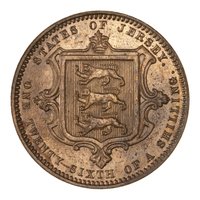
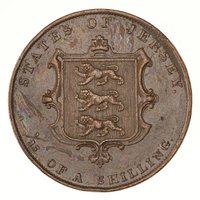
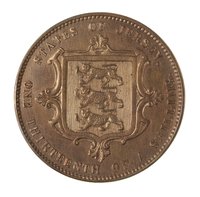
Description:
Ornate shield, country name above, denomination in words below.
Inscription:
STATES OF JERSEY.
ONE TWENTY SIXTH OF A SHILLING.
ONE TWENTY SIXTH OF A SHILLING.
Script: Latin
Edge
Plain
Categories
| Symbols> Coat of Arms |
Mints
| Name | Mark |
|---|---|
| Royal Mint (Tower Hill) | — |
Mintings
| Year | Mint Mark | Mintage | Quality | Collection |
|---|---|---|---|---|
| 1866 | — | — | Proof | |
| 1866 | — | 173,333 | ||
| 1870 | — | 160,000 | ||
| 1870 | — | — | Proof | |
| 1871 | — | 160,000 | ||
| 1871 | — | — | Proof |
Historical background
In 1866, the Channel Island of Jersey operated within a complex and often problematic dual-currency system, a legacy of its historical ties to both England and France. The official currency was British sterling, consisting of gold sovereigns, silver shillings, and copper pennies. However, the French franc, particularly in the form of silver coins like 5-franc pieces, circulated widely and was legally accepted for daily transactions. This created a fluctuating exchange rate, typically around 25.22 French francs to the British pound, which caused confusion, inconvenience, and opportunities for arbitrage, especially for merchants and in the thriving export trade.
The situation was further complicated by a chronic shortage of British small change on the island. To fill this void, a proliferation of low-denomination French copper coins (centimes) and private token coinage issued by local merchants and parishes were used for everyday purchases. This makeshift system was inefficient and open to abuse, as the value and authenticity of these tokens were not always reliable. The States of Jersey, the island's government, had long been aware of these monetary difficulties, which hampered commerce and created administrative headaches.
The year 1866 itself was not marked by a single event but represented a critical juncture of growing pressure for reform. The British Coinage Act of 1866, which demonetised foreign silver coins in the UK, did not automatically apply to Jersey but highlighted the need for the island to clarify its own position. This external catalyst, combined with decades of internal frustration, galvanised the States Assembly. Consequently, 1866 set the stage for the decisive legislation that would follow in 1870, which demonetised the French currency and authorised the first States of Jersey issue of a dedicated, decimalised coinage, finally resolving the long-standing currency chaos.
The situation was further complicated by a chronic shortage of British small change on the island. To fill this void, a proliferation of low-denomination French copper coins (centimes) and private token coinage issued by local merchants and parishes were used for everyday purchases. This makeshift system was inefficient and open to abuse, as the value and authenticity of these tokens were not always reliable. The States of Jersey, the island's government, had long been aware of these monetary difficulties, which hampered commerce and created administrative headaches.
The year 1866 itself was not marked by a single event but represented a critical juncture of growing pressure for reform. The British Coinage Act of 1866, which demonetised foreign silver coins in the UK, did not automatically apply to Jersey but highlighted the need for the island to clarify its own position. This external catalyst, combined with decades of internal frustration, galvanised the States Assembly. Consequently, 1866 set the stage for the decisive legislation that would follow in 1870, which demonetised the French currency and authorised the first States of Jersey issue of a dedicated, decimalised coinage, finally resolving the long-standing currency chaos.
🌱 Common