

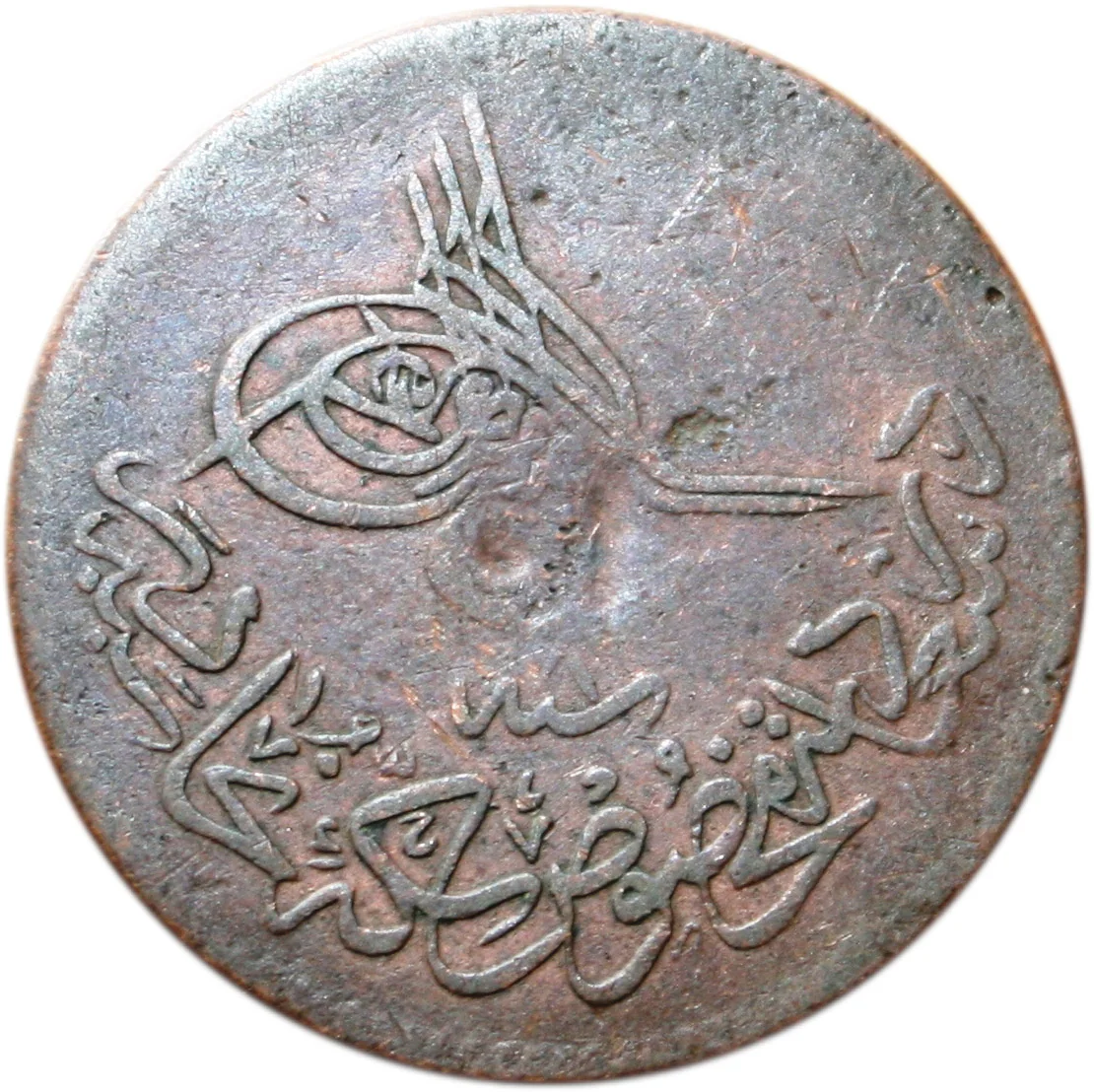
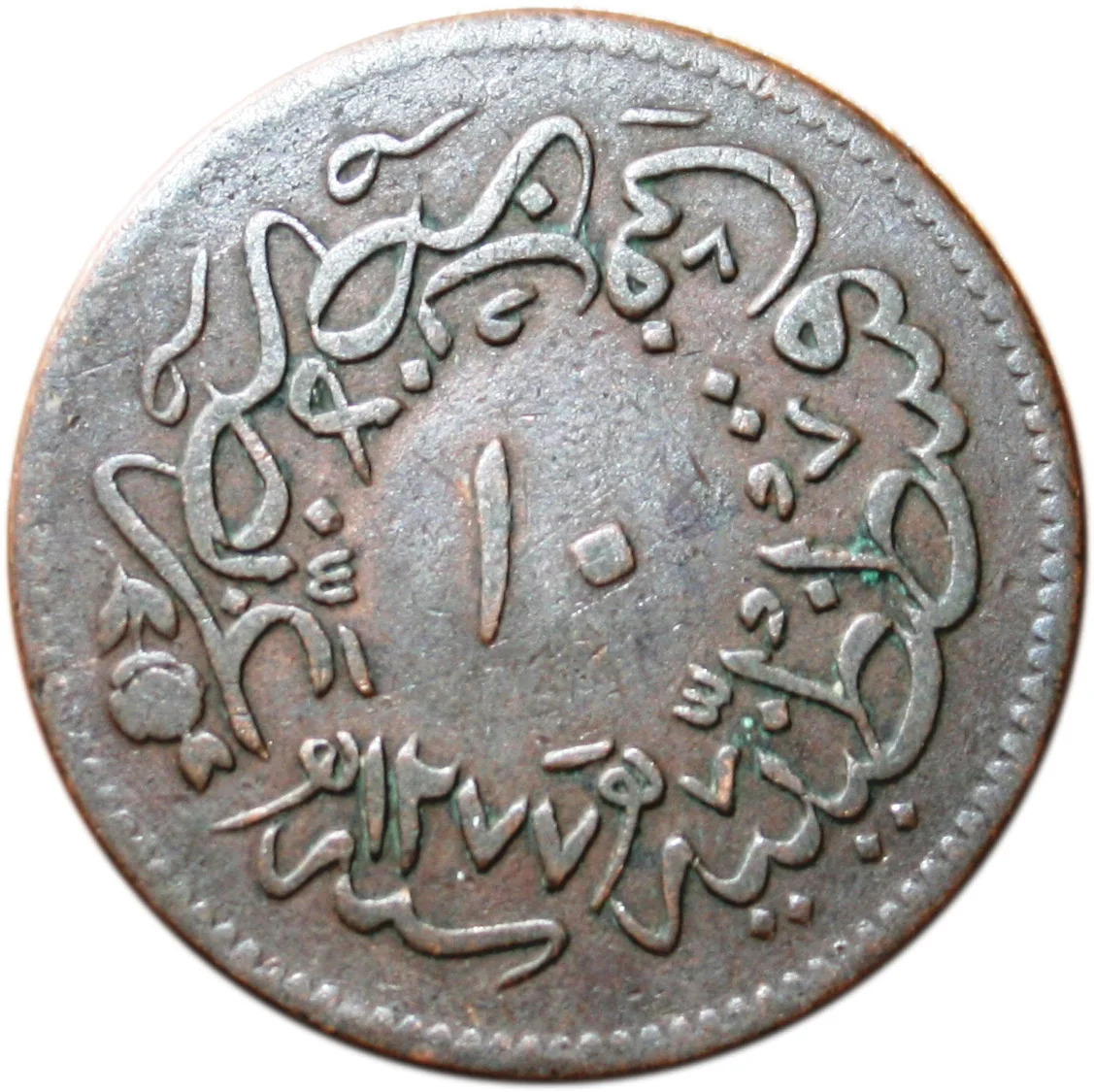
10 para – Ottoman Empire
Add to wishlist
Turkey
Context
Year: 1861
Islamic (Hijri) Year:: 1277
Country: Turkey
Issuer: Ottoman Empire
Ruler: Abdülaziz
Currency:
(1844—1923)
Demonetized: Yes
Material
References
KM: #
Numista: #15177
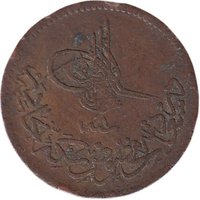
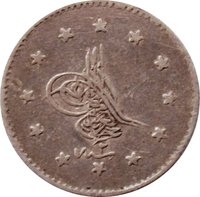
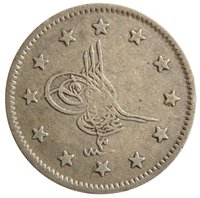
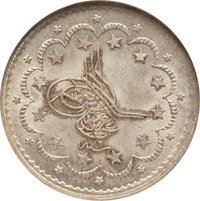
Obverse
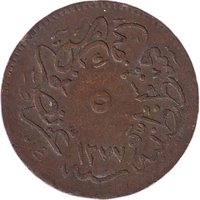
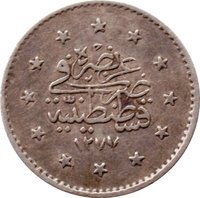
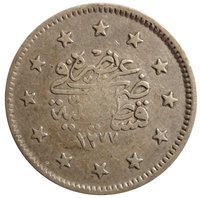
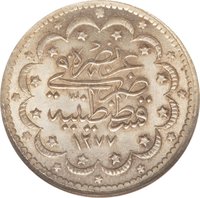
Reverse
Edge
Plain
Mints
| Name | Mark |
|---|---|
| Constantinople | — |
Mintings
| Year | Mint Mark | Mintage | Quality | Collection |
|---|---|---|---|---|
| 1861 | — | — | ||
| 1861 | ١ | — |
Historical background
By 1861, the Ottoman Empire’s currency system was in a state of profound crisis, characterized by severe depreciation and rampant inflation. The primary unit, the kuruş (piastre), had been drastically debased over decades, with its silver content reduced by nearly 90% since the 1820s to finance state deficits, costly wars, and modernization efforts. This led to a chaotic dual-currency reality: the heavily depreciated kaime, a paper currency first issued in the 1840s, circulated alongside the debased silver coinage, causing widespread public mistrust and economic instability. The empire was effectively bankrupt, reliant on high-interest foreign loans to sustain itself, which further eroded monetary sovereignty.
The situation was exacerbated by the complex and fragmented nature of the economy. Alongside the official Ottoman coinage, a multitude of foreign currencies—especially British gold sovereigns, French francs, and Austrian thalers—circulated freely, used for large transactions and as a stable store of value. This "currency competition" highlighted the lack of confidence in the state's money. Furthermore, different regions within the empire often used their own local valuations and units, creating a bewildering lack of standardization that hampered internal trade and tax collection.
Sultan Abdülaziz’s accession in 1861 coincided with this low point, forcing the government to confront the monetary chaos as part of broader reform efforts. The immediate response was the withdrawal and demonetization of the discredited kaime in 1862, a painful but necessary step to curb inflation. This period set the stage for more fundamental reforms later in the decade, culminating in the Imperial Ottoman Bank becoming the state's central bank in 1863 and the eventual introduction of a new gold-based lira in the 1880s. Thus, 1861 represents the nadir of Ottoman currency, a moment of severe disorder that compelled the empire to seek systemic financial restructuring.
The situation was exacerbated by the complex and fragmented nature of the economy. Alongside the official Ottoman coinage, a multitude of foreign currencies—especially British gold sovereigns, French francs, and Austrian thalers—circulated freely, used for large transactions and as a stable store of value. This "currency competition" highlighted the lack of confidence in the state's money. Furthermore, different regions within the empire often used their own local valuations and units, creating a bewildering lack of standardization that hampered internal trade and tax collection.
Sultan Abdülaziz’s accession in 1861 coincided with this low point, forcing the government to confront the monetary chaos as part of broader reform efforts. The immediate response was the withdrawal and demonetization of the discredited kaime in 1862, a painful but necessary step to curb inflation. This period set the stage for more fundamental reforms later in the decade, culminating in the Imperial Ottoman Bank becoming the state's central bank in 1863 and the eventual introduction of a new gold-based lira in the 1880s. Thus, 1861 represents the nadir of Ottoman currency, a moment of severe disorder that compelled the empire to seek systemic financial restructuring.
🌱 Fairly Common