

1 Dollar – Trinidad and Tobago
Circulating commemorative coins
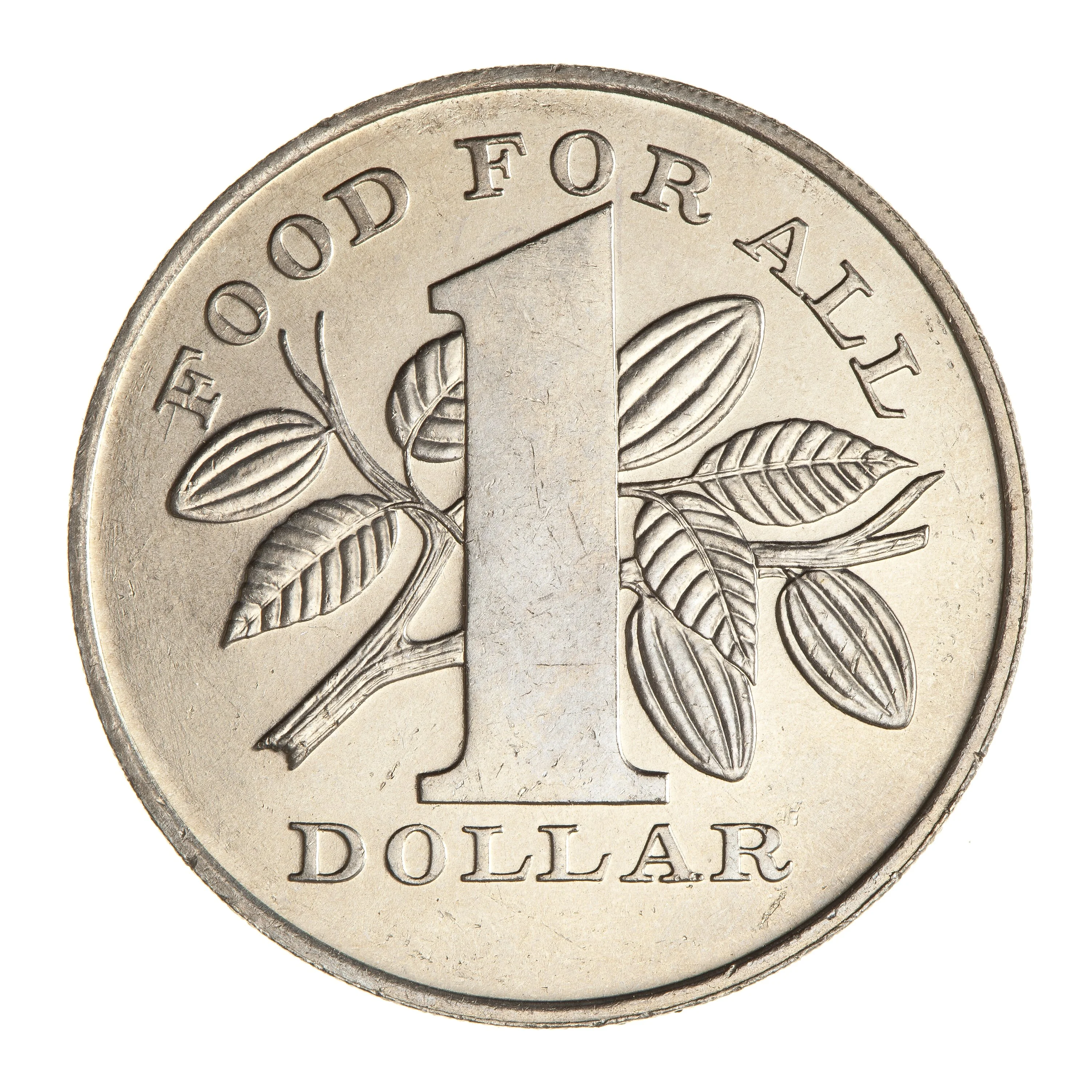
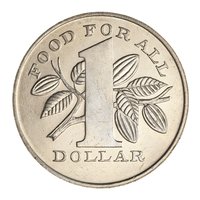
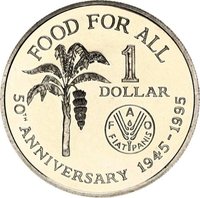
Commemoration: F.A.O. - Food for All
Trinidad and Tobago
Context
Year: 1979
Issuer: Trinidad and Tobago 
Period:
(since 1976)
Currency:
(since 1964)
Total mintage: 1,000,000
Material
Diameter: 32 mm
Weight: 12.7 g
Thickness: 1.78 mm
Shape: Round
Composition: Copper-nickel
Technique: Milled
Alignment: Medal alignment
flip
References
KM: #Click to copy to clipboard38
Numista: #5208
Value
Exchange value: 1 TTD
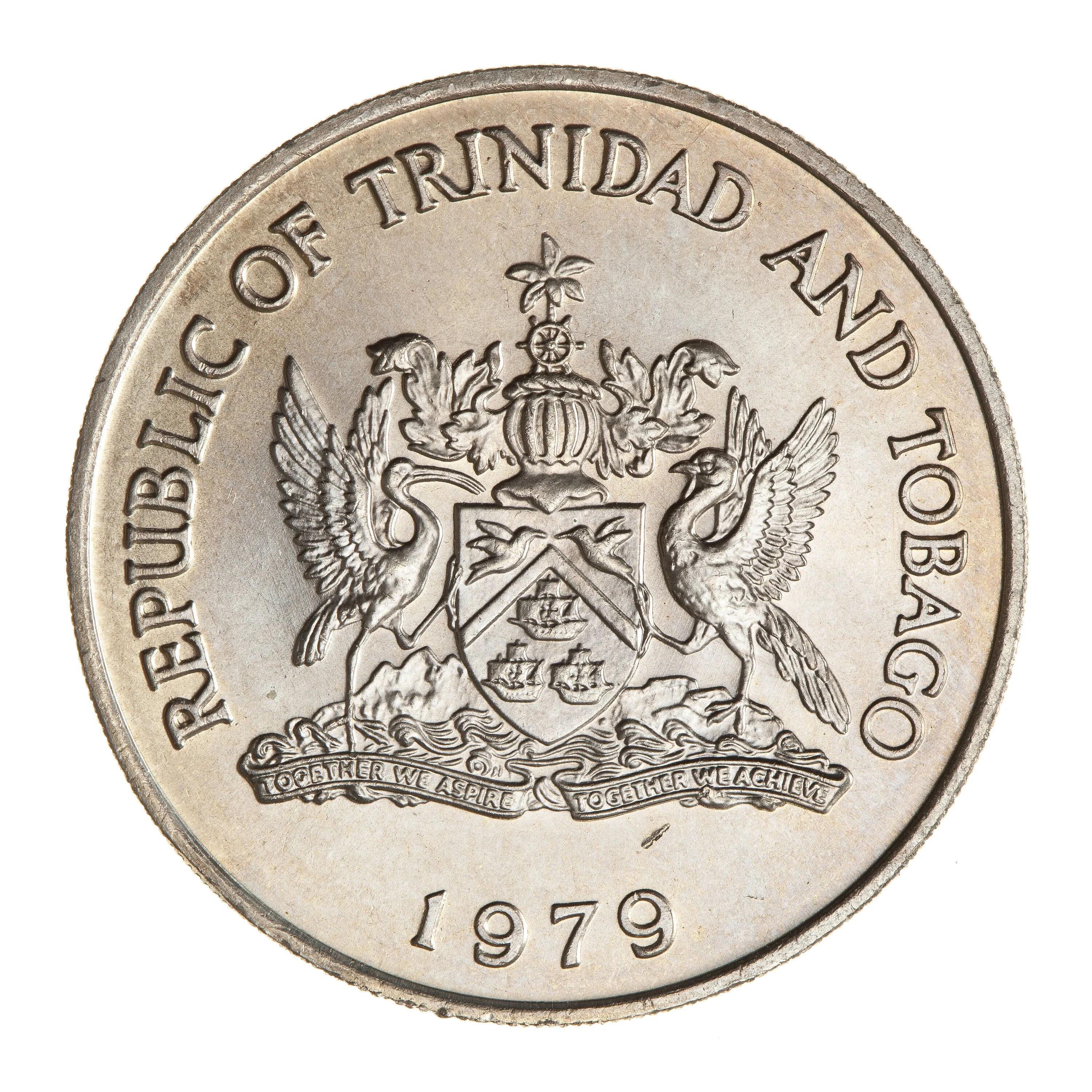
Obverse
Description:
Heraldic emblem
Inscription:
REPUBLIC OF TRINIDAD AND TOBAGO
TOGETHER WE ASPIRE TOGETHER WE ACHIEVE
1979
TOGETHER WE ASPIRE TOGETHER WE ACHIEVE
1979
Script: Latin
Reverse
Edge
Reeded
Categories
| Symbols> Coat of Arms |
| Organization> FAO |
Mints
| Name | Mark |
|---|---|
| Royal Mint | — |
Mintings
| Year | Mint Mark | Mintage | Quality | Collection |
|---|---|---|---|---|
| 1979 | — | 1,000,000 |
Historical background
In 1979, Trinidad and Tobago's currency situation was fundamentally shaped by the nation's oil boom, which had begun earlier in the decade following the 1973 oil crisis. The country was a significant petroleum exporter, and soaring global oil prices flooded the economy with foreign exchange (primarily US dollars). This led to a period of substantial government revenue, a strong balance of payments, and a seemingly stable Trinidad and Tobago dollar (TTD), which was pegged to the US dollar at a fixed rate of TT$2.40 = US$1.00. This peg, managed by the Central Bank established in 1964, provided predictability for trade and investment during this affluent period.
However, this stability was superficial and masked underlying vulnerabilities. The massive influx of petrodollars created intense inflationary pressures, as domestic production could not keep pace with the surge in government and consumer spending. This phenomenon, known as "Dutch Disease," began to undermine other sectors like agriculture and manufacturing, making the economy overly dependent on a single volatile commodity. Furthermore, the fixed exchange rate, while a symbol of strength, was becoming increasingly expensive to maintain as it required large reserves of foreign currency to defend, and it made non-oil exports less competitive on the global market.
Consequently, 1979 represented the peak before a sharp decline. The economy was overheating, and the rigid currency peg would soon be tested. The global oil market would begin to soften in the early 1980s, leading to a dramatic collapse in government revenue. The strains that were building in 1979—inflation, sectoral imbalance, and an overvalued fixed exchange rate—would culminate in a severe economic crisis by the mid-1980s, ultimately forcing the government to devalue the Trinidad and Tobago dollar and seek assistance from the International Monetary Fund. Thus, 1979 was the final chapter of the boom, with the currency regime poised for an inevitable and painful adjustment.
However, this stability was superficial and masked underlying vulnerabilities. The massive influx of petrodollars created intense inflationary pressures, as domestic production could not keep pace with the surge in government and consumer spending. This phenomenon, known as "Dutch Disease," began to undermine other sectors like agriculture and manufacturing, making the economy overly dependent on a single volatile commodity. Furthermore, the fixed exchange rate, while a symbol of strength, was becoming increasingly expensive to maintain as it required large reserves of foreign currency to defend, and it made non-oil exports less competitive on the global market.
Consequently, 1979 represented the peak before a sharp decline. The economy was overheating, and the rigid currency peg would soon be tested. The global oil market would begin to soften in the early 1980s, leading to a dramatic collapse in government revenue. The strains that were building in 1979—inflation, sectoral imbalance, and an overvalued fixed exchange rate—would culminate in a severe economic crisis by the mid-1980s, ultimately forcing the government to devalue the Trinidad and Tobago dollar and seek assistance from the International Monetary Fund. Thus, 1979 was the final chapter of the boom, with the currency regime poised for an inevitable and painful adjustment.
🌱 Common