

1 Dollar – Trinidad and Tobago
Circulating commemorative coins
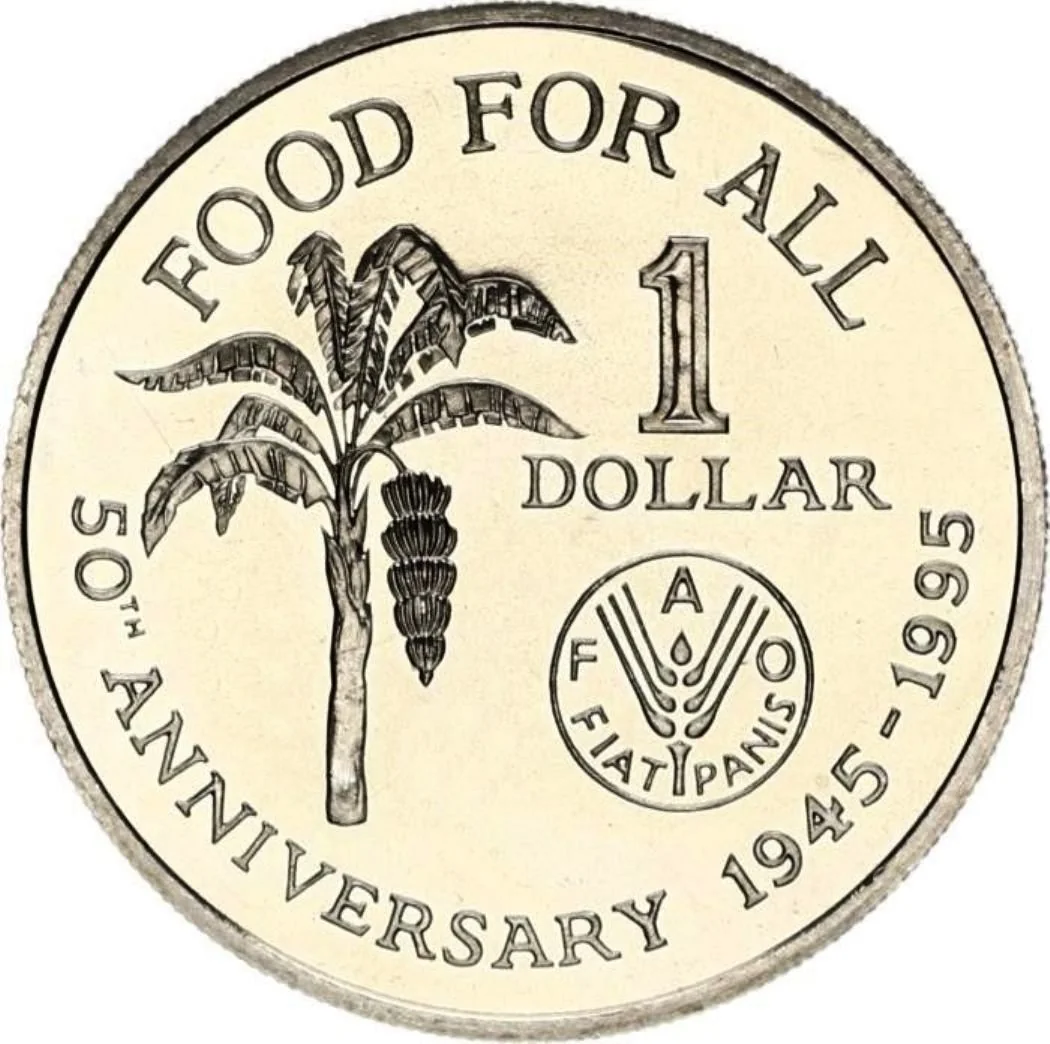
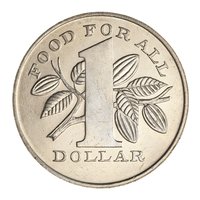
Commemoration: F.A.O. - Food for All
Trinidad and Tobago
Context
Years: 1995–1999
Issuer: Trinidad and Tobago 
Period:
(since 1976)
Currency:
(since 1964)
Total mintage: 503,000
Material
Diameter: 28.5 mm
Weight: 8.4 g
Shape: Round
Composition: Copper-nickel
Technique: Milled
Alignment: Medal alignment
flip
References
KM: #Click to copy to clipboard61
Numista: #5207
Value
Exchange value: 1 TTD
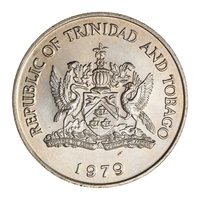
Obverse
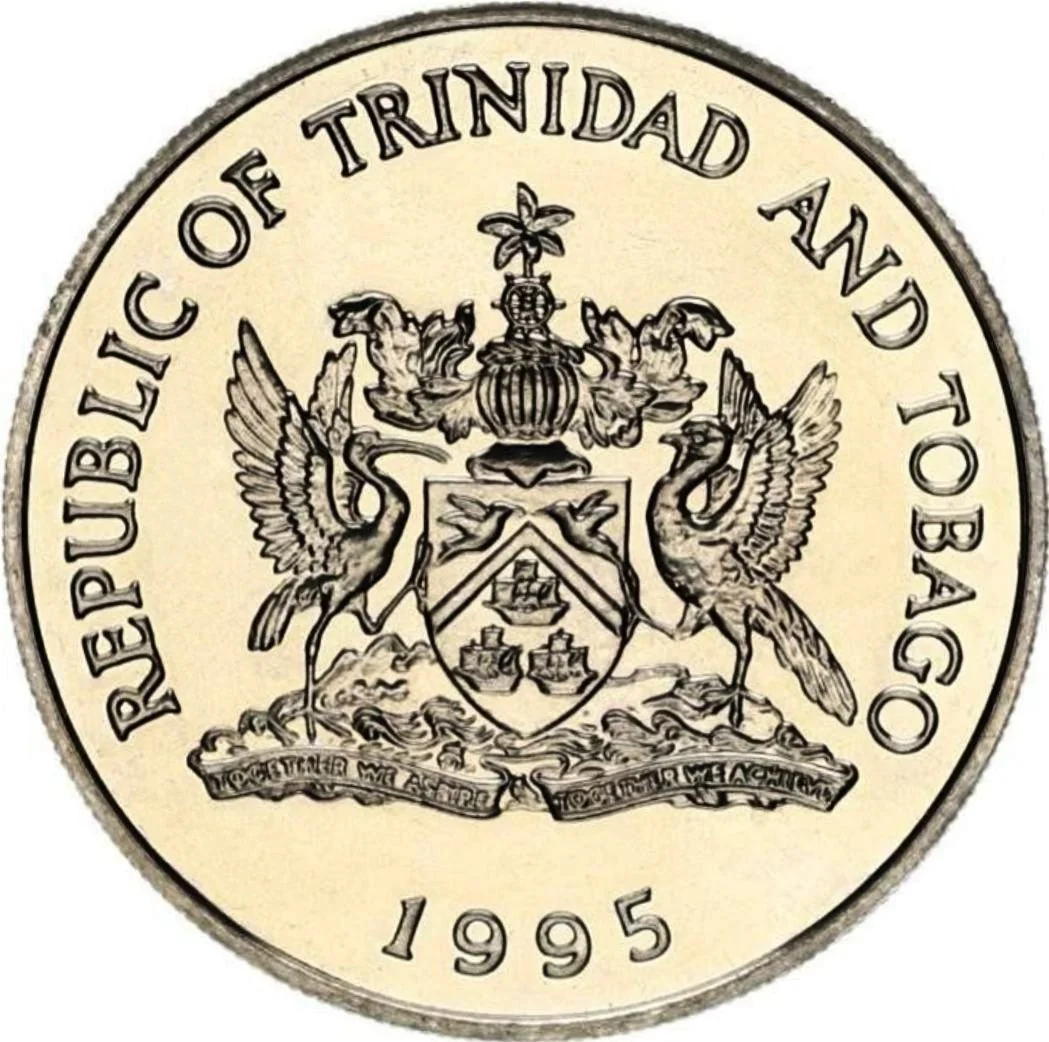
Description:
Heraldic emblem
Inscription:
REPUBLIC OF TRINIDAD AND TOBAGO
TOGETHER WE ASPIRE TOGETHER WE ACHIEVE
1995
TOGETHER WE ASPIRE TOGETHER WE ACHIEVE
1995
Script: Latin
Reverse
Edge
Reeded
Categories
| Plant> Fruit |
| Symbols> Coat of Arms |
| Organization> FAO |
Mintings
| Year | Mint Mark | Mintage | Quality | Collection |
|---|---|---|---|---|
| 1995 | — | 500,000 | ||
| 1999 | — | — | ||
| 1999 | — | 3,000 | Proof |
Historical background
In 1995, Trinidad and Tobago's currency situation was characterized by a managed float of the Trinidad and Tobago dollar (TTD) within a relatively stable macroeconomic environment, following a period of significant adjustment. The country had emerged from a severe economic crisis in the late 1980s, which necessitated a structural adjustment program and a major devaluation in 1993. By 1995, the economy was in recovery, buoyed by rising energy prices and increased natural gas production, which provided crucial foreign exchange reserves and helped maintain currency stability.
The exchange rate regime was under the purview of the Central Bank of Trinidad and Tobago, which operated a system of frequent, small adjustments to the TTD's value against a basket of currencies, primarily the US dollar. This "managed float" aimed to maintain export competitiveness while controlling inflation. In practice, the TTD was held fairly stable, with a slight depreciating trend. The parallel or black market for foreign currency, which had been rampant during the crisis years, had diminished significantly due to improved reserve levels and greater confidence in the formal banking system, though it did not disappear entirely.
Overall, 1995 represented a year of consolidation in Trinidad and Tobago's currency landscape. The stability of the TTD was underpinned by prudent fiscal management and energy-driven foreign exchange inflows, which allowed the Central Bank to build reserves and manage the exchange rate with less pressure. This period set the stage for the subsequent years of robust economic growth, known as the "gas boom," which would further strengthen the country's external financial position and allow for a long period of exchange rate stability pegged to the US dollar.
The exchange rate regime was under the purview of the Central Bank of Trinidad and Tobago, which operated a system of frequent, small adjustments to the TTD's value against a basket of currencies, primarily the US dollar. This "managed float" aimed to maintain export competitiveness while controlling inflation. In practice, the TTD was held fairly stable, with a slight depreciating trend. The parallel or black market for foreign currency, which had been rampant during the crisis years, had diminished significantly due to improved reserve levels and greater confidence in the formal banking system, though it did not disappear entirely.
Overall, 1995 represented a year of consolidation in Trinidad and Tobago's currency landscape. The stability of the TTD was underpinned by prudent fiscal management and energy-driven foreign exchange inflows, which allowed the Central Bank to build reserves and manage the exchange rate with less pressure. This period set the stage for the subsequent years of robust economic growth, known as the "gas boom," which would further strengthen the country's external financial position and allow for a long period of exchange rate stability pegged to the US dollar.
🌱 Common