

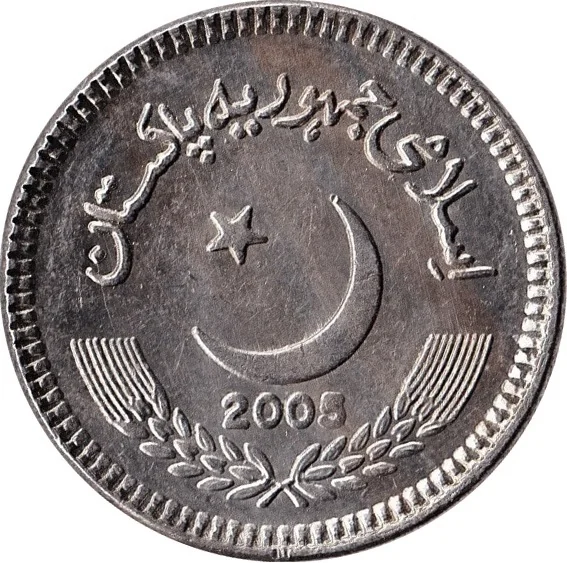
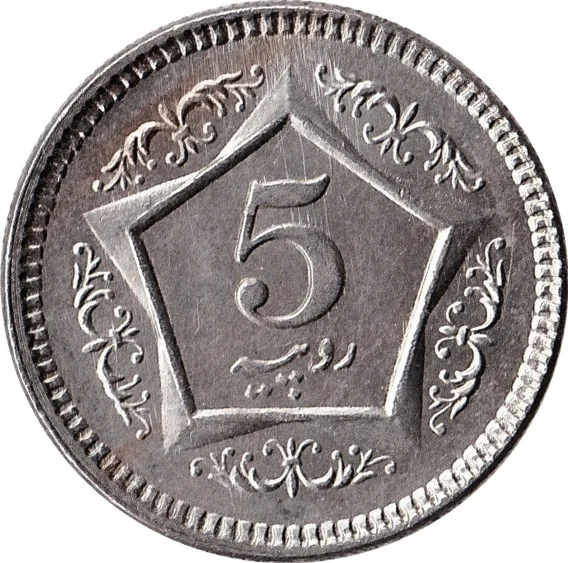
5 rupees – Pakistan
Add to wishlist
Pakistan
Context
Years: 2002–2006
Issuer: Pakistan
Period:
(since 1956)
Currency:
(since 1961)
Total mintage: 723,932,000
Material
Diameter: 24 mm
Weight: 6.5 g
Thickness: 2.1 mm
Shape: Round
Composition: Copper-nickel
Technique: Milled
Alignment: Medal alignment
flip
References
KM: #
Numista: #5204
Value
Exchange value: 5 PKR
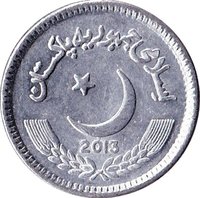
Obverse
Description:
Crescent moon and star.
Inscription:
اسلامی جمہوریہ پاکِستان
2005
2005
Translation:
Islamic Republic of Pakistan
2005
2005
Language: Urdu
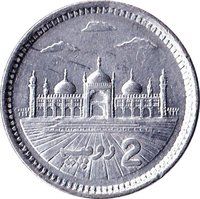
Reverse
Edge
Reeded
Mintings
| Year | Mint Mark | Mintage | Quality | Collection |
|---|---|---|---|---|
| 2002 | — | 35,668,000 | ||
| 2003 | — | 138,566,000 | ||
| 2004 | — | 224,228,000 | ||
| 2005 | — | 148,248,000 | ||
| 2006 | — | 177,222,000 |
Historical background
In 2002, Pakistan's currency situation was defined by a pivotal shift towards a managed float and the beginning of a period of relative stability, largely driven by external financial inflows. Following the nuclear tests of 1998 and subsequent sanctions, the Pakistani rupee (PKR) had been under severe pressure, leading to a costly and unsustainable defense of a fixed exchange rate. This culminated in a decisive devaluation and the abandonment of the peg in July 2000. By 2002, the new managed float system was bedding in, with the State Bank of Pakistan (SBP) intervening to smooth volatility rather than target a specific rate, allowing the currency to respond more flexibly to market forces.
The key factor underpinning the rupee in 2002 was a substantial influx of foreign exchange, primarily from three sources: post-9/11 coalition support funds, a surge in remittances (which doubled as they were shifted from informal hawala channels to formal banking systems), and the resumption of lending from international financial institutions like the IMF. These inflows bolstered the country's foreign reserves, which rose from critically low levels to over $9 billion by year's end. This reserve cushion provided the SBP with greater credibility and firepower to manage the exchange rate, leading to an unusual phenomenon: relative nominal stability for the PKR against the US dollar, with the exchange rate hovering around 59 PKR/USD.
However, this stability was externally facilitated and masked underlying structural economic weaknesses. Export growth remained sluggish, and the fiscal deficit was a persistent concern. The currency management in 2002, while successful in averting a crisis and restoring confidence, was not driven by a fundamental strengthening of the export base or productivity. Instead, it was a respite bought by geopolitical circumstances and one-off inflows, setting a precedent for an economy that would remain vulnerable to shifts in external financing and continued to grapple with chronic trade imbalances in the years to follow.
The key factor underpinning the rupee in 2002 was a substantial influx of foreign exchange, primarily from three sources: post-9/11 coalition support funds, a surge in remittances (which doubled as they were shifted from informal hawala channels to formal banking systems), and the resumption of lending from international financial institutions like the IMF. These inflows bolstered the country's foreign reserves, which rose from critically low levels to over $9 billion by year's end. This reserve cushion provided the SBP with greater credibility and firepower to manage the exchange rate, leading to an unusual phenomenon: relative nominal stability for the PKR against the US dollar, with the exchange rate hovering around 59 PKR/USD.
However, this stability was externally facilitated and masked underlying structural economic weaknesses. Export growth remained sluggish, and the fiscal deficit was a persistent concern. The currency management in 2002, while successful in averting a crisis and restoring confidence, was not driven by a fundamental strengthening of the export base or productivity. Instead, it was a respite bought by geopolitical circumstances and one-off inflows, setting a precedent for an economy that would remain vulnerable to shifts in external financing and continued to grapple with chronic trade imbalances in the years to follow.

🌱 Very Common