

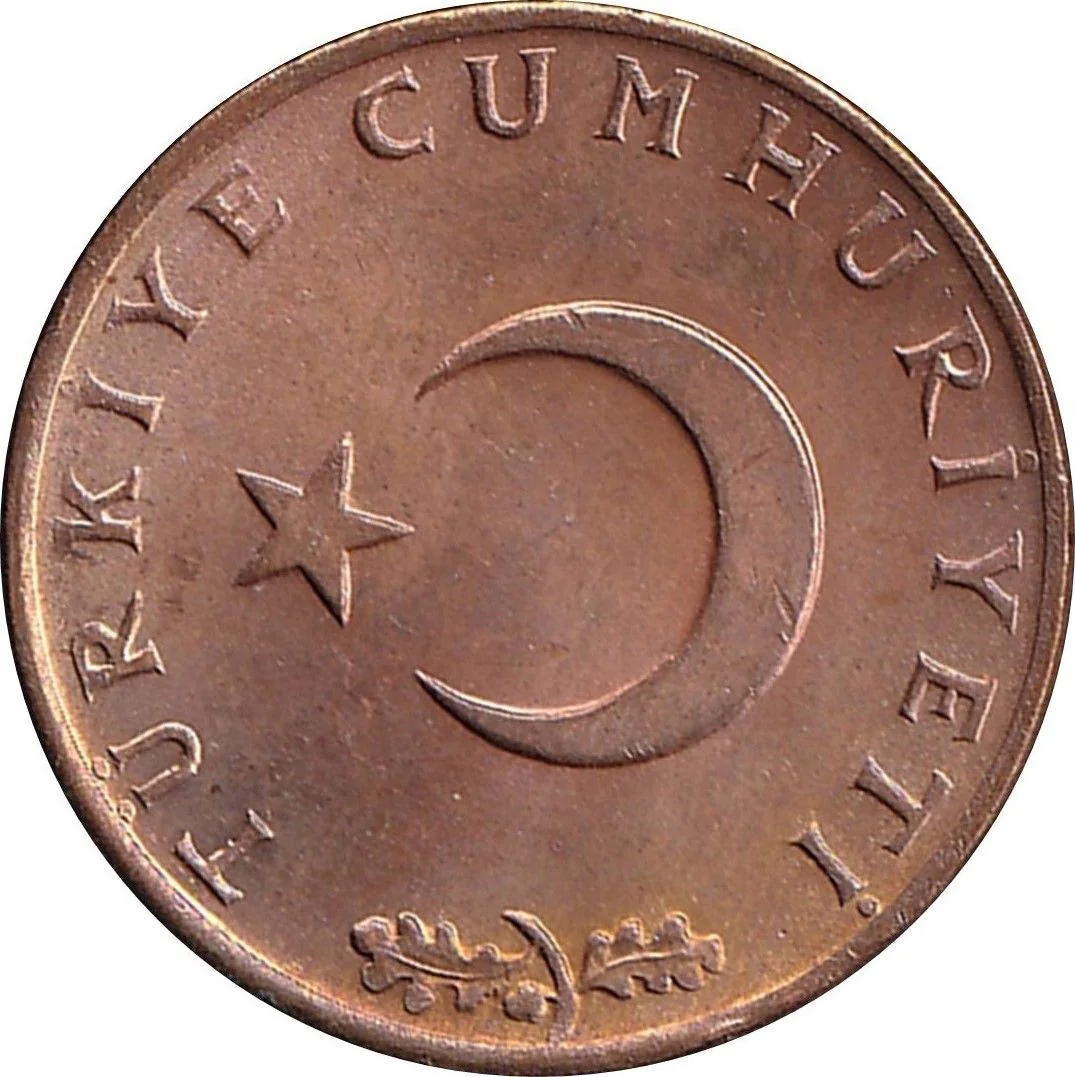

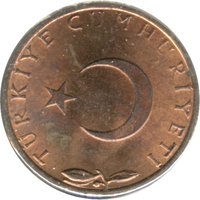
Obverse
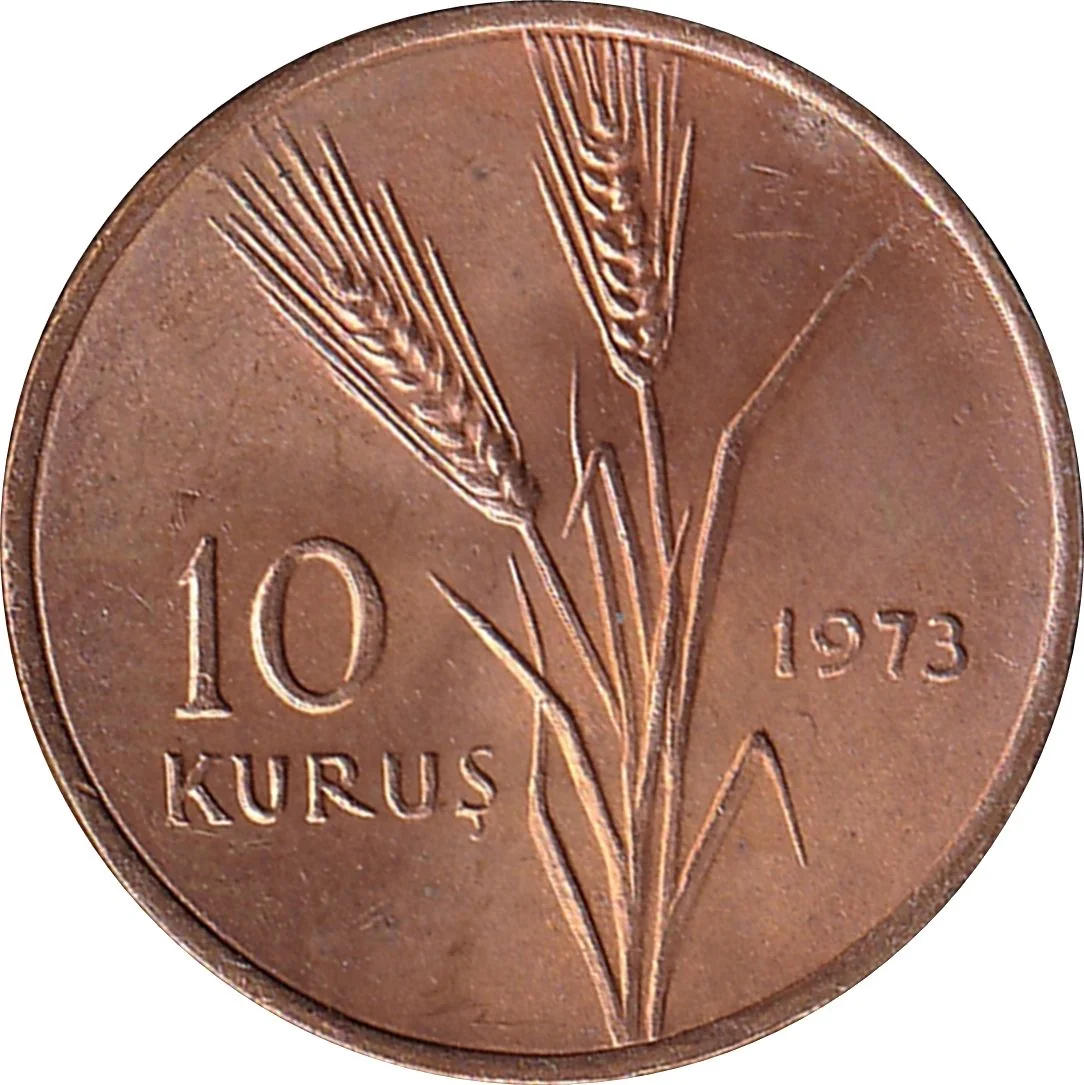
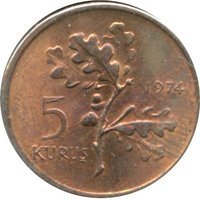
Reverse
Edge
Plain
Mints
| Name | Mark |
|---|---|
| Turkish State Mint | — |
Mintings
| Year | Mint Mark | Mintage | Quality | Collection |
|---|---|---|---|---|
| 1958 | — | 14,770,000 | ||
| 1959 | — | 11,160,000 | ||
| 1960 | — | 9,450,000 | ||
| 1961 | — | 5,370,000 | ||
| 1962 | — | 9,250,000 | ||
| 1963 | — | 10,390,000 | ||
| 1964 | — | 9,890,000 | ||
| 1965 | — | 10,480,000 | ||
| 1966 | — | 12,200,000 | ||
| 1967 | — | 11,410,000 | ||
| 1968 | — | 18,620,000 | ||
| 1969 | — | 21,190,000 | ||
| 1970 | — | 19,930,000 | ||
| 1971 | — | 14,120,000 | ||
| 1972 | — | 17,460,000 | ||
| 1973 | — | 11,930,000 | ||
| 1974 | — | 9,280,000 |
Historical background
By 1958, Turkey's currency situation was one of severe crisis, marking the culmination of a decade of economic strain under the Democratic Party government. The post-World War II period had seen ambitious state-led industrialization and infrastructure projects funded heavily by foreign borrowing and the printing of money. This led to chronic budget deficits, rampant inflation, and a critically overvalued Turkish lira. The fixed exchange rate, pegged at 2.80 lira to the US dollar since 1946, became increasingly unrealistic, destroying export competitiveness and creating a booming black market for foreign currency. By the late 1950s, Turkey was grappling with severe foreign exchange shortages, dwindling central bank reserves, and an unsustainable debt burden.
The immediate trigger for the 1958 crisis was the exhaustion of Turkey's credit lines and its inability to service its external debts, primarily owed to Western creditors. The government had resorted to using short-term credits to pay for essential imports, creating a cycle of dependency. With reserves nearly empty and the threat of default looming, Turkey was forced to seek a major international stabilization program. This led to negotiations with the Organisation for European Economic Co-operation (OEEC) and the International Monetary Fund (IMF), resulting in a landmark agreement in August 1958.
The 1958 stabilization program, backed by $359 million in loans from the IMF and OEEC consortium, mandated a drastic devaluation and economic liberalization. On August 4, 1958, the lira was devalued by 76%, moving from 2.80 to 9.00 lira to the dollar. This was accompanied by a commitment to curb monetary expansion, liberalize imports, and reduce state controls on the economy. While painful and contributing to short-term inflation, the package successfully restored external balance and ended the immediate crisis. It marked a pivotal turn toward greater integration with the Western economic system and set the stage for a period of relative stability until the next major economic shocks in the 1970s.
The immediate trigger for the 1958 crisis was the exhaustion of Turkey's credit lines and its inability to service its external debts, primarily owed to Western creditors. The government had resorted to using short-term credits to pay for essential imports, creating a cycle of dependency. With reserves nearly empty and the threat of default looming, Turkey was forced to seek a major international stabilization program. This led to negotiations with the Organisation for European Economic Co-operation (OEEC) and the International Monetary Fund (IMF), resulting in a landmark agreement in August 1958.
The 1958 stabilization program, backed by $359 million in loans from the IMF and OEEC consortium, mandated a drastic devaluation and economic liberalization. On August 4, 1958, the lira was devalued by 76%, moving from 2.80 to 9.00 lira to the dollar. This was accompanied by a commitment to curb monetary expansion, liberalize imports, and reduce state controls on the economy. While painful and contributing to short-term inflation, the package successfully restored external balance and ended the immediate crisis. It marked a pivotal turn toward greater integration with the Western economic system and set the stage for a period of relative stability until the next major economic shocks in the 1970s.
🌱 Very Common