

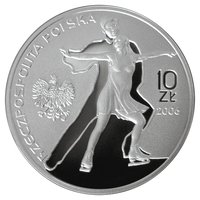
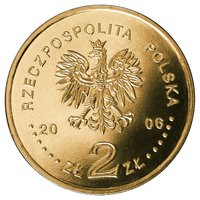
Obverse
Description:
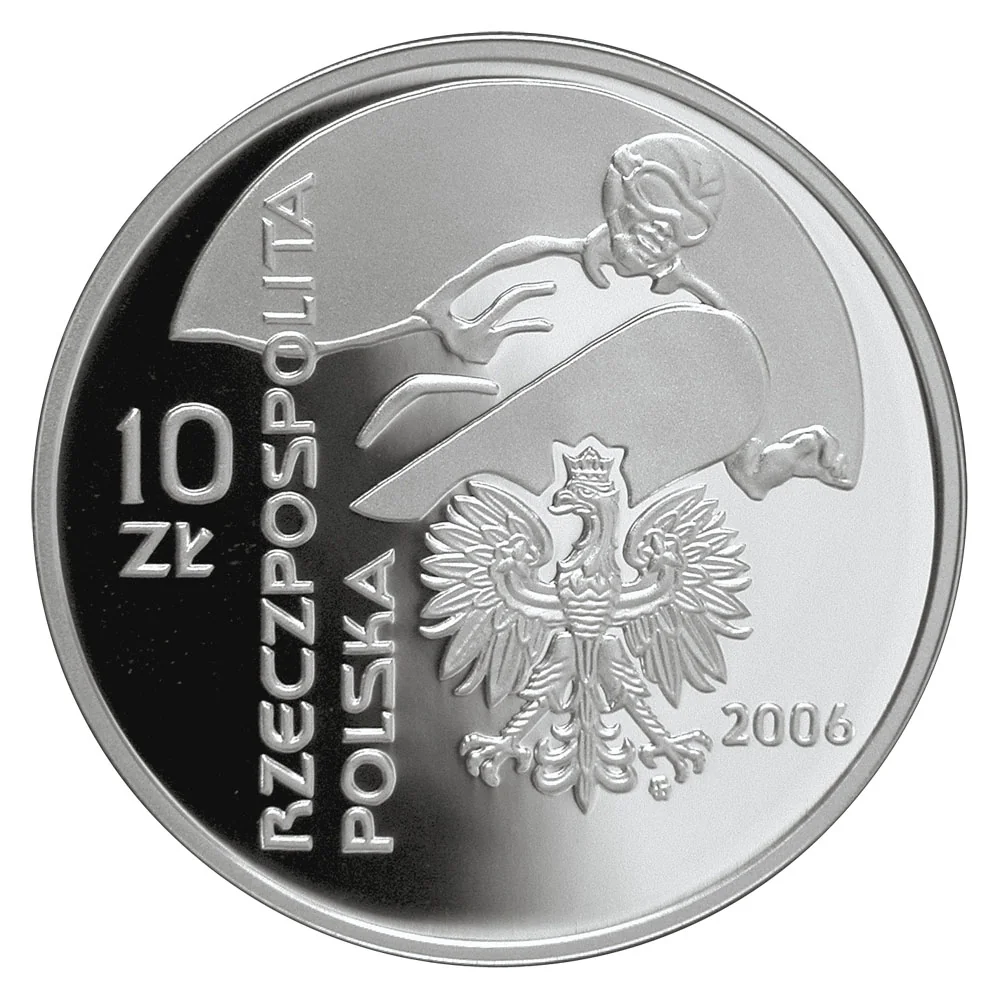
Eagle with snowboarder.
Inscription:
10 ZŁ
RZECZYPOSPOLITA POLSKA
2006
mw
RZECZYPOSPOLITA POLSKA
2006
mw
Translation:
10 ZŁOTYCH
REPUBLIC OF POLAND
2006
REPUBLIC OF POLAND
2006
Script: Latin
Language: Polish
Designer: Robert Kotowicz
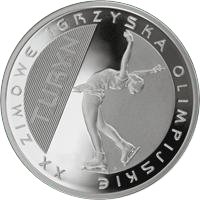
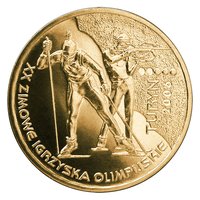
Reverse
Description:
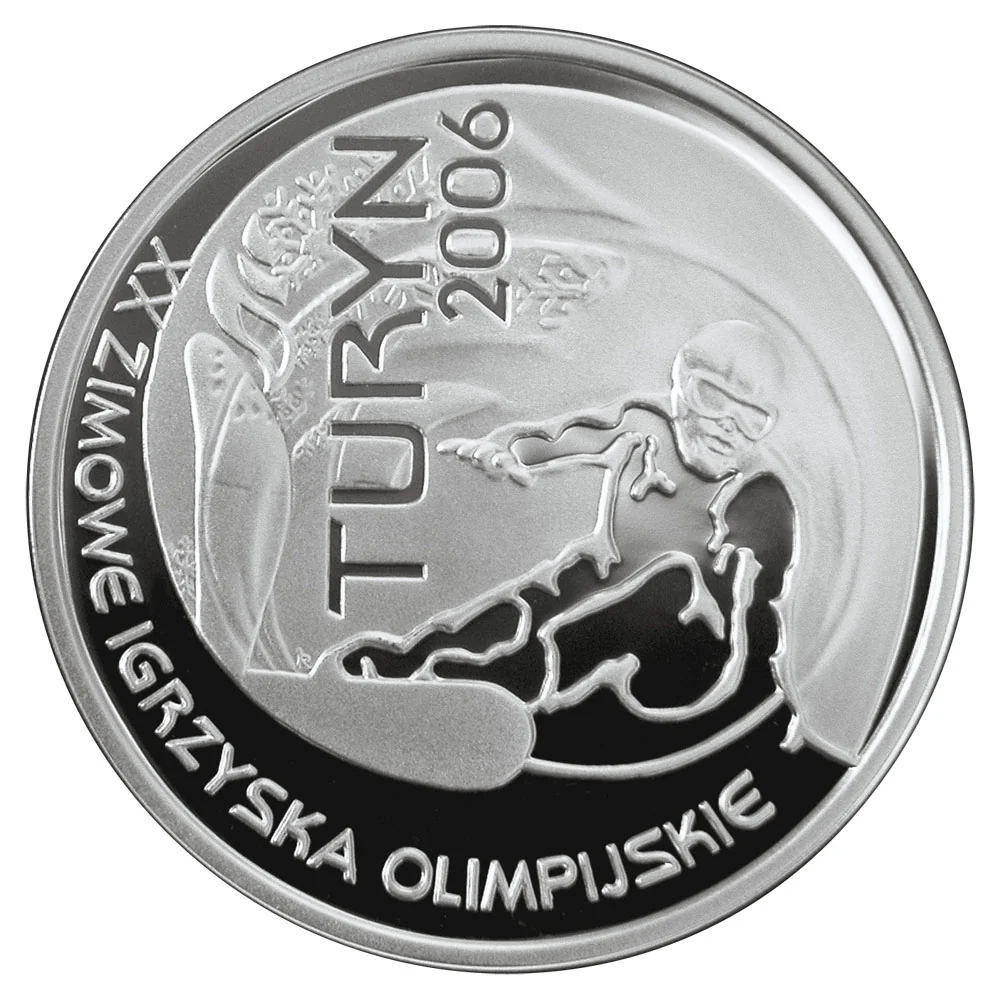
Olympic snowboard flame
Inscription:
XX ZIMOWE IGRZYSKA OLIMPIJSKIE
TURYN
2006
TURYN
2006
Translation:
XX OLYMPIC WINTER GAMES
TURIN
2006
TURIN
2006
Script: Latin
Designer: Robert Kotowicz
Edge
Plain
Categories
| Sport> Winter Olympic Games |
Mints
| Name | Mark |
|---|---|
| Mint of Poland | (MW) |
Mintings
| Year | Mint Mark | Mintage | Quality | Collection |
|---|---|---|---|---|
| 2006 | MW | 71,400 | Proof |
Historical background
In 2006, Poland's currency situation was characterized by a period of significant strength and appreciation for the Polish złoty (PLN), driven primarily by robust economic fundamentals and investor optimism surrounding the country's accession to the European Union in 2004. The złoty, which operated under a free-floating exchange rate regime since 2000, benefited from strong GDP growth (over 6% in 2006), substantial inflows of foreign direct investment, and a convergence play as markets anticipated eventual Eurozone entry. This confidence kept the currency firm against both the euro and the US dollar for much of the year, with the exchange rate hovering around 3.8 PLN/EUR in the first half, a notable appreciation from levels above 4.2 just a few years prior.
However, this appreciation presented a dual challenge for policymakers at the National Bank of Poland (NBP). While a strong currency helped curb inflation by making imports cheaper, it also began to threaten the competitiveness of Polish exports, a vital engine of the country's economic growth. The central bank, under President Leszek Balcerowicz and later Sławomir Skrzypek, faced a delicate balancing act. Its primary tool was interest rate policy, and after a series of hikes in 2004-2005 to combat inflation, the NBP began a cautious easing cycle in late 2005, which continued through 2006, partly to temper the złoty's strength and support exporters.
The year ended with the currency dynamics shifting slightly due to emerging global financial turbulence and domestic political uncertainty. In the latter months, the złoty experienced some volatility and modest weakening as risk appetite globally began to wane, foreshadowing the coming financial crisis. Nevertheless, 2006 is largely remembered as a peak period of pre-crisis confidence for Poland, with a strong and stable złoty symbolizing the country's successful economic transition and convergence with Western Europe, even as the foundations for future monetary policy challenges were being laid.
However, this appreciation presented a dual challenge for policymakers at the National Bank of Poland (NBP). While a strong currency helped curb inflation by making imports cheaper, it also began to threaten the competitiveness of Polish exports, a vital engine of the country's economic growth. The central bank, under President Leszek Balcerowicz and later Sławomir Skrzypek, faced a delicate balancing act. Its primary tool was interest rate policy, and after a series of hikes in 2004-2005 to combat inflation, the NBP began a cautious easing cycle in late 2005, which continued through 2006, partly to temper the złoty's strength and support exporters.
The year ended with the currency dynamics shifting slightly due to emerging global financial turbulence and domestic political uncertainty. In the latter months, the złoty experienced some volatility and modest weakening as risk appetite globally began to wane, foreshadowing the coming financial crisis. Nevertheless, 2006 is largely remembered as a peak period of pre-crisis confidence for Poland, with a strong and stable złoty symbolizing the country's successful economic transition and convergence with Western Europe, even as the foundations for future monetary policy challenges were being laid.
Series: Olympic Games
⭐ Somewhat Rare