

2 Francs – French Somaliland
Somalia
Context
Years: 1959–1965
Country: Somalia 
Issuer: French Somaliland
Period:
(1958—1967)
Currency:
(1949—1967)
Demonetized: Yes
Total mintage: 440,000
Material
References
KM: #Click to copy to clipboard9
Numista: #5165
Obverse
Description:
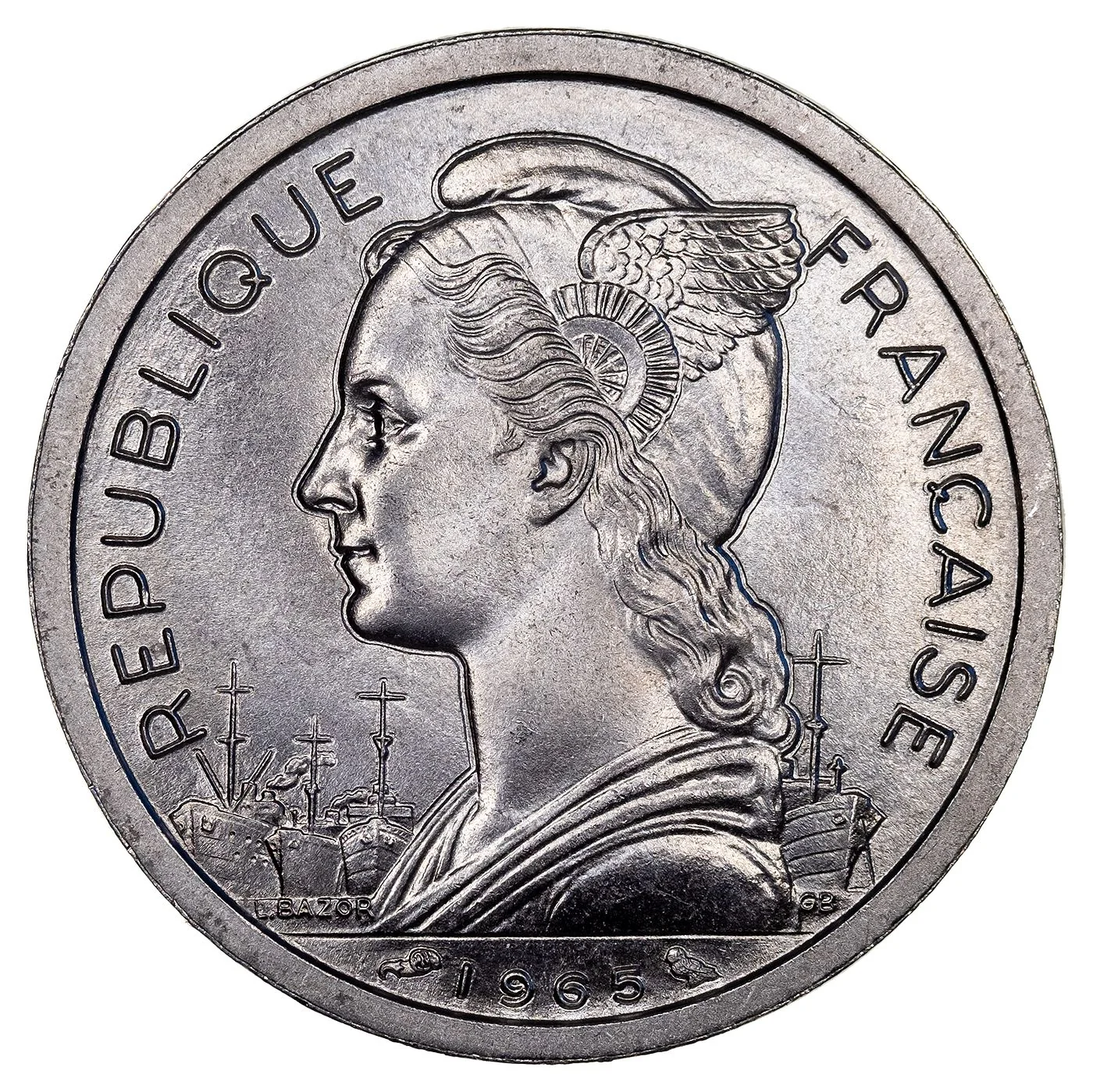
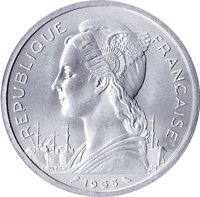
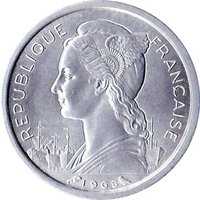
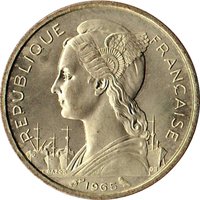
Marianne faces left in a winged Phrygian cap, with four ships behind her and the date below.
Inscription:
REPUBLIQUE FRANÇAISE
L.BAZOR GB
1965
L.BAZOR GB
1965
Translation:
FRENCH REPUBLIC
L.BAZOR GB
1965
L.BAZOR GB
1965
Script: Latin
Language: French
Engraver: Lucien Georges Bazor
Reverse
Description:
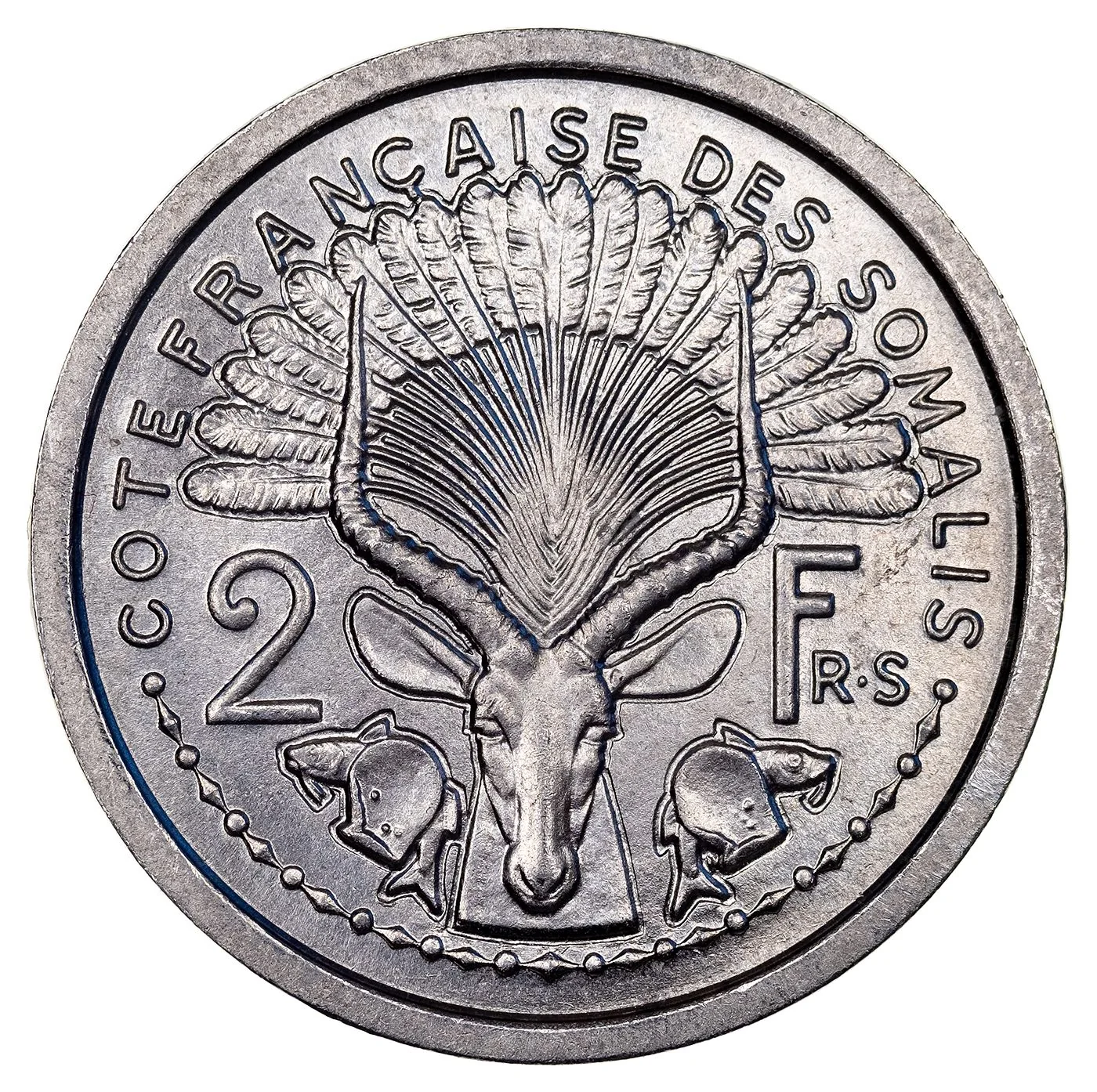
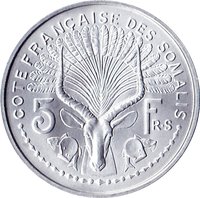
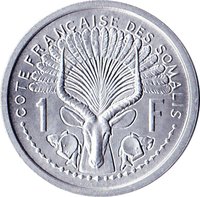
Waterbuck head with long horns flanked by shells, each over a fish. A palm spreads above.
Inscription:
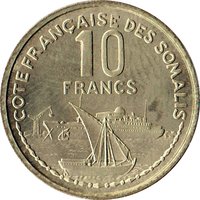
CÔTE FRANÇAISE DES SOMALIS
2 FR·S
2 FR·S
Translation:
FRENCH COAST OF THE SOMALIS
2 FRANCS
2 FRANCS
Script: Latin
Language: French
Engraver: Lucien Georges Bazor
Edge
Plain
Mints
| Name | Mark |
|---|---|
| Monnaie de Paris | — |
Mintings
| Year | Mint Mark | Mintage | Quality | Collection |
|---|---|---|---|---|
| 1959 | — | 200,000 | ||
| 1965 | — | 240,000 |
Historical background
In 1959, the currency situation in French Somaliland (present-day Djibouti) was defined by its integration into the France-issued colonial franc zone, specifically the CFA franc. The territory used the "Franc de Djibouti" (Djibouti franc), which, while locally named, was pegged at a fixed parity to the French metropolitan franc and fully guaranteed by the French Treasury. This arrangement ensured monetary stability and facilitated trade, but it also underscored the colony's complete economic dependence on France, with no independent monetary policy.
The currency's stability was crucial for the territory's primary economic role as a strategic port and refueling station. The franc circulated alongside the French franc and was the sole legal tender, anchoring all commercial banking and government transactions. This system simplified financial operations for the French military, the significant naval base, and the critical railway linking Djibouti to Addis Ababa, which handled a large portion of Ethiopia's foreign trade.
However, this fixed colonial system existed amidst growing political tensions. The year 1959 fell within a period of rising nationalist sentiment and calls for independence, which would eventually be achieved in 1977. While the currency zone provided stability, it was a clear instrument of continued French control. The economic and monetary framework of 1959 thus reflected a colony at a crossroads: functionally stable and integrated into the franc area, but poised on the brink of the political changes that would, years later, lead to the creation of an independent national currency.
The currency's stability was crucial for the territory's primary economic role as a strategic port and refueling station. The franc circulated alongside the French franc and was the sole legal tender, anchoring all commercial banking and government transactions. This system simplified financial operations for the French military, the significant naval base, and the critical railway linking Djibouti to Addis Ababa, which handled a large portion of Ethiopia's foreign trade.
However, this fixed colonial system existed amidst growing political tensions. The year 1959 fell within a period of rising nationalist sentiment and calls for independence, which would eventually be achieved in 1977. While the currency zone provided stability, it was a clear instrument of continued French control. The economic and monetary framework of 1959 thus reflected a colony at a crossroads: functionally stable and integrated into the franc area, but poised on the brink of the political changes that would, years later, lead to the creation of an independent national currency.
🌱 Common