

2 Centimes – Belgium
Belgium
Context
Years: 1869–1909
Issuer: Belgium 
Ruler: Leopold II
Currency:
(1832—2001)
Demonetized: Yes
Total mintage: 36,529,056
Material
References
KM: #Click to copy to clipboard35.1
Numista: #516
Value
Exchange value: 0.02 BEF
Obverse
Description:
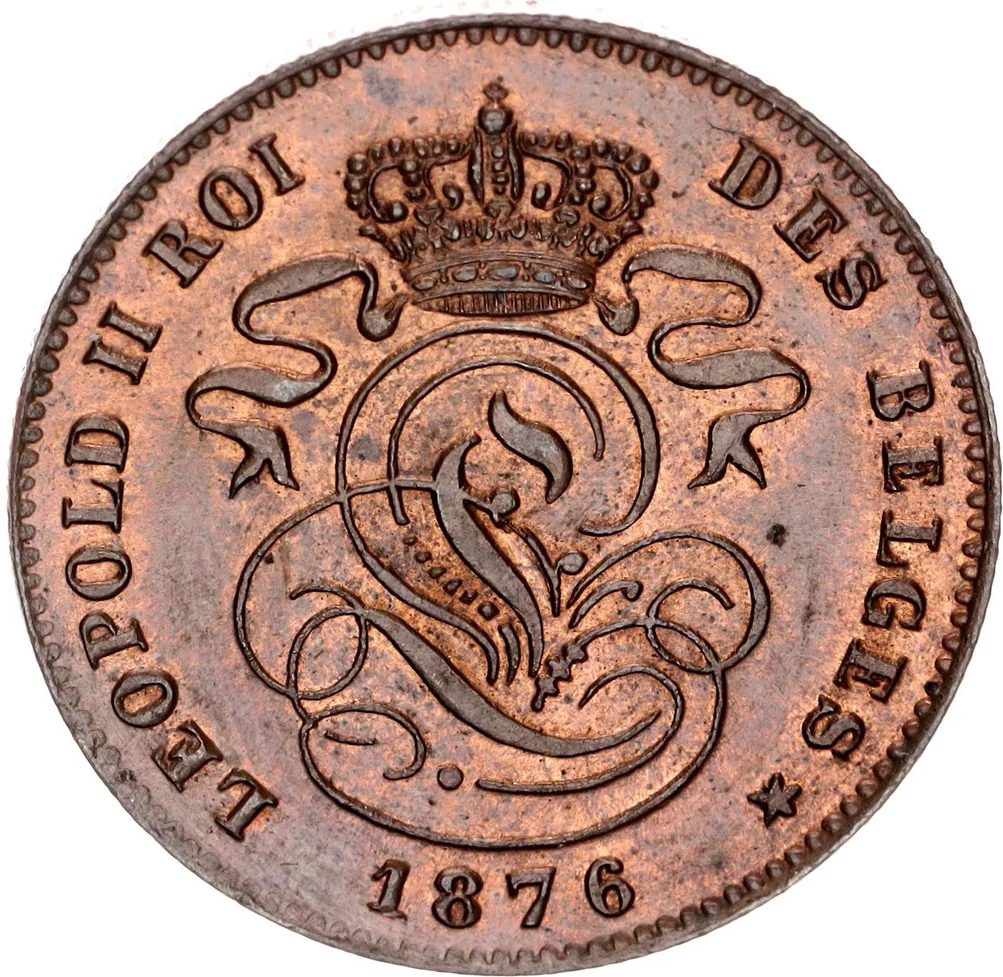
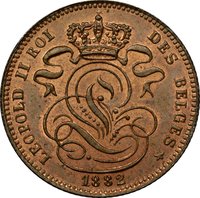
French lettering surrounds the royal monogram, with the date below.
Inscription:
LEOPOLD II ROI DES BELGES ★
1902
1902
Translation:
Leopold II King of the Belgians ★
1902
1902
Script: Latin
Language: French
Engraver: Joseph-Pierre Braemt
Reverse
Description:
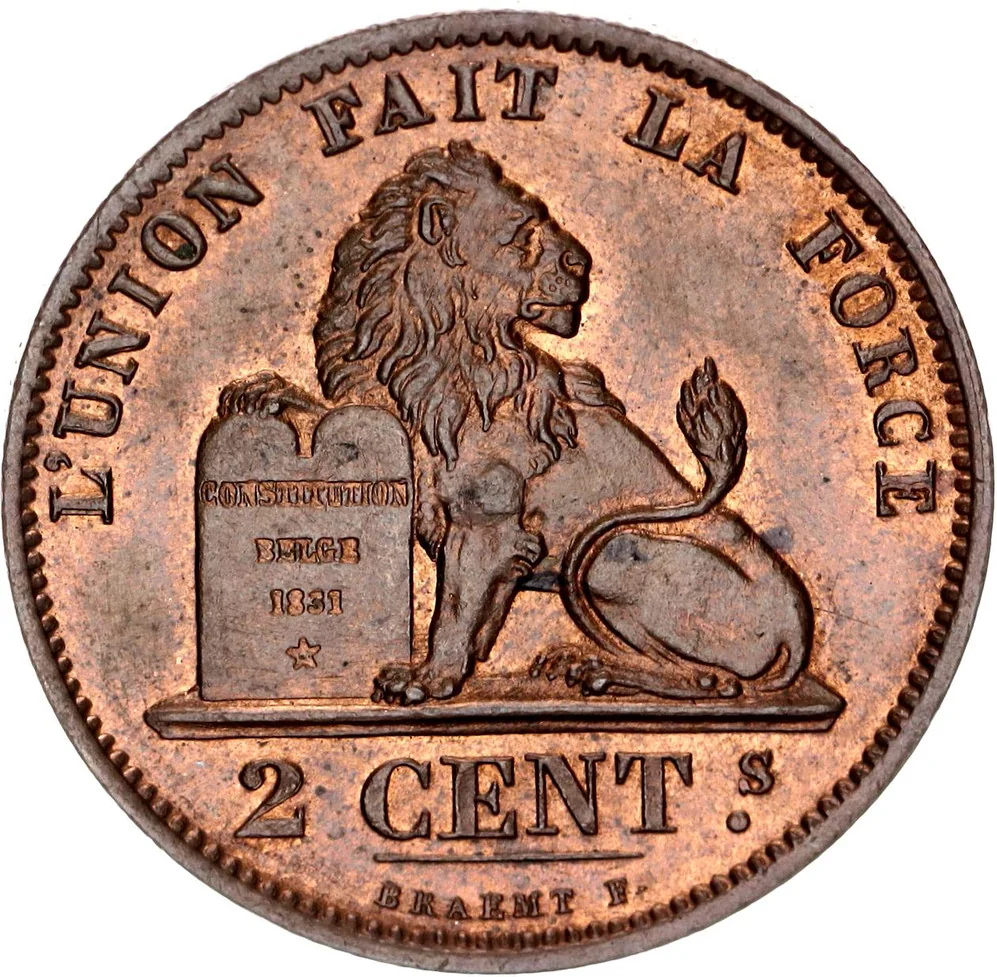
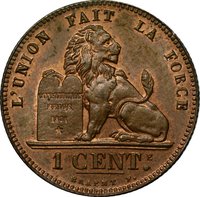
Belgian lion with paw on 1831 Constitution, surrounded by French motto. Value and designer below.
Inscription:
L'UNION FAIT LA FORCE
CONSTITUTION
BELGE
1831
*
2 CENTs.
BRAEMT.F
CONSTITUTION
BELGE
1831
*
2 CENTs.
BRAEMT.F
Translation:
Union makes strength
Constitution
Belgian
1831
*
2 Cents
BRAEMT.F
Constitution
Belgian
1831
*
2 Cents
BRAEMT.F
Script: Latin
Engraver: Joseph-Pierre Braemt
Edge
Reeded
Mints
| Name | Mark |
|---|---|
| Royal Mint of Belgium | — |
Mintings
| Year | Mint Mark | Mintage | Quality | Collection |
|---|---|---|---|---|
| 1869 | — | — | ||
| 1870 | — | 5,653,780 | ||
| 1871 | — | — | ||
| 1873 | — | 7,490,637 | ||
| 1874 | — | — | ||
| 1875 | — | 7,931,768 | ||
| 1876 | — | 10,471,512 | ||
| 1902 | — | — | ||
| 1905 | — | 4,981,359 | ||
| 1909 | — | — |
Historical background
In 1869, Belgium operated under a complex and transitional monetary system, a legacy of its recent independence and the broader European context. The country was part of the Latin Monetary Union (LMU), established in 1865, which sought to standardize gold and silver coinage among member nations (France, Belgium, Italy, and Switzerland). While Belgian francs were pegged to and interchangeable with French francs, the system was bimetallic, meaning both gold and silver coins were legal tender at a fixed ratio. However, by 1869, this bimetallic standard was under severe international strain due to the fluctuating market values of the two metals, leading to the widespread hoarding and export of undervalued coins—a phenomenon known as Gresham's Law.
Domestically, this created practical challenges. The Belgian National Bank, founded in 1850, held the exclusive right to issue banknotes, but public trust in paper currency remained limited. Commerce still heavily relied on specie (coinage), and the scarcity of certain coins, particularly full-weight silver francs, disrupted everyday transactions. Furthermore, a proliferation of foreign coins, especially from neighboring France and the Netherlands, circulated freely within Belgium, adding to the chaotic and heterogeneous nature of the physical currency in citizens' pockets.
Consequently, 1869 fell within a period of intense monetary debate and adjustment. The Belgian government and the National Bank were actively working to manage the coinage supply and uphold the LMU agreements, while also preparing for the inevitable shift toward a gold standard that would eventually stabilize European currencies. Thus, the monetary situation was one of de jure bimetallic union, but de facto moving toward a gold-based system, marked by temporary scarcity and a push for greater monetary sovereignty within a multinational framework.
Domestically, this created practical challenges. The Belgian National Bank, founded in 1850, held the exclusive right to issue banknotes, but public trust in paper currency remained limited. Commerce still heavily relied on specie (coinage), and the scarcity of certain coins, particularly full-weight silver francs, disrupted everyday transactions. Furthermore, a proliferation of foreign coins, especially from neighboring France and the Netherlands, circulated freely within Belgium, adding to the chaotic and heterogeneous nature of the physical currency in citizens' pockets.
Consequently, 1869 fell within a period of intense monetary debate and adjustment. The Belgian government and the National Bank were actively working to manage the coinage supply and uphold the LMU agreements, while also preparing for the inevitable shift toward a gold standard that would eventually stabilize European currencies. Thus, the monetary situation was one of de jure bimetallic union, but de facto moving toward a gold-based system, marked by temporary scarcity and a push for greater monetary sovereignty within a multinational framework.
🌱 Very Common