

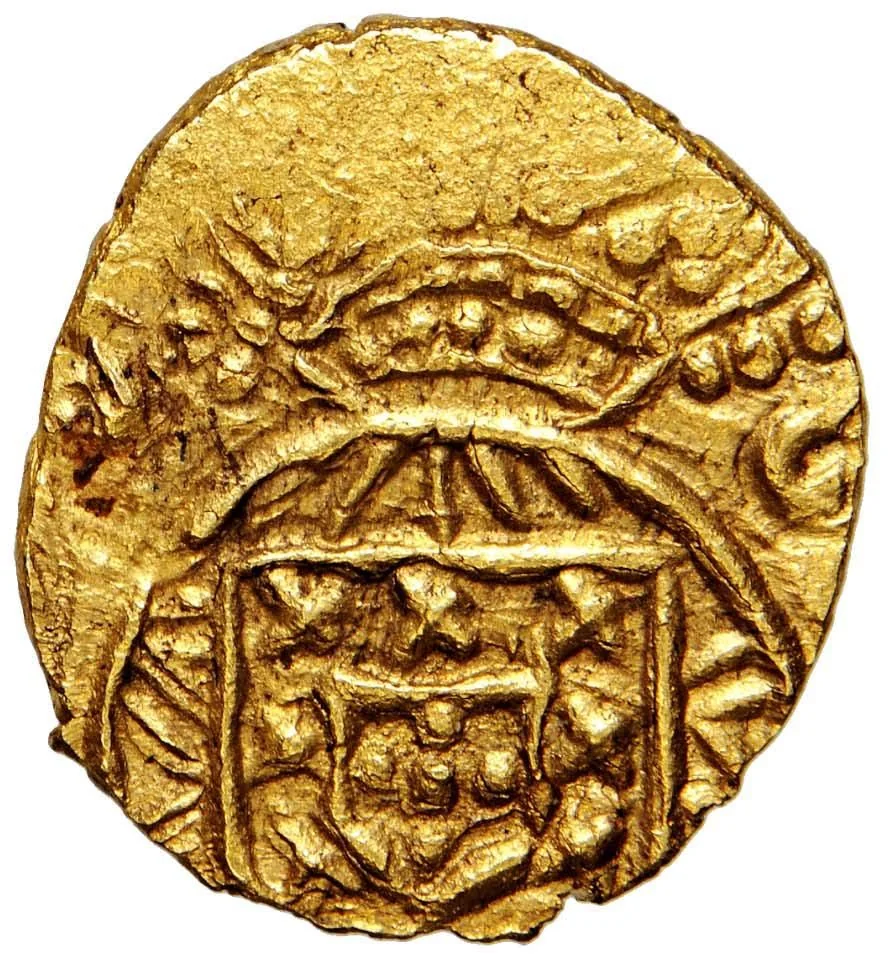
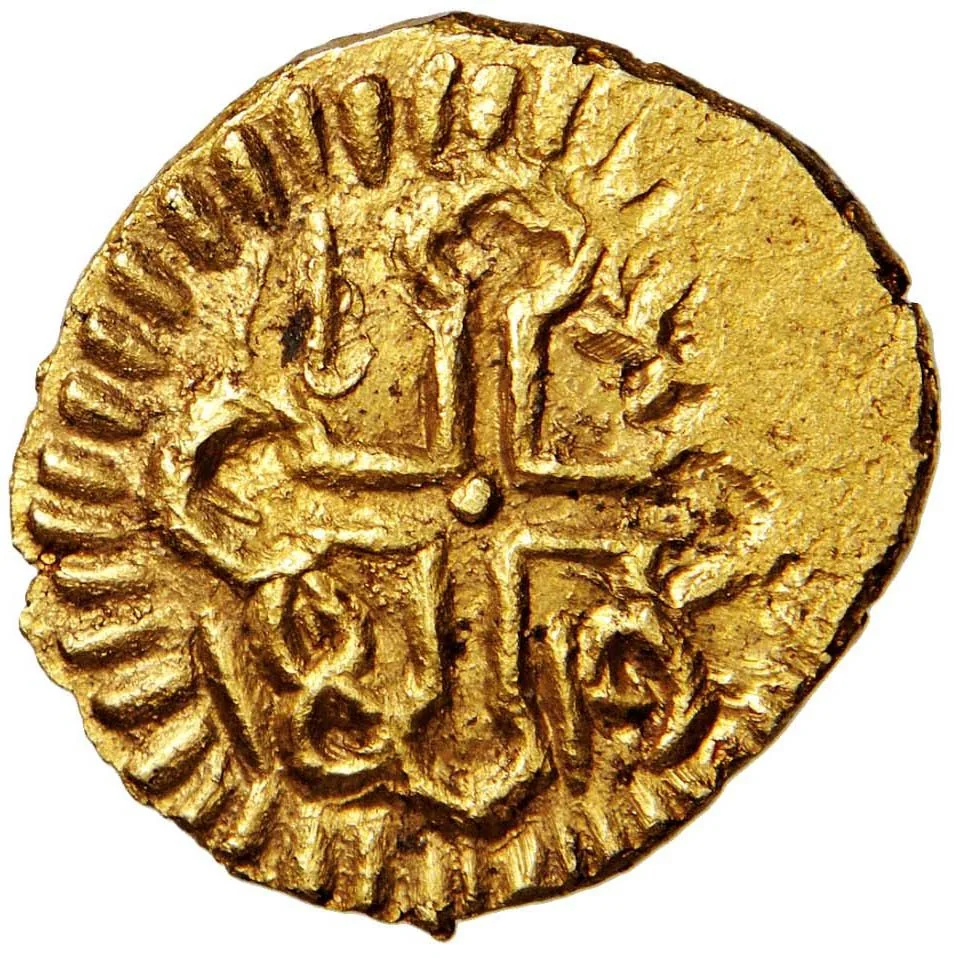
1 xerafim – Portuguese India
Add to wishlist
India
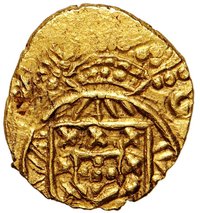
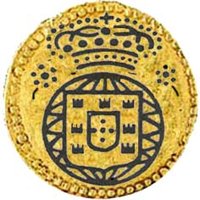
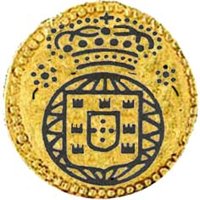
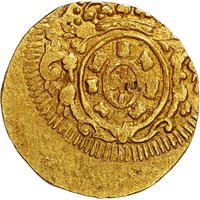
Obverse
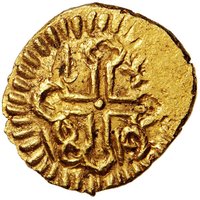
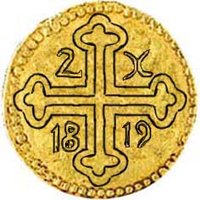
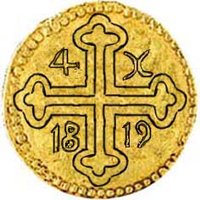
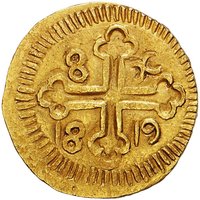
Reverse
Edge
Mints
| Name | Mark |
|---|---|
| Goa | — |
Mintings
| Year | Mint Mark | Mintage | Quality | Collection |
|---|---|---|---|---|
| 1819 | — | — |
Historical background
In 1819, the currency situation in Portuguese India was a complex and fragmented system, reflecting its position as a crossroads of trade and a colonial outpost. The official currency was the Portuguese Xerafim (Xerafin), but it circulated alongside a multitude of other coins, creating a challenging monetary environment. The most important of these was the Rupia (Indian Rupee), minted not only by the British East India Company but also by various Indian princely states. Additionally, older Portuguese coins like the Tangas and Reis (the latter being the theoretical base unit of the Portuguese empire) remained in use, alongside gold Mohoors and other historic trade coins. This proliferation meant exchange rates were fluid and often localized, complicating commerce.
The root of this complexity lay in Goa's economic reality. While politically a Portuguese colony, its economy was deeply integrated into the Indian Ocean and South Asian trade networks, where the rupee was the dominant silver currency for regional commerce. The Portuguese administration, centered in Velha Goa (Old Goa), lacked the economic strength to impose its currency exclusively. Consequently, the Xerafim itself was essentially a counting unit rather than a uniformly minted coin; it was often used to denote a value of 300 Réis or 60 Tangas, but actual payments were made in a mix of physical rupees, tangas, and other silver coins. The system was therefore bimetallic (gold and silver) and multi-issuer, leading to frequent disputes over the weight and purity of coins in transactions.
This chaotic monetary landscape posed significant problems for the Portuguese colonial government and merchants alike. It hindered efficient tax collection, created opportunities for fraud, and made fiscal planning difficult. Recognizing these issues, there were ongoing discussions and failed attempts at reform throughout the early 19th century. The situation in 1819 was one of entrenched instability, awaiting a concerted effort to standardize the currency—a goal that would only be partially achieved decades later with more substantive reforms aimed at aligning the colony's monetary system more closely with that of metropolitan Portugal, while still acknowledging the inescapable role of the rupee.
The root of this complexity lay in Goa's economic reality. While politically a Portuguese colony, its economy was deeply integrated into the Indian Ocean and South Asian trade networks, where the rupee was the dominant silver currency for regional commerce. The Portuguese administration, centered in Velha Goa (Old Goa), lacked the economic strength to impose its currency exclusively. Consequently, the Xerafim itself was essentially a counting unit rather than a uniformly minted coin; it was often used to denote a value of 300 Réis or 60 Tangas, but actual payments were made in a mix of physical rupees, tangas, and other silver coins. The system was therefore bimetallic (gold and silver) and multi-issuer, leading to frequent disputes over the weight and purity of coins in transactions.
This chaotic monetary landscape posed significant problems for the Portuguese colonial government and merchants alike. It hindered efficient tax collection, created opportunities for fraud, and made fiscal planning difficult. Recognizing these issues, there were ongoing discussions and failed attempts at reform throughout the early 19th century. The situation in 1819 was one of entrenched instability, awaiting a concerted effort to standardize the currency—a goal that would only be partially achieved decades later with more substantive reforms aimed at aligning the colony's monetary system more closely with that of metropolitan Portugal, while still acknowledging the inescapable role of the rupee.
✨ Legendary