

1 tanga – Portuguese India
Add to wishlist
India
Context
Years: 1818–1826
Country: India
Issuer: Portuguese India
Ruler: João VI
Currency:
(1706—1880)
Demonetized: Yes
Material
References
KM: #
Numista: #51398
Obverse
Description:
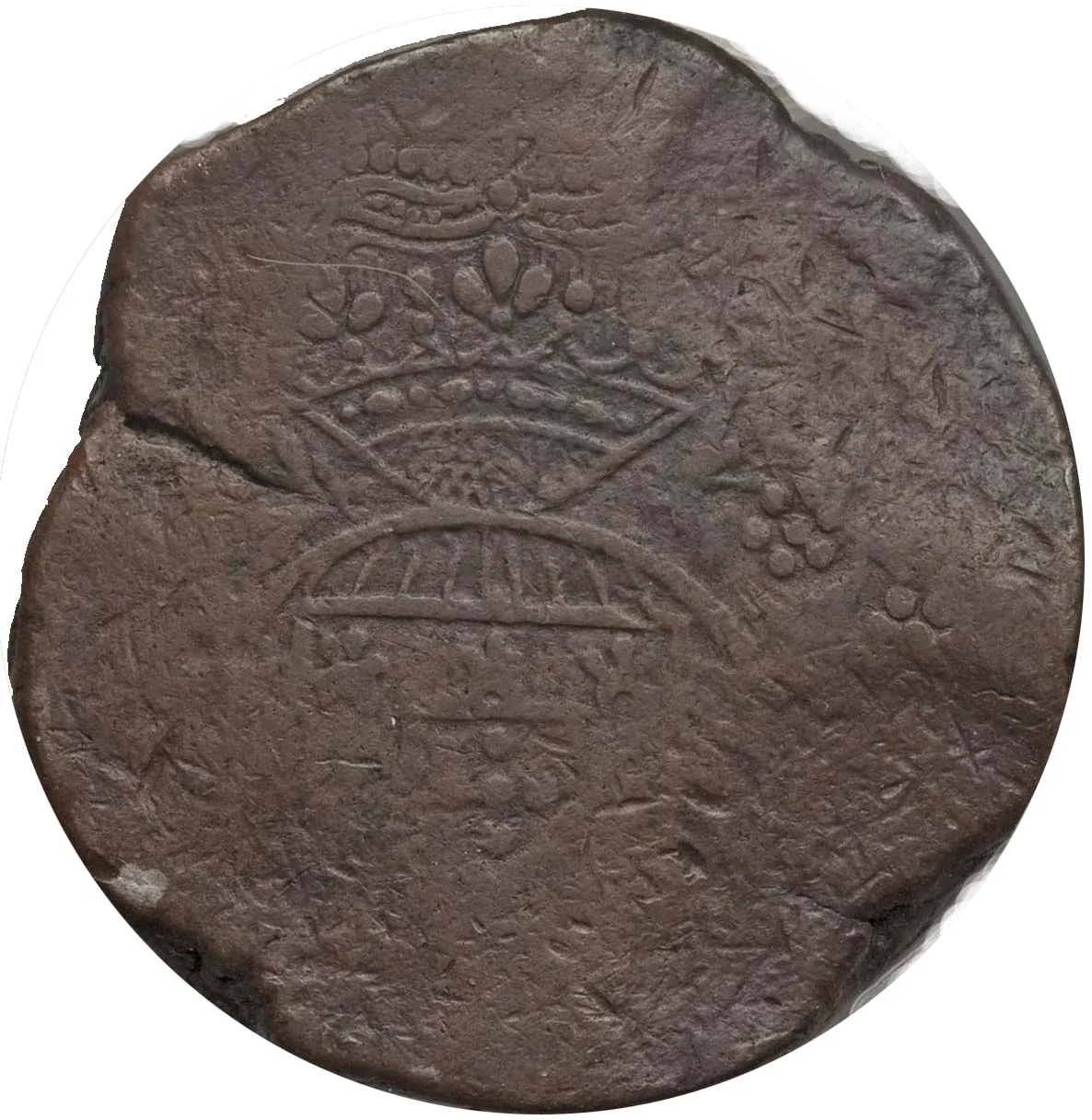
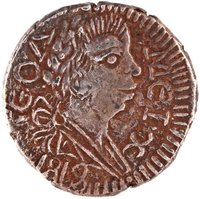
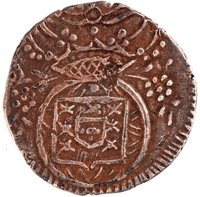
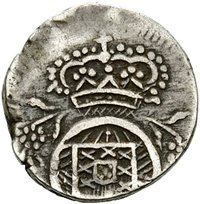
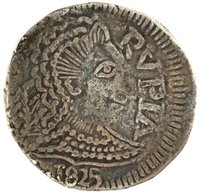
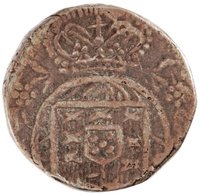
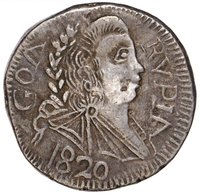
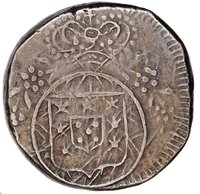
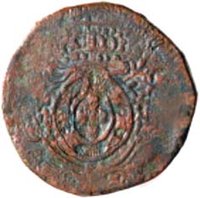
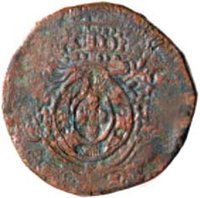
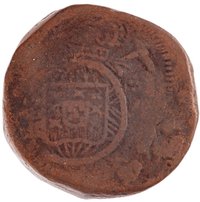
Crowned shield in sphere. (Uncrowned version is DIU serial.)
Reverse
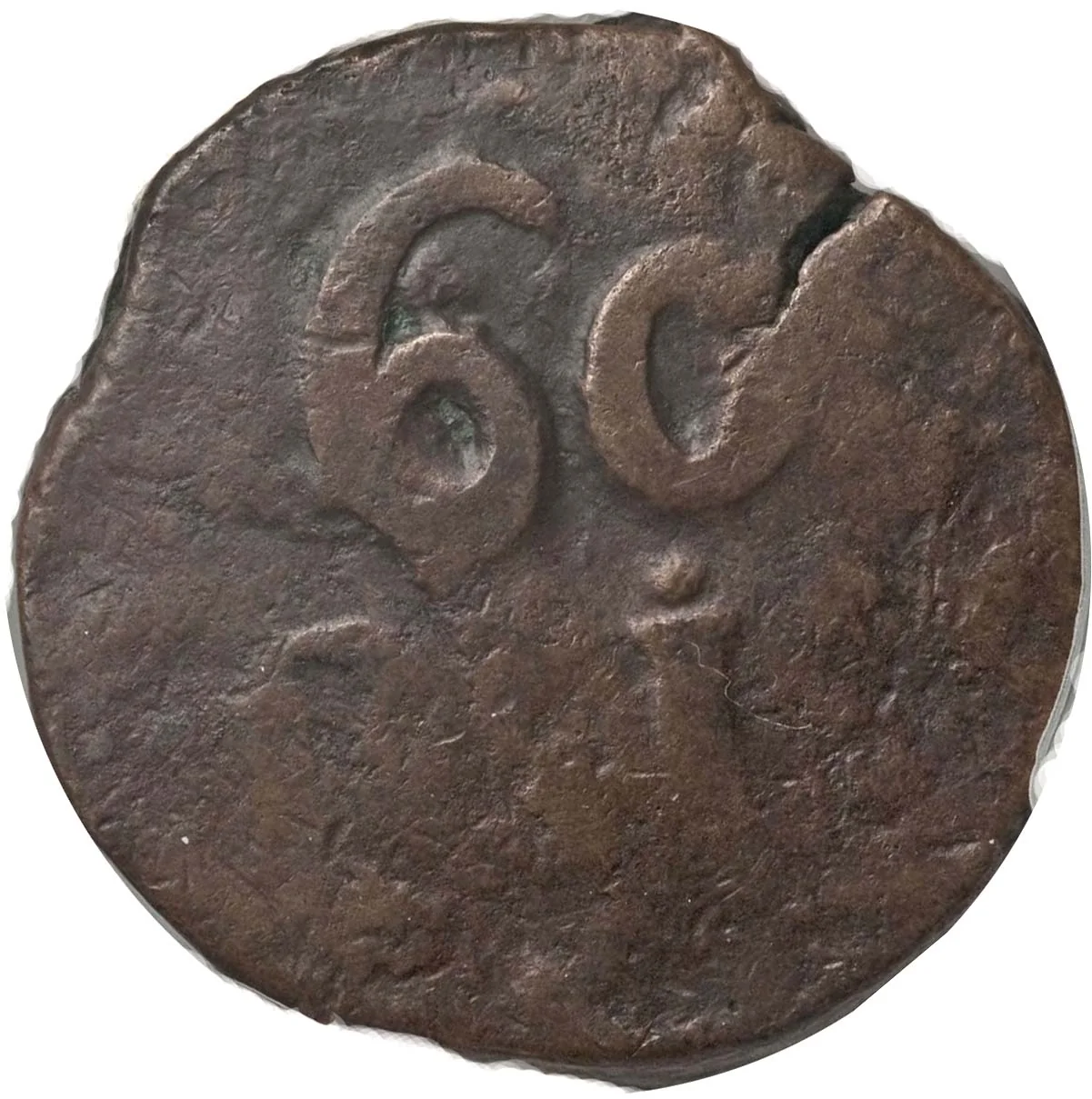
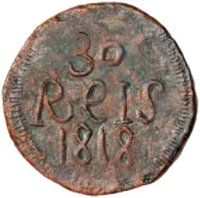
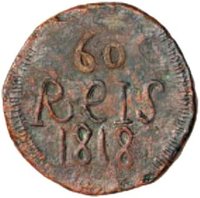
Inscription:
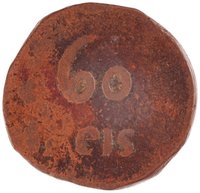
60
Rei8
Rei8
Script: Latin
Edge
Mints
| Name | Mark |
|---|---|
| Goa | — |
Mintings
| Year | Mint Mark | Mintage | Quality | Collection |
|---|---|---|---|---|
| — | — | — |
Historical background
In 1818, the currency situation in Portuguese India, centered on the territories of Goa, Daman, and Diu, was complex and fragmented, reflecting its dual role as a colonial enclave and a hub within Indian Ocean trade networks. The official currency was the Portuguese Indian Rupia (or Rupia de Goa), which was theoretically subdivided into tangas and reis. However, the reality on the ground was one of significant monetary pluralism. A wide variety of foreign coins circulated freely and were essential for commerce, including British Indian rupees, Spanish and Mexican silver dollars (patacas), and gold moidores. This proliferation stemmed from Goa's deep integration into regional trade, where these foreign currencies, particularly the silver dollars, were often preferred for their consistent weight and purity.
The Portuguese administration struggled with the practical and political challenges of this system. While they minted their own silver rupias at the Goa Mint, their supply was often insufficient, and the fluctuating value of silver created instability. Furthermore, the widespread acceptance of more trusted foreign coins undermined the authority and seigniorage of the colonial state. Attempts to fix exchange rates between the various circulating media were largely ineffective, leading to a dynamic and often chaotic daily exchange market managed by money changers (sarafs).
Thus, in 1818, the monetary landscape was less a unified system and more a competitive marketplace of metallic currencies. The Portuguese Indian rupia existed alongside, and in competition with, stronger foreign currencies, with value determined as much by intrinsic silver content and merchant confidence as by official decree. This situation would persist until more forceful standardization attempts were made later in the 19th century, but at this time, practicality and trade demands dictated a de facto multi-currency regime.
The Portuguese administration struggled with the practical and political challenges of this system. While they minted their own silver rupias at the Goa Mint, their supply was often insufficient, and the fluctuating value of silver created instability. Furthermore, the widespread acceptance of more trusted foreign coins undermined the authority and seigniorage of the colonial state. Attempts to fix exchange rates between the various circulating media were largely ineffective, leading to a dynamic and often chaotic daily exchange market managed by money changers (sarafs).
Thus, in 1818, the monetary landscape was less a unified system and more a competitive marketplace of metallic currencies. The Portuguese Indian rupia existed alongside, and in competition with, stronger foreign currencies, with value determined as much by intrinsic silver content and merchant confidence as by official decree. This situation would persist until more forceful standardization attempts were made later in the 19th century, but at this time, practicality and trade demands dictated a de facto multi-currency regime.
✨ Legendary