

1 Rupia – Portuguese India
India
Context
Years: 1804–1806
Country: India 
Issuer: Portuguese India
Ruler: Maria I
Currency:
(1706—1880)
Demonetized: Yes
Material
Diameter: 22 mm
Weight: 7.4 g
Silver weight: 7.40 g
Shape: Irregular round
Composition: Silver
Magnetic: No
Technique: Hammered
References
Numista: #51003
Value
Bullion value: $20.93
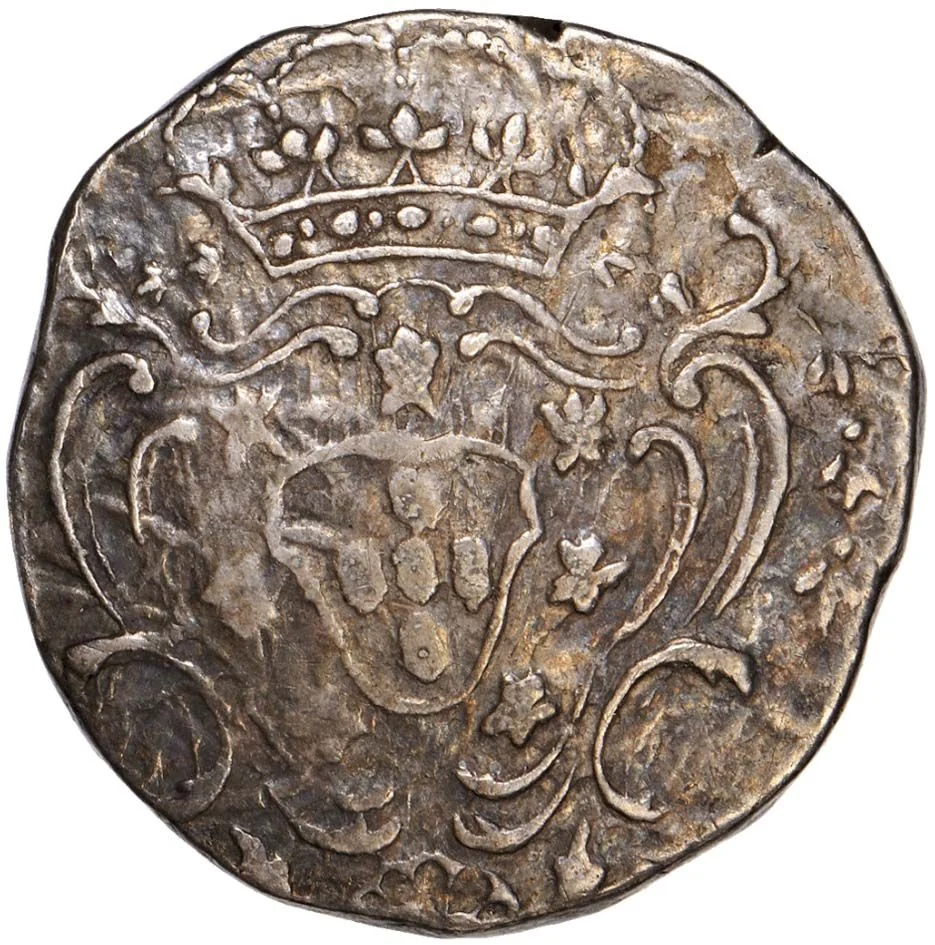
Obverse
Description:
Heraldic emblem
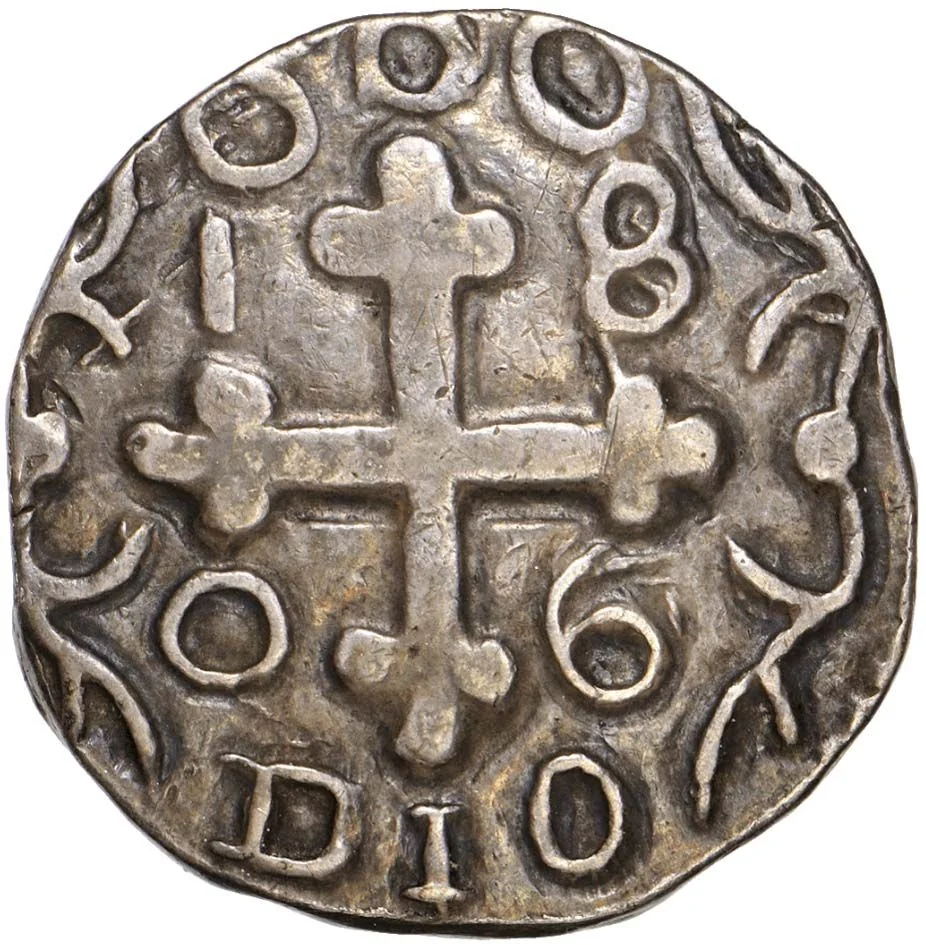
Reverse
Description:
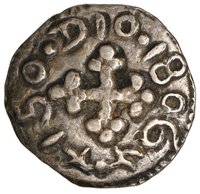
Cross of the Military Order of Avis, dated at corners, with encircling inscription.
Inscription:
600___DIO
1-8
0-6
1-8
0-6
Script: Latin
Edge
Mints
| Name | Mark |
|---|---|
| Dio | DIO |
Historical background
In 1804, the currency situation in Portuguese India, centred on the territories of Goa, Daman, and Diu, was complex and marked by a chronic shortage of official Portuguese coinage. The local economy operated on a de facto multi-currency system, heavily reliant on a vast array of foreign coins that circulated freely. The most dominant of these was the Portuguese Indian Rupia (Rupia) and its fractional units, but these competed with a plethora of other silver coins, notably the Spanish American 8 Reales (the "Spanish Dollar" or "Pillar Dollar") and various issues from neighbouring Indian princely states and other European trading powers. This created a chaotic monetary environment where exchange rates fluctuated based on the intrinsic silver content and physical condition of each coin.
The Portuguese administration, under the Viceroy Dom Domingos de Sousa Coutinho, struggled to assert monetary sovereignty. While the Casa da Moeda (mint) in Goa occasionally struck silver rupias, its output was insufficient to meet demand. Consequently, the government was forced to repeatedly recognise and regulate the rates of foreign coins through official proclamations called "assentos". These decrees attempted to fix the value of specific coin types in réis (the official Portuguese accounting unit), but they were often reactive and failed to stabilise the system. A significant problem was the widespread practice of "cunha" – the clipping and filing of coins to extract precious metal, which further degraded the currency in circulation and eroded trust.
This monetary instability had direct consequences for trade and administration. It complicated tax collection, created opportunities for arbitrage and fraud, and hindered smooth commercial transactions in Goa, a key port in the Indian Ocean trade network. The situation reflected Portugal's diminished economic power in the region and its inability to fully control its colonial financial system. Ultimately, the currency background of 1804 was one of ad-hoc management amidst scarcity, setting the stage for more concerted, but still challenging, monetary reforms in the decades that followed.
The Portuguese administration, under the Viceroy Dom Domingos de Sousa Coutinho, struggled to assert monetary sovereignty. While the Casa da Moeda (mint) in Goa occasionally struck silver rupias, its output was insufficient to meet demand. Consequently, the government was forced to repeatedly recognise and regulate the rates of foreign coins through official proclamations called "assentos". These decrees attempted to fix the value of specific coin types in réis (the official Portuguese accounting unit), but they were often reactive and failed to stabilise the system. A significant problem was the widespread practice of "cunha" – the clipping and filing of coins to extract precious metal, which further degraded the currency in circulation and eroded trust.
This monetary instability had direct consequences for trade and administration. It complicated tax collection, created opportunities for arbitrage and fraud, and hindered smooth commercial transactions in Goa, a key port in the Indian Ocean trade network. The situation reflected Portugal's diminished economic power in the region and its inability to fully control its colonial financial system. Ultimately, the currency background of 1804 was one of ad-hoc management amidst scarcity, setting the stage for more concerted, but still challenging, monetary reforms in the decades that followed.

✨ Legendary