

2000 Schilling – Austria
Austria
Context
Years: 1989–2001
Issuer: Austria 
Period:
(since 1945)
Currency:
(1945—2001)
Demonetization: 28 February 2002
Total mintage: 4,351,000
Material
Diameter: 37 mm
Weight: 31.1 g
Gold weight: 31.10 g
Thickness: 2 mm
Shape: Round
Composition: 99.99% Gold
Standard: Silver ounce
Magnetic: No
Technique: Milled
Alignment: Medal alignment
flip
References
KM: #Click to copy to clipboard2990
Numista: #15150
Value
Exchange value: 2000 ATS
Bullion value: $5177.00
Inflation-adjusted value: 4906.00 ATS
Obverse
Description:
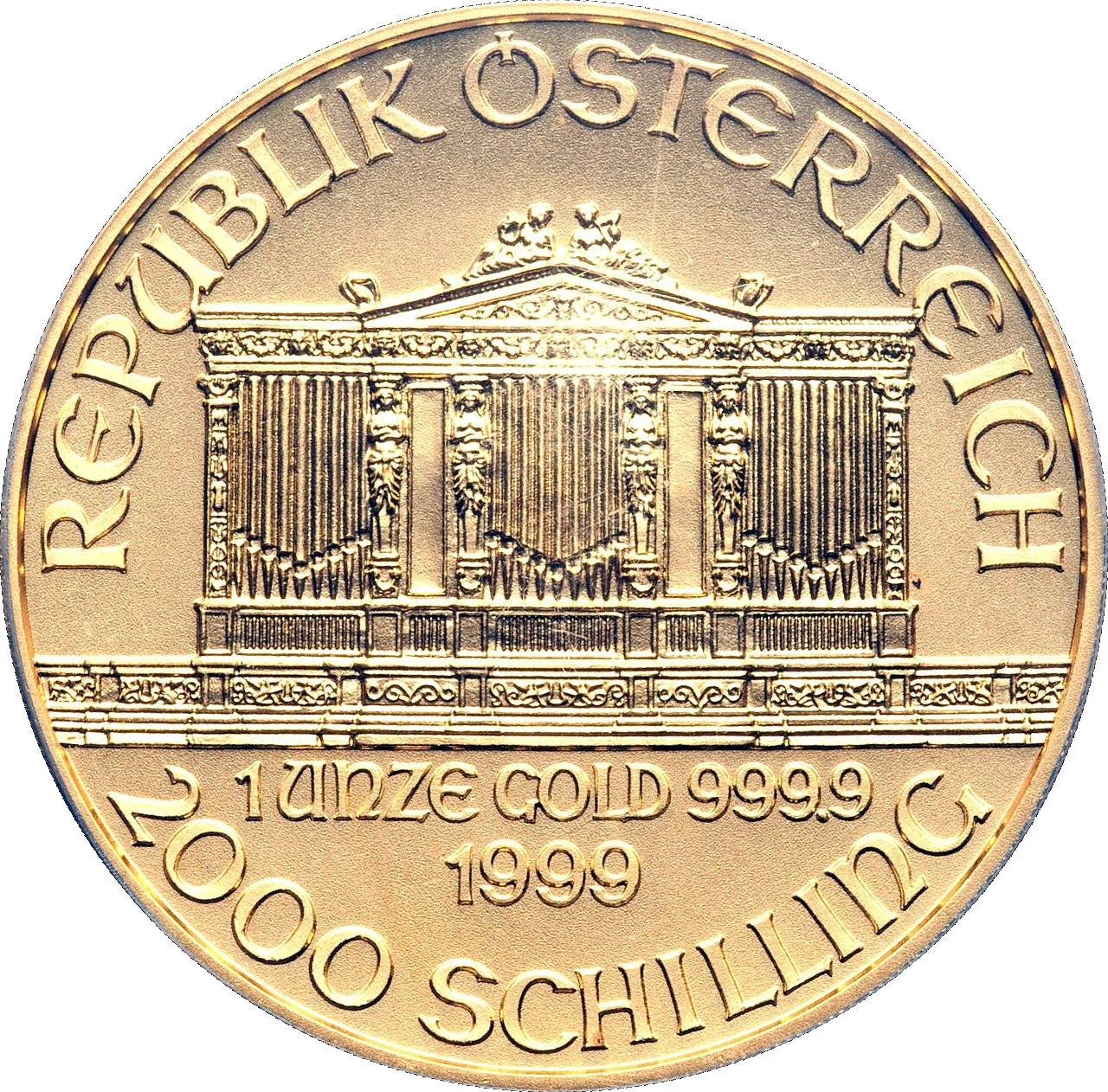
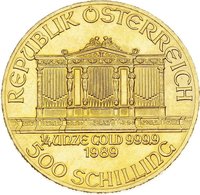
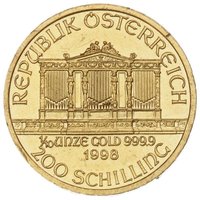
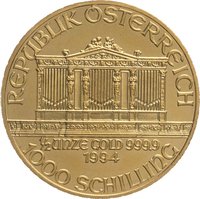
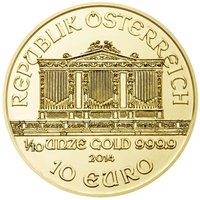
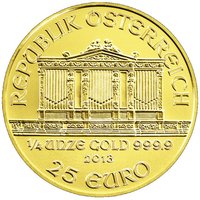
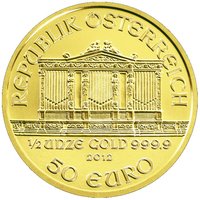
The pipe organ in Vienna's Musikverein Golden Hall.
Inscription:
REPUBLIK ÖSTERREICH
1 UNZE GOLD 999.9
1989
2000 SCHILLING
1 UNZE GOLD 999.9
1989
2000 SCHILLING
Translation:
REPUBLIC OF AUSTRIA
1 OUNCE GOLD 999.9
1989
2000 SCHILLING
1 OUNCE GOLD 999.9
1989
2000 SCHILLING
Script: Latin
Language: German
Engraver: Thomas Pesendorfer
Reverse
Description:
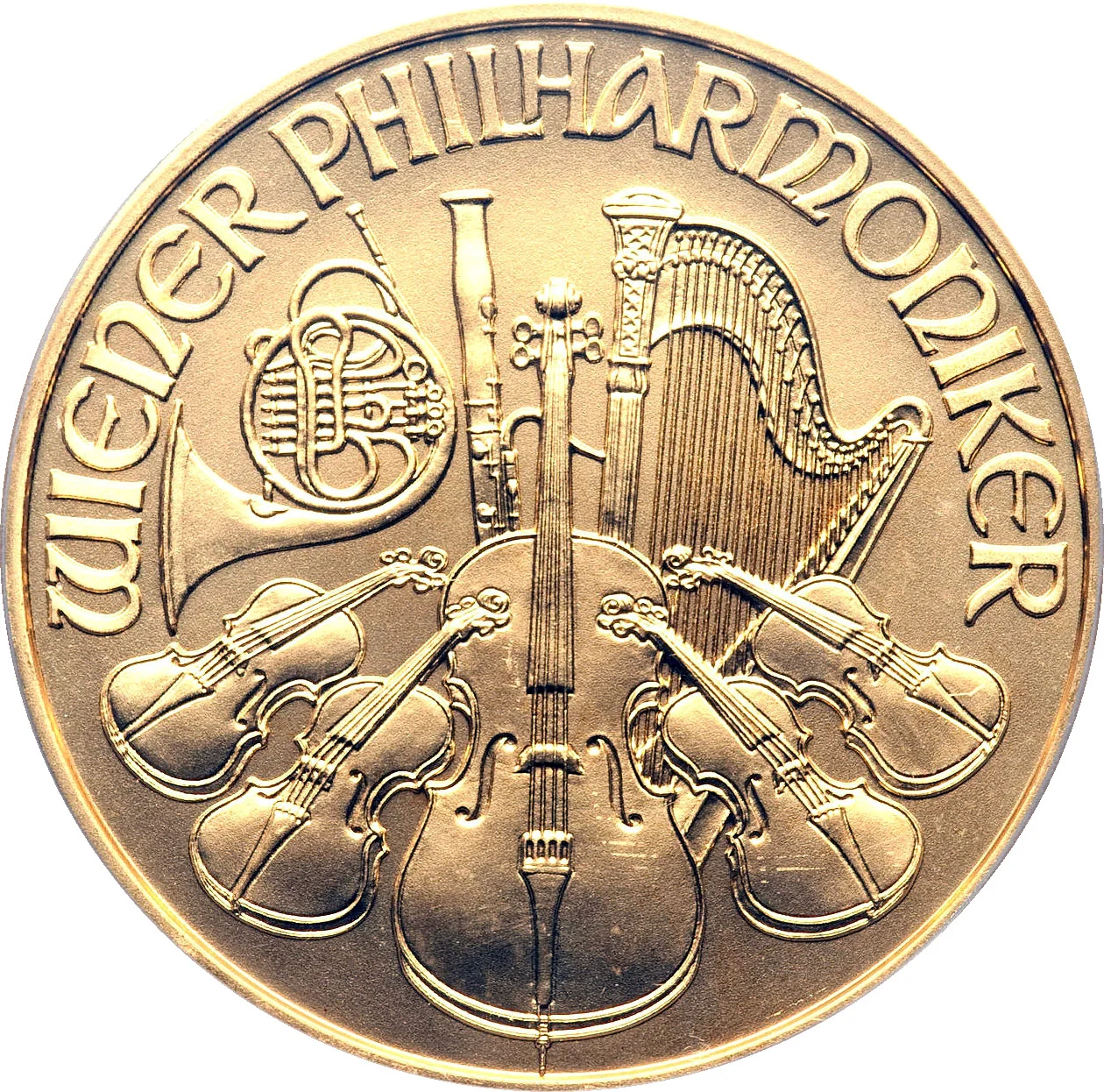
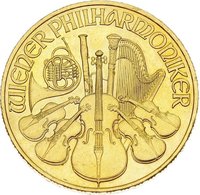
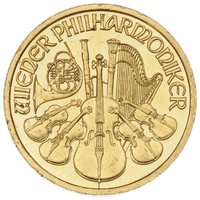
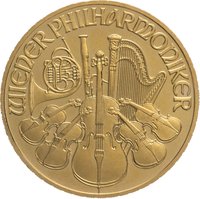
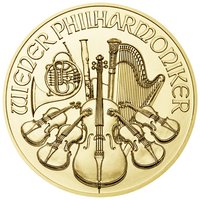
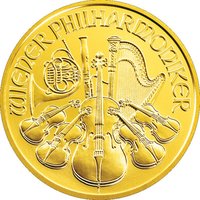
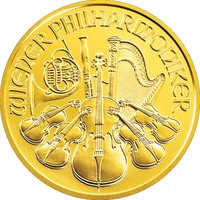
Four violins flank a cello, with a Viennese horn, bassoon, and harp behind.
Inscription:
WIENER PHILHARMONIKER
Script: Latin
Engraver: Thomas Pesendorfer
Edge
Reeded
Mints
| Name | Mark |
|---|---|
| Münze Österreich | — |
Mintings
| Year | Mint Mark | Mintage | Quality | Collection |
|---|---|---|---|---|
| 1989 | — | 351,000 | ||
| 1990 | — | 484,500 | ||
| 1991 | — | 233,500 | ||
| 1992 | — | 537,000 | ||
| 1993 | — | 234,000 | ||
| 1994 | — | 218,500 | ||
| 1995 | — | 645,500 | ||
| 1996 | — | 377,500 | ||
| 1997 | — | 408,500 | ||
| 1998 | — | 330,500 | ||
| 1999 | — | 230,500 | ||
| 2000 | — | 245,500 | ||
| 2001 | — | 54,500 |
Historical background
In 1989, Austria's currency situation was defined by the enduring strength and stability of the Austrian Schilling (ATS), often referred to as the "Alpendollar." This stability was a point of national pride, built upon a longstanding policy of a "hard currency" strategy initiated in the 1970s. The Austrian National Bank (OeNB) pegged the Schilling closely to the Deutsche Mark, the anchor currency of the European Monetary System (EMS). This deliberate alignment with West Germany's powerful Bundesbank imported monetary credibility and low inflation, fostering a stable environment for trade and investment, particularly with its largest economic partner.
This monetary stability existed in sharp contrast to the turbulent economic conditions in neighboring Eastern Bloc countries. As the Iron Curtain began to fray in 1989, Austria's solid Schilling became a beacon. The opening of the Hungarian border in May and the fall of the Berlin Wall in November triggered a wave of emigration from East Germany and elsewhere, with many transiting through Austria. Furthermore, Austrian banks and businesses, positioned at the new frontier between East and West, began to see increased opportunities, all conducted in the reliable Schilling.
Looking forward, Austria's currency policy in 1989 was already set on a clear European trajectory. The nation was an active participant in the European Monetary System (EMS) and fully committed to the broader project of European integration. The stability of the Schilling was seen not as a permanent end goal, but as a preparatory step for eventual participation in a single European currency. Thus, while the Schilling symbolized national economic success, its underlying strategy was fundamentally oriented toward relinquishing it in favor of the future Euro, a process that would culminate a decade later.
This monetary stability existed in sharp contrast to the turbulent economic conditions in neighboring Eastern Bloc countries. As the Iron Curtain began to fray in 1989, Austria's solid Schilling became a beacon. The opening of the Hungarian border in May and the fall of the Berlin Wall in November triggered a wave of emigration from East Germany and elsewhere, with many transiting through Austria. Furthermore, Austrian banks and businesses, positioned at the new frontier between East and West, began to see increased opportunities, all conducted in the reliable Schilling.
Looking forward, Austria's currency policy in 1989 was already set on a clear European trajectory. The nation was an active participant in the European Monetary System (EMS) and fully committed to the broader project of European integration. The stability of the Schilling was seen not as a permanent end goal, but as a preparatory step for eventual participation in a single European currency. Thus, while the Schilling symbolized national economic success, its underlying strategy was fundamentally oriented toward relinquishing it in favor of the future Euro, a process that would culminate a decade later.
Series: Vienna Philharmonic
⭐ Rare