

10 centavos – Colombia
Add to wishlist
Colombia
Context
Years: 1952–1966
Issuer: Colombia
Period:
(since 1886)
Currency:
(since 1847)
Total mintage: 344,912,000
Material
Diameter: 18.5 mm
Weight: 2.5 g
Thickness: 1.31 mm
Shape: Round
Composition: Copper-nickel
Technique: Milled
Alignment: Coin alignment
flip
References
KM: #
Numista: #5094
Value
Exchange value: 0.10 COP
Obverse
Description:
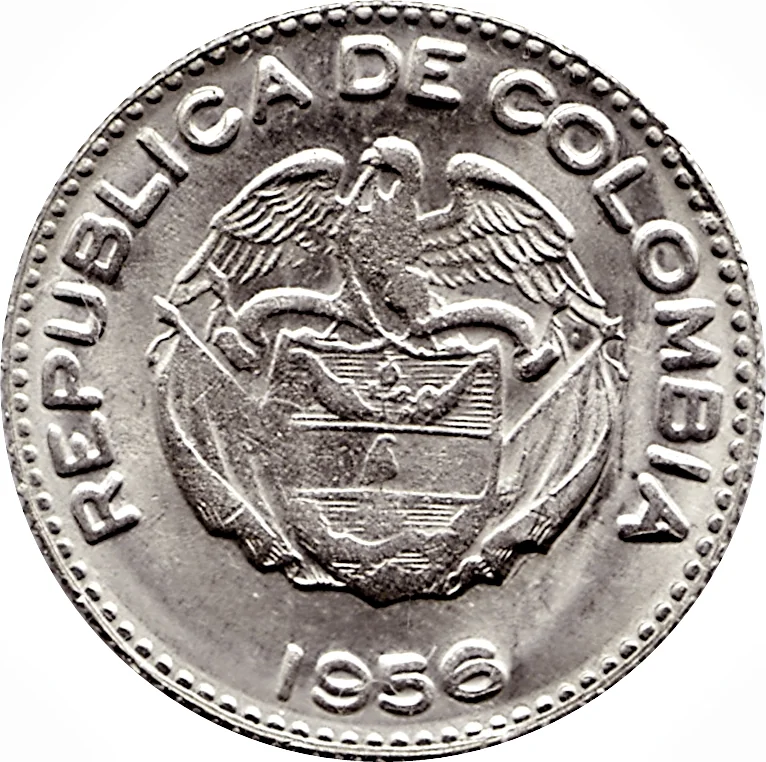
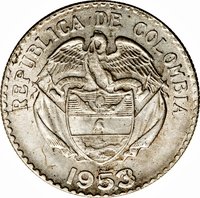
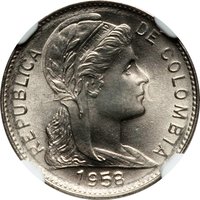
Colombia's coat of arms encircled by the country name, with the date beneath.
Inscription:
REPUBLICA DE COLOMBIA
1956
1956
Translation:
REPUBLIC OF COLOMBIA
1956
1956
Script: Latin
Language: Spanish
Engraver: Luis Alberto Acuña Tapias
Reverse
Description:
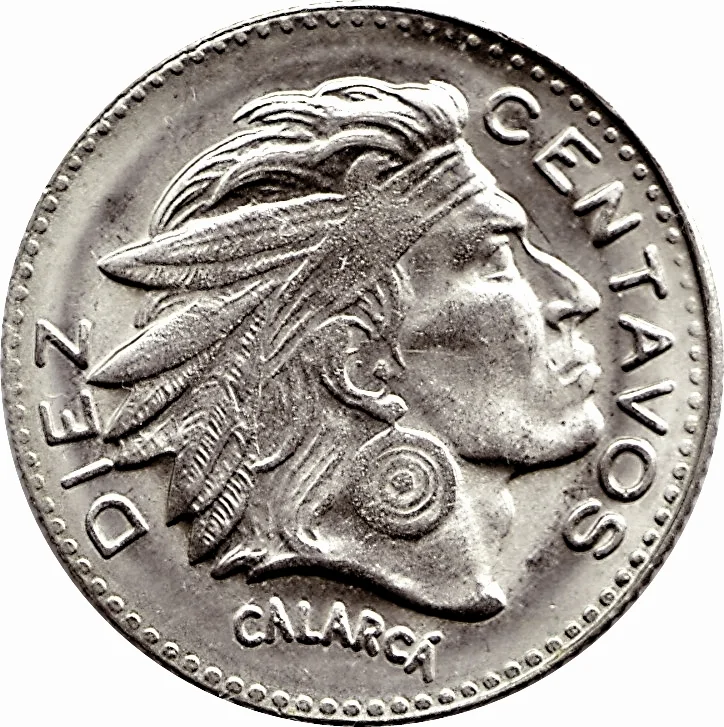
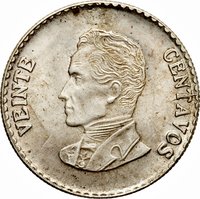
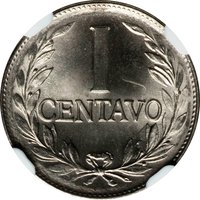
Portrait of Chief Calarcá, facing right.
Inscription:
DIEZ CENTAVOS
CALARCÁ
CALARCÁ
Translation:
TEN CENTS
CALARCÁ
CALARCÁ
Script: Latin
Language: Spanish
Engraver: Luis Alberto Acuña Tapias
Edge
Reeded
Categories
| Animal> Bird |
| Person> Military leader |
| Symbols> Coat of Arms |
Mints
| Name | Mark |
|---|---|
| Bogota Mint | B |
Mintings
Historical background
In 1952, Colombia's currency situation was characterized by a complex system of exchange controls and multiple exchange rates, a legacy of the economic policies established during World War II and intensified under President Laureano Gómez (1950-1953). The country operated under a fixed exchange rate regime, pegging the Colombian peso to the US dollar. However, due to persistent balance of payments pressures and inflationary trends, the official rate did not reflect market realities. This led to the creation of a thriving black market for dollars, where the currency traded at a significant premium, highlighting a growing lack of confidence in the peso and the rigidity of the official system.
The core economic challenge was a sharp decline in Colombia's terms of trade, primarily driven by a fall in coffee prices on the international market after the Korean War boom. As coffee was the nation's principal export, this created a severe shortage of foreign exchange. The government's response was to tighten import restrictions and maintain a labyrinth of preferential exchange rates for different types of transactions (e.g., essential imports, profit remittances, travel). This system, managed by the Exchange Office, aimed to conserve dollars and protect international reserves but created distortions, encouraged corruption, and stifled non-coffee exports by making them less competitive.
Overall, the currency situation in 1952 reflected an economy under strain, struggling to adjust to external shocks within an inflexible policy framework. The multiple-rate system acted as a subsidy for some sectors and a tax on others, leading to inefficiencies and economic rent-seeking. This environment of exchange controls and a widening gap between official and parallel market rates would set the stage for a major currency reform later in the decade, culminating in the adoption of a crawling peg system in 1967 to introduce greater flexibility.
The core economic challenge was a sharp decline in Colombia's terms of trade, primarily driven by a fall in coffee prices on the international market after the Korean War boom. As coffee was the nation's principal export, this created a severe shortage of foreign exchange. The government's response was to tighten import restrictions and maintain a labyrinth of preferential exchange rates for different types of transactions (e.g., essential imports, profit remittances, travel). This system, managed by the Exchange Office, aimed to conserve dollars and protect international reserves but created distortions, encouraged corruption, and stifled non-coffee exports by making them less competitive.
Overall, the currency situation in 1952 reflected an economy under strain, struggling to adjust to external shocks within an inflexible policy framework. The multiple-rate system acted as a subsidy for some sectors and a tax on others, leading to inefficiencies and economic rent-seeking. This environment of exchange controls and a widening gap between official and parallel market rates would set the stage for a major currency reform later in the decade, culminating in the adoption of a crawling peg system in 1967 to introduce greater flexibility.
Series: 1952 Colombia circulation coins
🌱 Very Common