

100 crowns – Austrian Empire
Add to wishlist
Austria
Context
Years: 1909–1915
Country: Austria
Issuer: Austrian Empire
Ruler: Francis Joseph I
Currency:
(1892—1918)
Demonetized: Yes
Total mintage: 24,924
Material
References
KM: #
Numista: #15147
Value
Bullion value: $4706.42
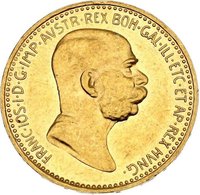
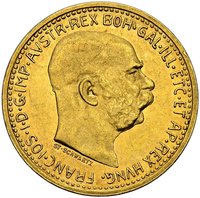
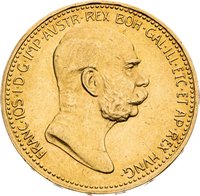
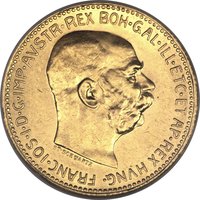
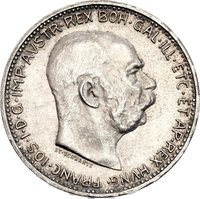
Obverse
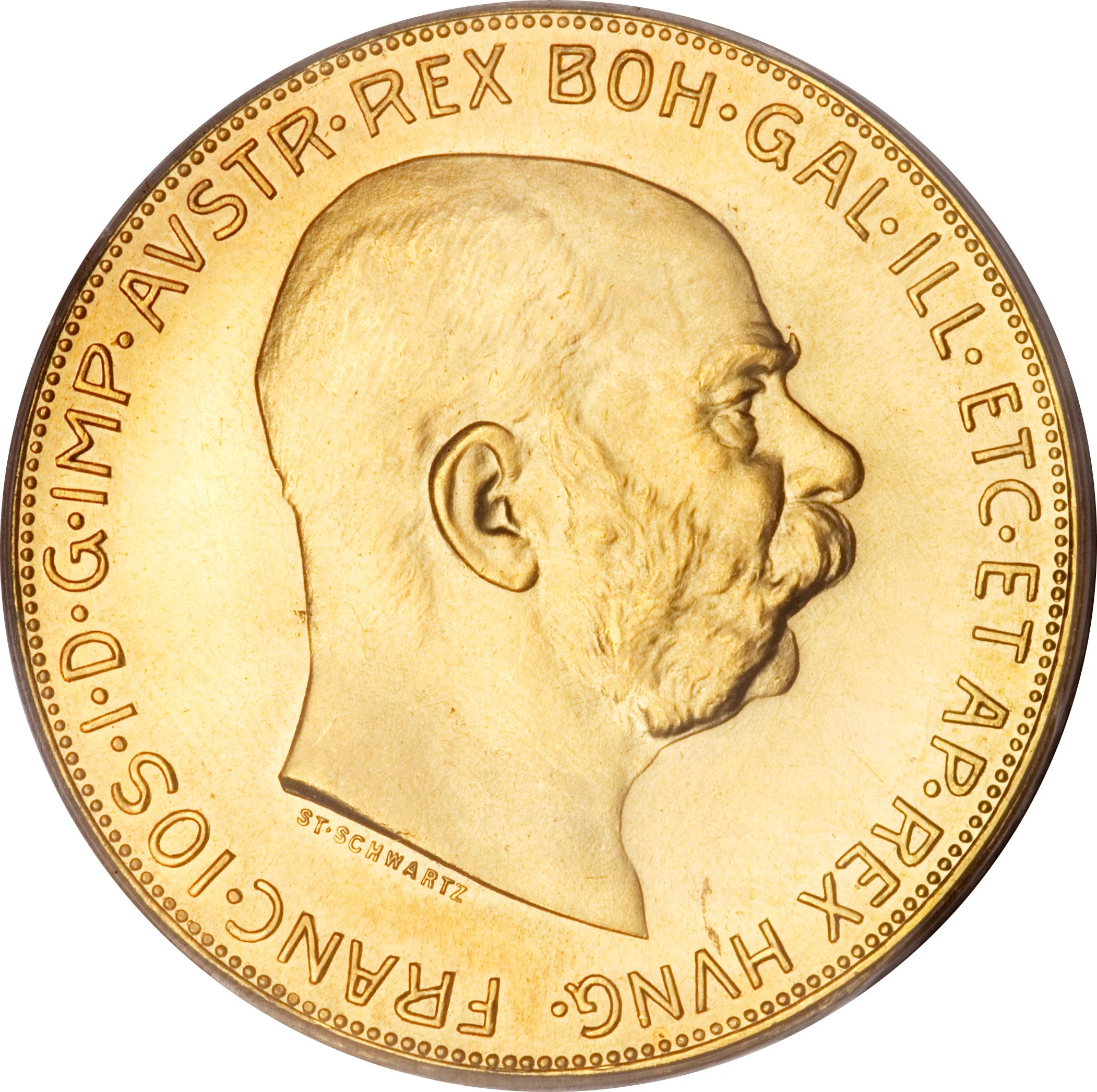
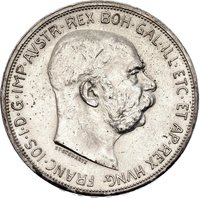
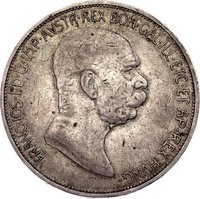
Description:
Bust portrait facing right, signed below.
Inscription:
FRANC·IOS·I·D·G·IMP·AVSTR·REX BOH·GAL·ILL·ETC·ET AP·REX HUNG·
ST.SCHWARTZ
ST.SCHWARTZ
Translation:
FRANCIS I, BY THE GRACE OF GOD, EMPEROR OF AUSTRIA, KING OF BOHEMIA, GALICIA, ILLYRIA, ETC., AND APOSTOLIC KING OF HUNGARY
Script: Latin
Language: Latin
Engraver: Stefan Schwartz
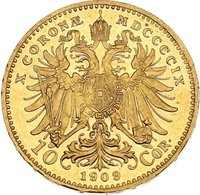
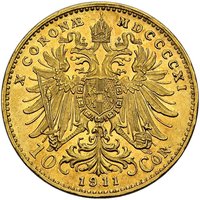
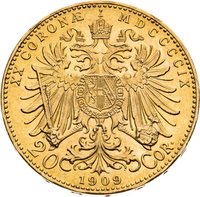
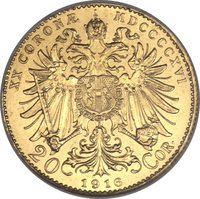
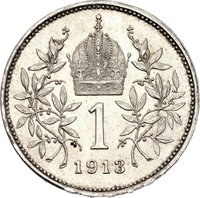
Reverse
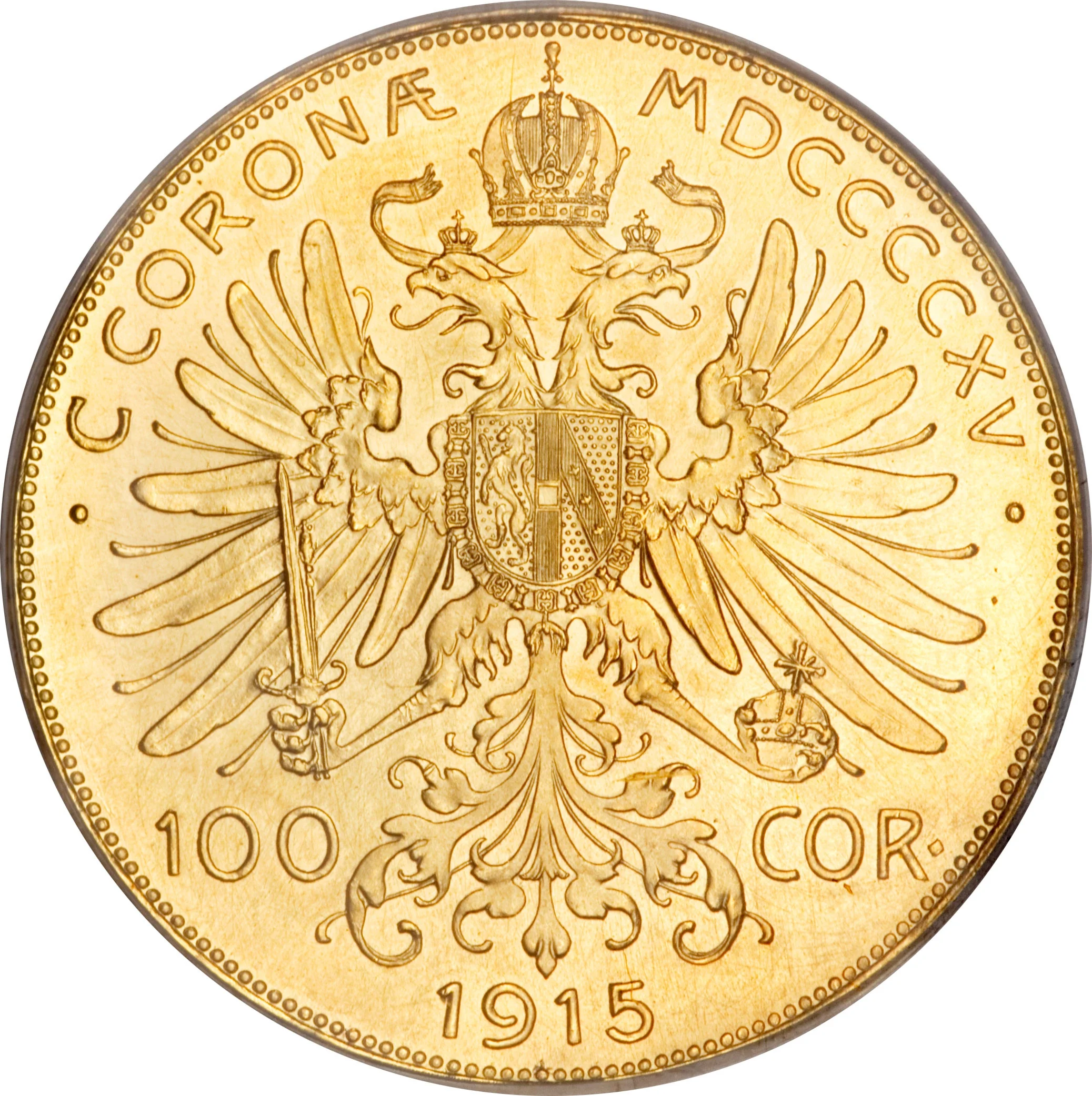
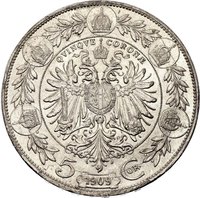
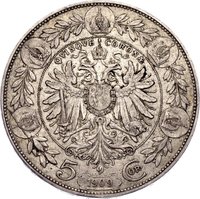
Description:
Imperial eagle above, value and date in Latin below.
Inscription:
C CORONÆ MDCCCCXV
100 COR.
1915
100 COR.
1915
Translation:
One Hundred Coronas 1915
Script: Latin
Language: Latin
Engraver: Stefan Schwartz
Edge
Mints
| Name | Mark |
|---|---|
| Münze Österreich | — |
Mintings
| Year | Mint Mark | Mintage | Quality | Collection |
|---|---|---|---|---|
| 1909 | — | 3,203 | ||
| 1910 | — | 3,074 | ||
| 1911 | — | 11,165 | ||
| 1912 | — | 3,591 | ||
| 1913 | — | 2,696 | ||
| 1914 | — | 1,195 | ||
| 1915 | — | — | Proof | |
| 1915 | — | — |
Historical background
In 1909, the Austro-Hungarian Empire operated under a complex and increasingly strained dual monetary system. The official currency was the Austro-Hungarian gulden (or florin), managed by the Austro-Hungarian Bank, which was on a de facto gold standard. However, the system was unique as banknotes were not directly convertible to gold for the general public; convertibility was guaranteed only for foreign central banks and for large international transactions. This "limping gold standard" created a fragile foundation, heavily reliant on confidence and the Bank's substantial gold reserves.
The period leading up to 1909 was marked by significant fiscal pressures, primarily due to the empire's massive military expenditures. The costs of annexing Bosnia and Herzegovina in 1908, coupled with an ongoing naval arms race in the Adriatic and general military modernization, placed severe strain on the state budget. To finance these deficits, the government increasingly resorted to borrowing from the central bank, which led to a growth in the paper money supply not fully backed by gold. This practice risked inflation and undermined international confidence in the gulden's stability.
Consequently, by 1909, there was intense political debate and growing recognition among policymakers that monetary reform was urgently needed. The goal was to transition to a fully convertible and stable gold-based currency to strengthen international trade and credit. These discussions would culminate just three years later, in 1912, with the planned introduction of the new gold krone, a reform delayed but ultimately hastened by the financial demands of the impending First World War. Thus, 1909 represents a pivotal moment of vulnerability, where wartime financial practices were straining a pre-war monetary system on the brink of official transformation.
The period leading up to 1909 was marked by significant fiscal pressures, primarily due to the empire's massive military expenditures. The costs of annexing Bosnia and Herzegovina in 1908, coupled with an ongoing naval arms race in the Adriatic and general military modernization, placed severe strain on the state budget. To finance these deficits, the government increasingly resorted to borrowing from the central bank, which led to a growth in the paper money supply not fully backed by gold. This practice risked inflation and undermined international confidence in the gulden's stability.
Consequently, by 1909, there was intense political debate and growing recognition among policymakers that monetary reform was urgently needed. The goal was to transition to a fully convertible and stable gold-based currency to strengthen international trade and credit. These discussions would culminate just three years later, in 1912, with the planned introduction of the new gold krone, a reform delayed but ultimately hastened by the financial demands of the impending First World War. Thus, 1909 represents a pivotal moment of vulnerability, where wartime financial practices were straining a pre-war monetary system on the brink of official transformation.
🌱 Fairly Common