

200 mon – Yonezawa Domain
Add to wishlist
Japan
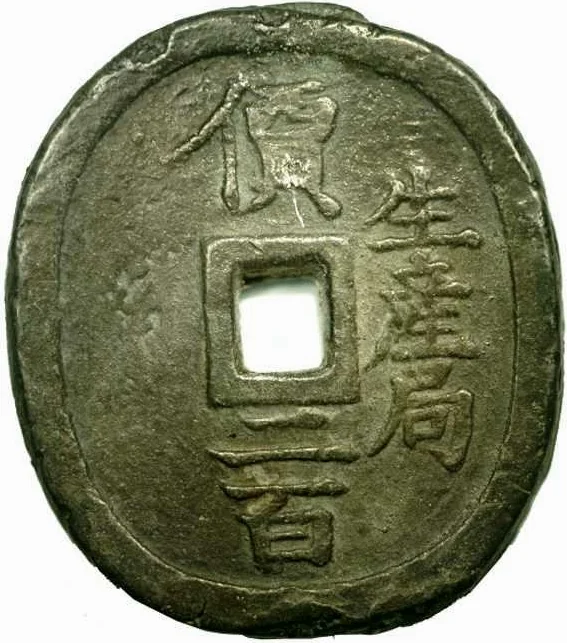
Obverse
Description:
Vertical characters: 生産局 (Seisankyoku). Authority to right: 價二百 (Ka-nihyaku).
Inscription:
價
生
産
局
二
百
生
産
局
二
百
Translation:
Price
Life
Production
Bureau
Two
Hundred
Life
Production
Bureau
Two
Hundred
Scripts: Chinese (traditional, regular script)
Language: Chinese
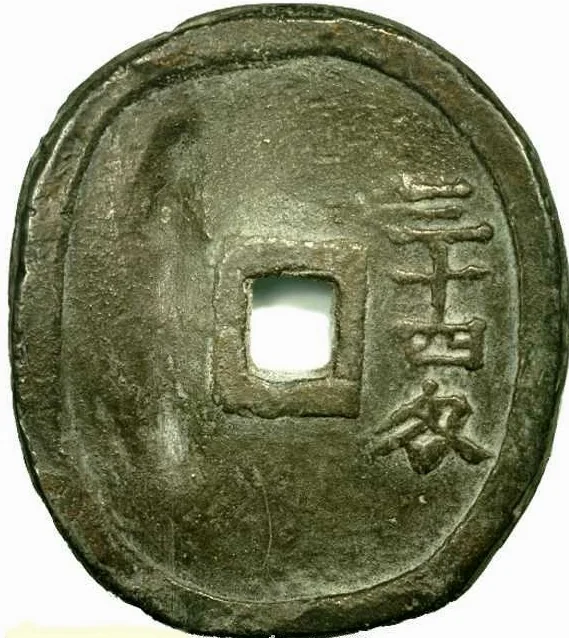
Reverse
Description:
Right of hole: four vertical characters indicate coin weight in Japanese units: 三十四匁 (Sanjūyon-monme).
Inscription:
三
十
四
匁
十
四
匁
Translation:
Thirty-four monme.
Scripts: Chinese (traditional, regular script)
Language: Japanese
Edge
Mintings
| Year | Mint Mark | Mintage | Quality | Collection |
|---|---|---|---|---|
| 1862 | — | — |
Historical background
In 1862, the Yonezawa Domain, like many feudal domains in late Edo-period Japan, faced severe and chronic financial difficulties. These problems were rooted in the domain's mountainous geography, which limited agricultural output, and its historical obligation to maintain a large samurai retinue far beyond its modest 150,000 koku assessment. Decades of deficit spending, crop failures, and lavish sankin-kōtai processions to Edo had driven the domain deep into debt with Osaka merchants. By the 1860s, Yonezawa was functionally bankrupt, surviving on forced loans and deferred obligations.
The currency situation was a critical manifestation of this crisis. The domain heavily relied on the issuance of hansatsu (domainal paper notes) to circulate within its borders. While these notes provided essential liquidity for internal transactions and samurai stipends, their over-issuance led to significant depreciation and loss of public confidence. Furthermore, Yonezawa's notes were not readily convertible outside the domain, creating complex exchange problems with Tokugawa koban gold and ichibu silver coinage used for external trade and official shogunate taxes. This created a two-tiered monetary system that stifled commerce.
In response, the domain's reformist leadership under Lord Uesugi Narinori and his senior retainer Takeshita Aya no Suke implemented drastic fiscal reforms. These included promoting local industries like safflower and textiles, enforcing extreme austerity on the samurai class, and attempting to stabilize the hansatsu. However, in 1862, these measures were still in their arduous early stages. The fundamental tension remained: Yonezawa needed its depreciating paper currency to function internally, yet it desperately needed hard specie to meet its external debts and obligations to the weakening Tokugawa shogunate, all while navigating the rising political storms of the Bakumatsu era.
The currency situation was a critical manifestation of this crisis. The domain heavily relied on the issuance of hansatsu (domainal paper notes) to circulate within its borders. While these notes provided essential liquidity for internal transactions and samurai stipends, their over-issuance led to significant depreciation and loss of public confidence. Furthermore, Yonezawa's notes were not readily convertible outside the domain, creating complex exchange problems with Tokugawa koban gold and ichibu silver coinage used for external trade and official shogunate taxes. This created a two-tiered monetary system that stifled commerce.
In response, the domain's reformist leadership under Lord Uesugi Narinori and his senior retainer Takeshita Aya no Suke implemented drastic fiscal reforms. These included promoting local industries like safflower and textiles, enforcing extreme austerity on the samurai class, and attempting to stabilize the hansatsu. However, in 1862, these measures were still in their arduous early stages. The fundamental tension remained: Yonezawa needed its depreciating paper currency to function internally, yet it desperately needed hard specie to meet its external debts and obligations to the weakening Tokugawa shogunate, all while navigating the rising political storms of the Bakumatsu era.
✨ Legendary