

15 dollars – Canada
Add to wishlist
Canada
Context
Material
Diameter: 38 mm
Weight: 31.39 g
Silver Weight:: 31.39 g
Thickness: 3.2 mm
Shape: Round
Composition: 99.99% Silver
Standard: Silver ounce
Magnetic: No
Technique: Milled
Alignment: Medal alignment
flip
References
KM: #
Numista: #50502
Value
Exchange value: 15 CAD
Bullion value: $76.99
Inflation-adjusted value: 19.76 CAD
Obverse
Description:
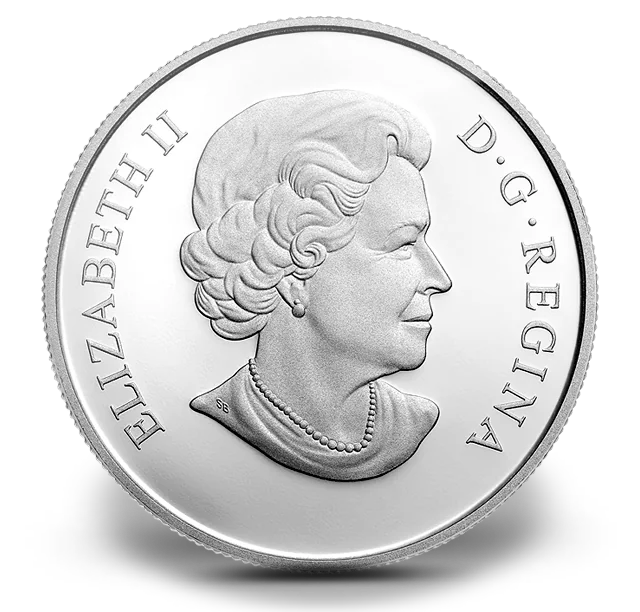
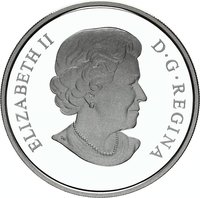
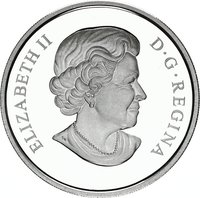
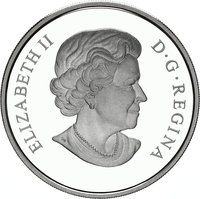
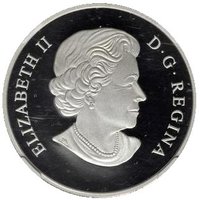
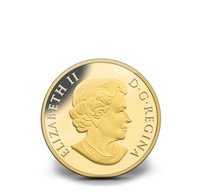
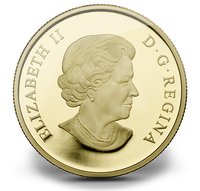
Queen Elizabeth II at 77, facing right, wearing a necklace and earrings.
Inscription:
ELIZABETH II D·G·REGINA
SB
SB
Translation:
Elizabeth II, by the Grace of God, Queen
Solomon Islands
Solomon Islands
Script: Latin
Engraver: Susan Taylor
Designer: Susanna Blunt
Reverse
Description:
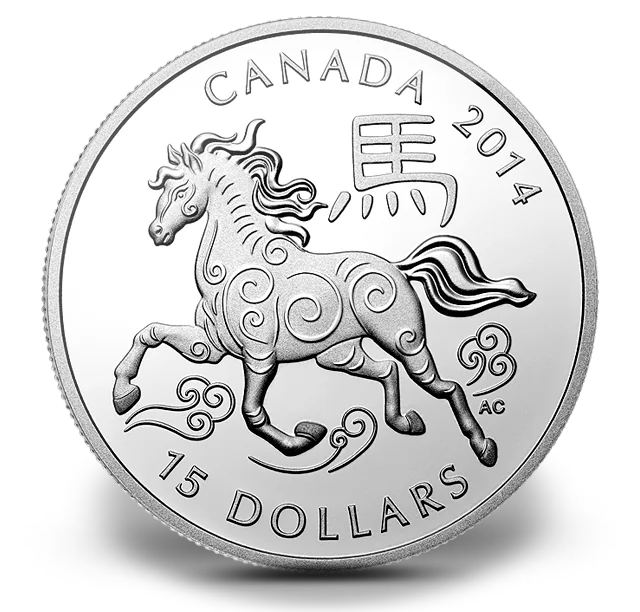
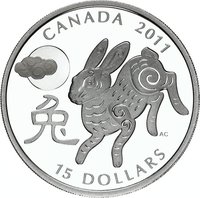
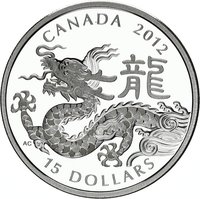
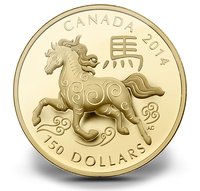
Galloping horse with Chinese horse symbol.
Inscription:
Canada 2014
馬
AC
15 DOLLARS
馬
AC
15 DOLLARS
Translation:
Canada 2014
Horse
AC
15 DOLLARS
Horse
AC
15 DOLLARS
Engraver: Konrad Wachelko
Designer: Aries Cheung
Edge
Serrated
Categories
| Animal> Horse |
| Astrology> Chinese calendar |
Mints
| Name | Mark |
|---|---|
| Royal Canadian Mint of Ottawa | — |
Mintings
| Year | Mint Mark | Mintage | Quality | Collection |
|---|---|---|---|---|
| 2014 | — | 15,738 | Proof |
Historical background
In 2014, the Canadian dollar, often called the "loonie," experienced a significant and sustained decline, marking a shift from the previous decade's strength. Having traded near or above parity with the US dollar for much of the period following the 2008-09 financial crisis, the currency began a sharp descent in early 2013 that accelerated throughout 2014. By year's end, it had fallen to approximately 86 US cents, a loss of roughly 10% of its value over the year and reaching its lowest level since mid-2009. This depreciation was the dominant narrative for Canada's currency that year.
The primary driver was a dramatic collapse in global oil prices, which began in the summer and saw benchmark crude fall by nearly 50% by December. As a major oil exporter, Canada's economy and currency are highly sensitive to energy prices. The shock exposed vulnerabilities and raised concerns about the economic outlook, particularly for energy investment and government revenues in oil-producing provinces like Alberta. Concurrently, the U.S. Federal Reserve was concluding its quantitative easing program, strengthening the U.S. dollar against most global currencies, while the Bank of Canada maintained a cautious and dovish stance, creating a widening policy divergence that further pressured the loonie.
This currency environment created a mixed economic picture. The weaker dollar provided a crucial boost to non-energy exporters, particularly manufacturers and tourism, by making their goods and services more competitive in the U.S. market. However, it also increased costs for imports and consumer travel, contributing to a higher cost of living. The Bank of Canada, under Governor Stephen Poloz, viewed the depreciation as a necessary "buffer" for the economy against the oil shock, opting to hold its key interest rate at 1% while emphasizing the growing risks from lower oil prices, which set the stage for a surprise rate cut in early 2015.
The primary driver was a dramatic collapse in global oil prices, which began in the summer and saw benchmark crude fall by nearly 50% by December. As a major oil exporter, Canada's economy and currency are highly sensitive to energy prices. The shock exposed vulnerabilities and raised concerns about the economic outlook, particularly for energy investment and government revenues in oil-producing provinces like Alberta. Concurrently, the U.S. Federal Reserve was concluding its quantitative easing program, strengthening the U.S. dollar against most global currencies, while the Bank of Canada maintained a cautious and dovish stance, creating a widening policy divergence that further pressured the loonie.
This currency environment created a mixed economic picture. The weaker dollar provided a crucial boost to non-energy exporters, particularly manufacturers and tourism, by making their goods and services more competitive in the U.S. market. However, it also increased costs for imports and consumer travel, contributing to a higher cost of living. The Bank of Canada, under Governor Stephen Poloz, viewed the depreciation as a necessary "buffer" for the economy against the oil shock, opting to hold its key interest rate at 1% while emphasizing the growing risks from lower oil prices, which set the stage for a surprise rate cut in early 2015.
💎 Extremely Rare