

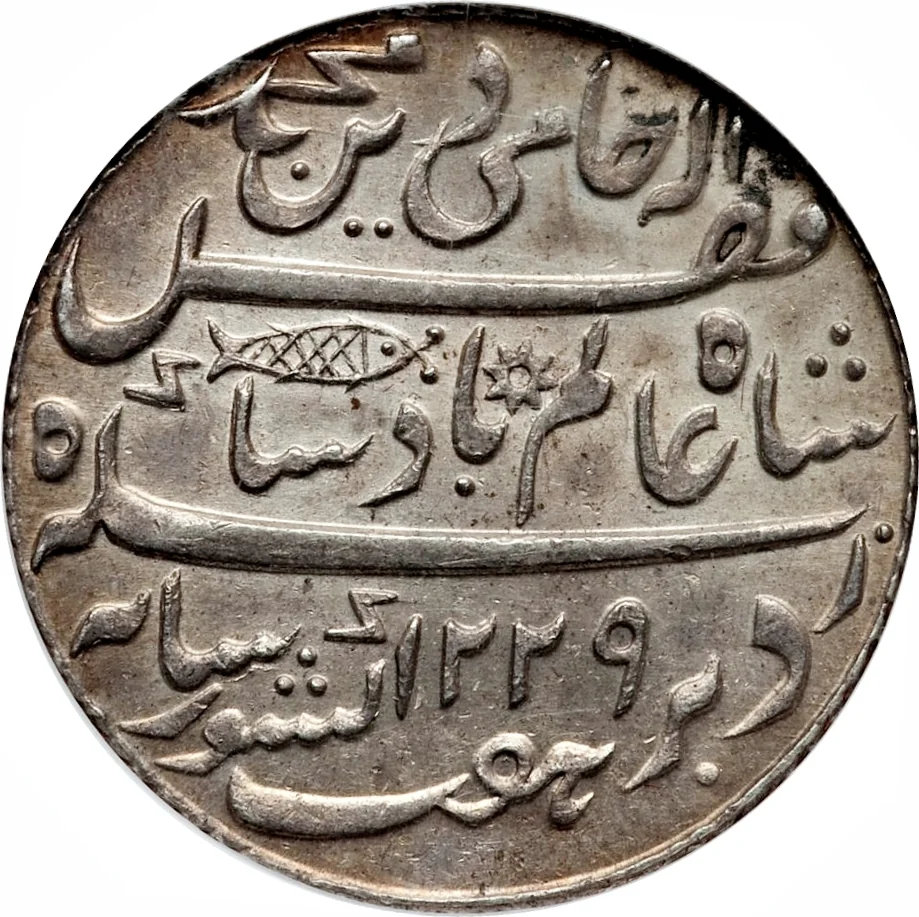
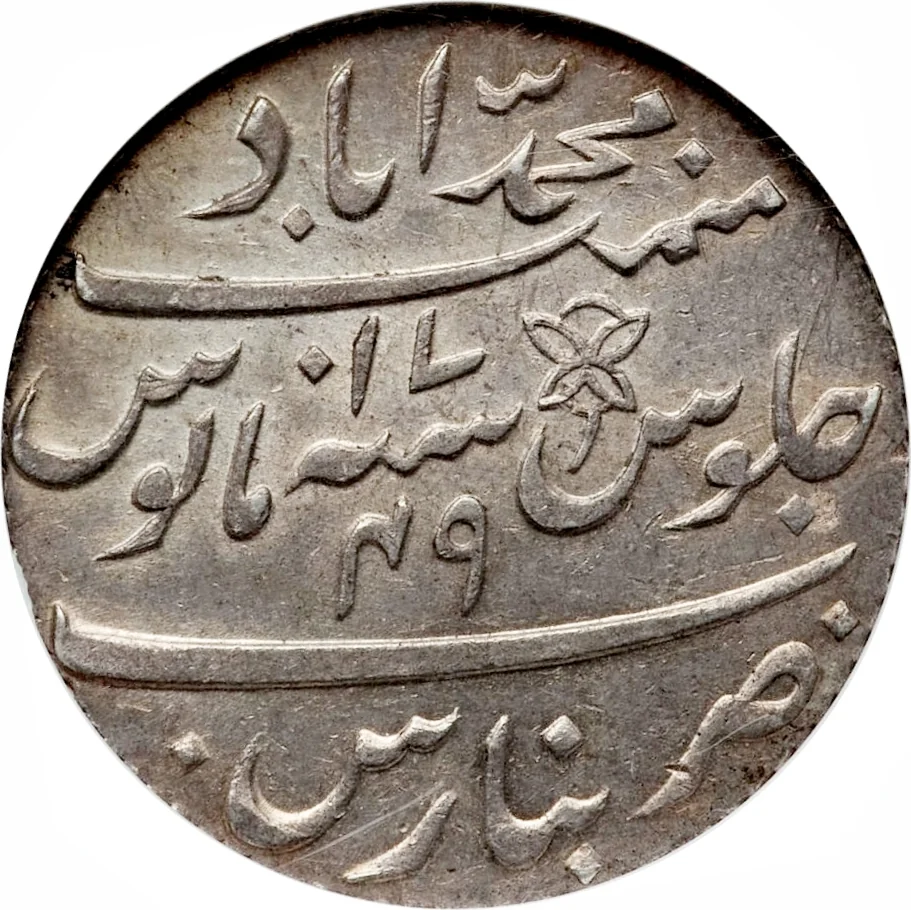
1 Rupee – Bengal Presidency
India
Context
Year: 1814
Islamic (Hijri) Year: 1229
Country: India 
Issuer: Bengal Presidency
Currency:
(1765—1835)
Demonetized: Yes
Material
References
KM: #Click to copy to clipboard42
Numista: #50427
Value
Bullion value: $32.28
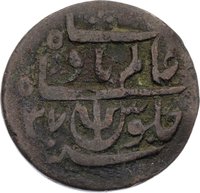
Obverse
Description:
Sikka zad bar haft kishwar saya fazl Ilah Hami ud-din Muhammad Shah Alam Badshah, AH 1229.
Inscription:
١٢٢٩
Translation:
1229
Language: Arabic
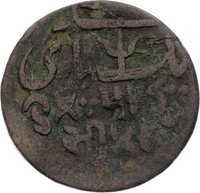
Reverse
Description:
Zarb Muhammadabad Banaras, sanat 17/49, julus maimanat manus.
Inscription:
١٧
۴٩
۴٩
Translation:
17
49
49
Language: Arabic
Edge
Oblique milled, Grained Right ////
Mintings
| Year | Mint Mark | Mintage | Quality | Collection |
|---|---|---|---|---|
| 1814 | — | — |
Historical background
In 1814, the Bengal Presidency's currency system was a complex and problematic bimetallic structure, officially based on both silver and gold but dominated by the silver rupee. The standard unit was the Sicca Rupee, a bulky coin containing a specified weight and purity of silver. However, the system was plagued by a proliferation of older, worn, and subsidiary coins of varying value, such as the Sonat rupee, which circulated alongside the Sicca. This created constant confusion, required complex calculations for revenue collection and trade, and facilitated widespread fraud. The East India Company, as the governing authority, struggled to enforce a uniform standard across its territories.
A critical and chronic issue was the persistent drain of silver from Bengal to China to pay for tea and other commodities, which was not offset by equivalent imports. This external drain exacerbated an internal shortage of standardized coin, putting deflationary pressure on the economy and hampering commercial transactions. Furthermore, the official bimetallic ratio between gold and silver (fixed at 1:15 in 1766) failed to reflect the global market value, leading to the disappearance of full-weight gold mohurs from circulation as they were exported for profit. This effectively left the rupee as the sole practical standard, but one in chronically short supply.
The Company administration was acutely aware of these destabilizing flaws. The situation in 1814 represented the culmination of decades of monetary disorder and set the stage for major reform. Just four years later, in 1818, the Governor-General, Lord Hastings, would initiate a significant recoinage, introducing the "Company Rupee" to replace the Sicca and attempting to suppress older variants. Thus, 1814 stands as a pivotal point, capturing the Presidency's strained and fragmented currency system immediately before a concerted, if not entirely successful, effort to impose a single, uniform silver standard.
A critical and chronic issue was the persistent drain of silver from Bengal to China to pay for tea and other commodities, which was not offset by equivalent imports. This external drain exacerbated an internal shortage of standardized coin, putting deflationary pressure on the economy and hampering commercial transactions. Furthermore, the official bimetallic ratio between gold and silver (fixed at 1:15 in 1766) failed to reflect the global market value, leading to the disappearance of full-weight gold mohurs from circulation as they were exported for profit. This effectively left the rupee as the sole practical standard, but one in chronically short supply.
The Company administration was acutely aware of these destabilizing flaws. The situation in 1814 represented the culmination of decades of monetary disorder and set the stage for major reform. Just four years later, in 1818, the Governor-General, Lord Hastings, would initiate a significant recoinage, introducing the "Company Rupee" to replace the Sicca and attempting to suppress older variants. Thus, 1814 stands as a pivotal point, capturing the Presidency's strained and fragmented currency system immediately before a concerted, if not entirely successful, effort to impose a single, uniform silver standard.
💎 Extremely Rare