

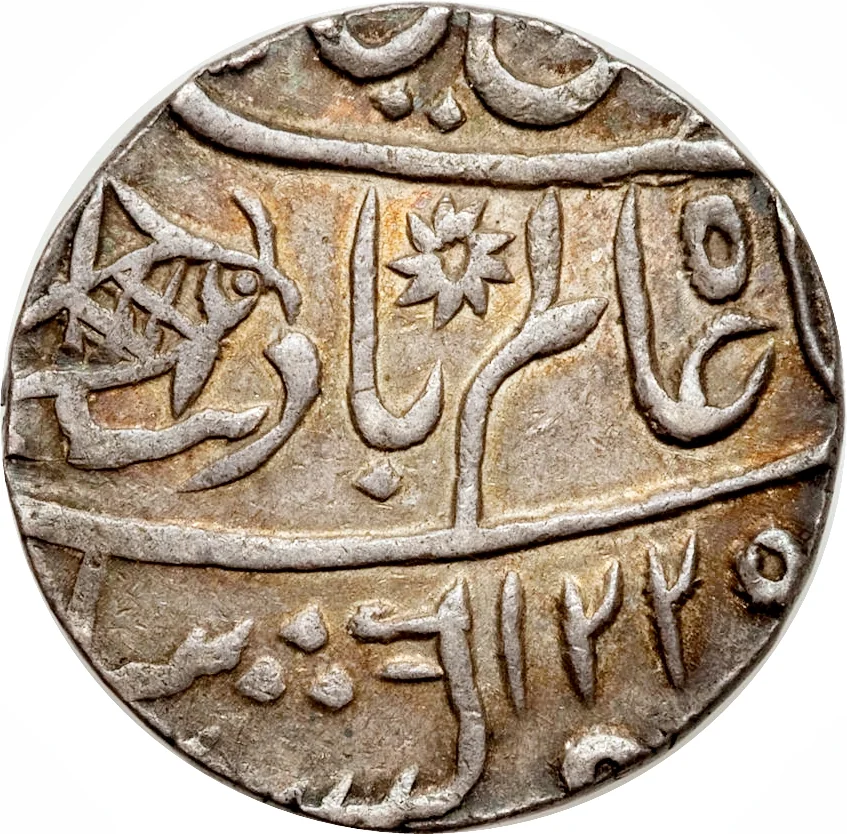
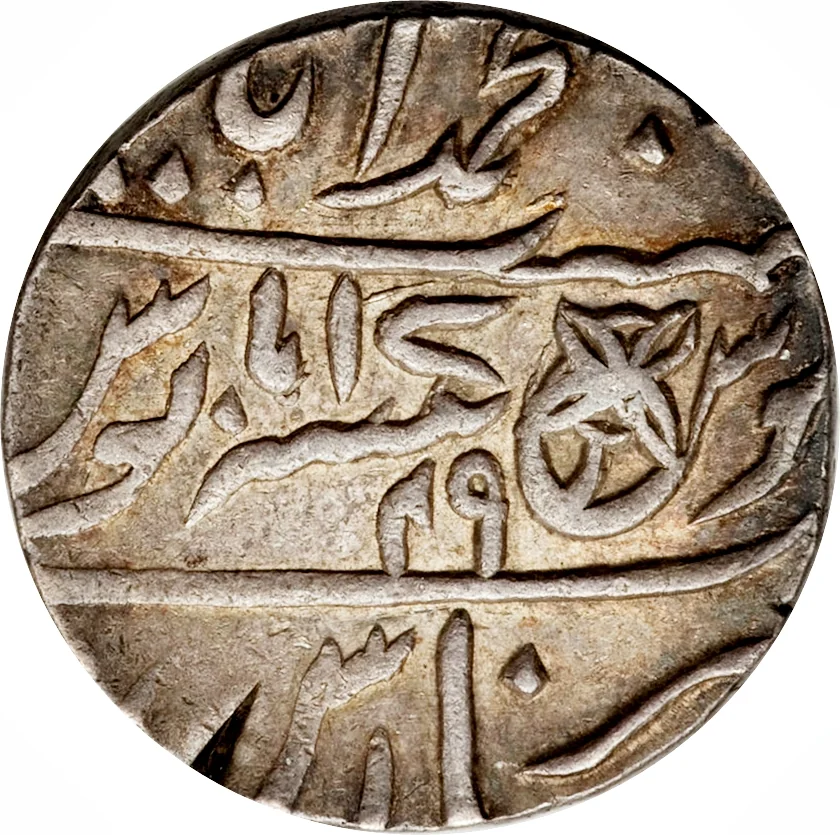
1 Rupee – Bengal Presidency
India
Context

Material
References
KM: #Click to copy to clipboard41
Numista: #42471
Value
Bullion value: $32.05
Obverse
Description:
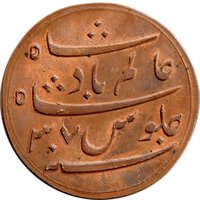
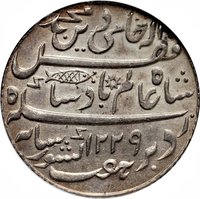
Sikka zad bar haft kishwar: "Coined over seven climes, by the grace of God, supporter of the faith Muhammad, Shah Alam Badshah, AH 1229."
Inscription:
١٢٢٩
Translation:
1229
Language: Arabic
Reverse
Edge
Plain
Mintings
| Year | Mint Mark | Mintage | Quality | Collection |
|---|---|---|---|---|
| 1812 | — | — | ||
| 1813 | — | — | ||
| 1814 | — | — |
Historical background
By 1812, the currency situation in the Bengal Presidency was a complex and pressing administrative challenge, characterised by a severe shortage of specie (coin) and the chaotic circulation of a multitude of debased and forged coins. The Presidency operated on a bimetallic system based on the silver rupee and the gold mohur, but the standard Company Rupee, the Sicca rupee, had to compete with a host of older, lighter, and variably valued rupees from the Mughal and regional regimes, such as the Sonat and Farrukhabad rupees. This proliferation created confusion, facilitated fraud, and hindered commerce, as merchants and revenue collectors constantly negotiated exchange rates and discounts between different coins.
The core of the crisis stemmed from the East India Company's own financial policies. To finance its wars and territorial expansion, the Company had increasingly resorted to manipulating the currency, notably by issuing a new, heavier Sicca rupee in 1793 with a high seigniorage charge (a tax on minting). This overvalued the Sicca artificially, driving older, full-weight rupees out of circulation (Gresham's Law) and into the hands of bullion dealers or the mint for melting and recoinage. Furthermore, the Company's high mint charges discouraged people from bringing silver bullion to the Calcutta Mint, exacerbating the coin shortage. The result was a crippling scarcity of reliable legal tender, which stifled the internal economy and complicated the vital process of land revenue collection, the financial bedrock of Company rule.
Consequently, the period leading up to 1812 was one of intense investigation and debate within the Company's administration. Officials were acutely aware that the monetary disorder was a direct threat to economic stability and state revenue. This scrutiny would culminate in the major currency reform of 1818, which finally demonstrated the old Sicca rupee and introduced a single, uniform silver currency, the Company Rupee, based on a refined standard. Thus, 1812 represents a pivotal moment within a protracted crisis, where the defects of the existing system were fully apparent, setting the stage for the comprehensive overhaul that would follow.
The core of the crisis stemmed from the East India Company's own financial policies. To finance its wars and territorial expansion, the Company had increasingly resorted to manipulating the currency, notably by issuing a new, heavier Sicca rupee in 1793 with a high seigniorage charge (a tax on minting). This overvalued the Sicca artificially, driving older, full-weight rupees out of circulation (Gresham's Law) and into the hands of bullion dealers or the mint for melting and recoinage. Furthermore, the Company's high mint charges discouraged people from bringing silver bullion to the Calcutta Mint, exacerbating the coin shortage. The result was a crippling scarcity of reliable legal tender, which stifled the internal economy and complicated the vital process of land revenue collection, the financial bedrock of Company rule.
Consequently, the period leading up to 1812 was one of intense investigation and debate within the Company's administration. Officials were acutely aware that the monetary disorder was a direct threat to economic stability and state revenue. This scrutiny would culminate in the major currency reform of 1818, which finally demonstrated the old Sicca rupee and introduced a single, uniform silver currency, the Company Rupee, based on a refined standard. Thus, 1812 represents a pivotal moment within a protracted crisis, where the defects of the existing system were fully apparent, setting the stage for the comprehensive overhaul that would follow.
⭐ Rare