

½ Rupee – Bengal Presidency
India

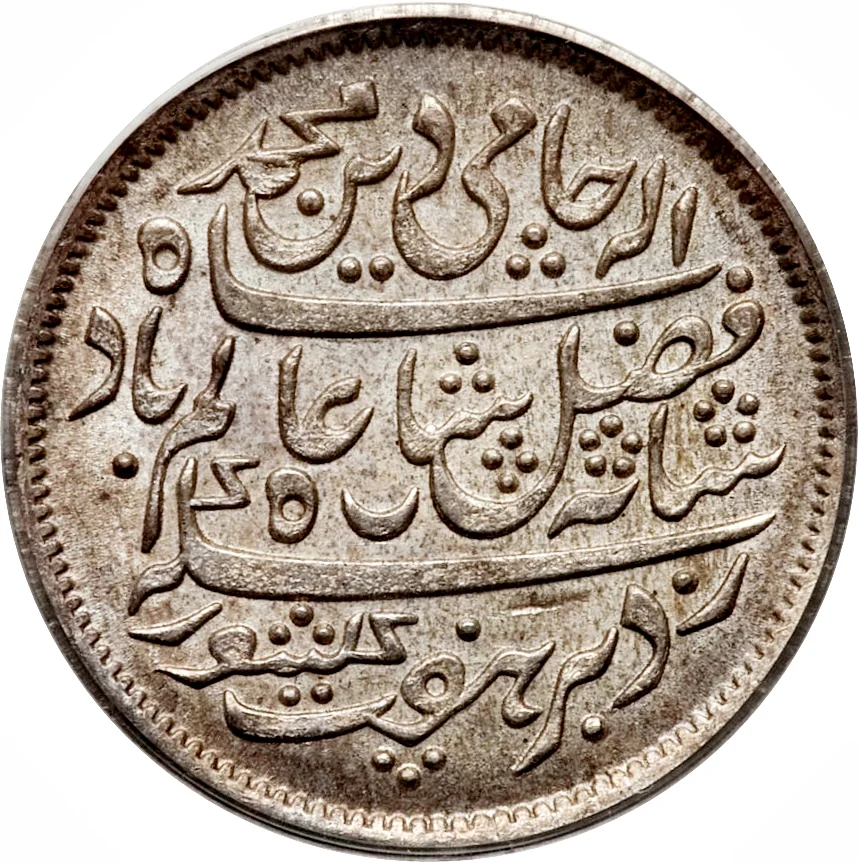
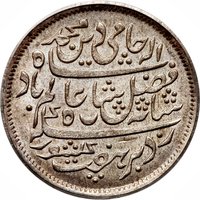
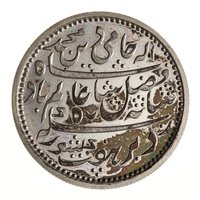
Obverse
Description:
Struck coin across seven climes, by divine grace, protector of faith Muhammad Shah Alam, Emperor.
Inscription:
شاه عالم بادشاه
حامي دين محمد
ساى فضل لله
سكة زد بر حفت كشور
حامي دين محمد
ساى فضل لله
سكة زد بر حفت كشور
Translation:
Shah Alam, Emperor
Protector of the religion of Muhammad
By the grace of God
Struck coin throughout the seven climes
Protector of the religion of Muhammad
By the grace of God
Struck coin throughout the seven climes
Language: Persian
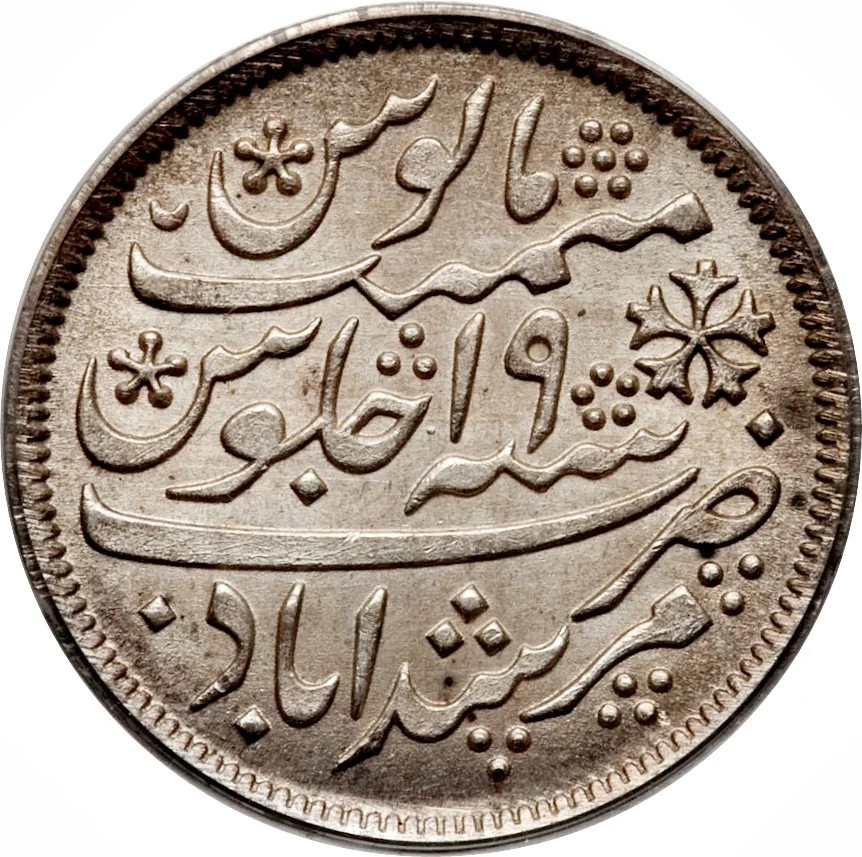
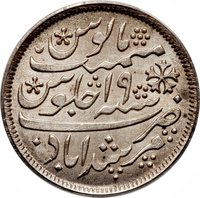
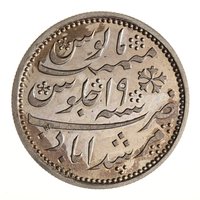
Reverse
Description:
Zarb Murshidabad, 19th regnal year.
Inscription:
ممنت مانوس
سنه ١٩ جلوس
ضرب مرشداباد
سنه ١٩ جلوس
ضرب مرشداباد
Translation:
Minted Manus
Year 19 of the Reign
Struck Murshidabad
Year 19 of the Reign
Struck Murshidabad
Language: Arabic
Edge
Plain edgeImage shows crescent privy mark for Calcutta mint on upper left of reverse
Mintings
| Year | Mint Mark | Mintage | Quality | Collection |
|---|---|---|---|---|
| 1830 | — | — | ||
| 1830 | ١٩ | — | Proof |
Historical background
By 1830, the Bengal Presidency's currency system was a complex and often chaotic legacy of its transition from Mughal rule to Company control. The monetary landscape was a fragmented mix of official Company rupees, a multitude of older, worn, and often debased silver coins from various Indian states, and a vital gold currency (the mohur). The primary unit was the Company's silver rupee, but its value and acceptability were undermined by the widespread circulation of older, substandard coins. This created significant problems for trade and revenue collection, as the intrinsic silver content of coins varied widely, leading to confusion, discounting, and rampant fraud.
The East India Company had long sought to impose order, most notably through the Coinage Act of 1793 which established the Calcutta Mint and the "sicca" rupee. However, this reform failed as the new, heavier sicca rupees were quickly hoarded or melted down, while lighter, older coins remained in circulation under a system of bewildering exchange rates. By 1830, the system was critically dysfunctional. The Presidency was effectively divided into monetary zones with different standard rupees (the Calcutta sicca, the Farrukhabad rupee in the west, and the Arcot rupee in the south), each with fluctuating values. This multiplicity stifered internal commerce and complicated the Company's own financial administration.
Consequently, 1830 stood on the brink of major reform. The chaotic system was widely recognized as an impediment to economic stability and colonial governance. This pressure would culminate just a few years later in the great recoinage of 1835, which finally abolished the old, disparate systems and introduced a uniform, all-India silver rupee bearing the image of the British monarch. Thus, the situation in 1830 was one of prolonged disorder, setting the stage for the final and forceful standardization of currency under the Company's rule.
The East India Company had long sought to impose order, most notably through the Coinage Act of 1793 which established the Calcutta Mint and the "sicca" rupee. However, this reform failed as the new, heavier sicca rupees were quickly hoarded or melted down, while lighter, older coins remained in circulation under a system of bewildering exchange rates. By 1830, the system was critically dysfunctional. The Presidency was effectively divided into monetary zones with different standard rupees (the Calcutta sicca, the Farrukhabad rupee in the west, and the Arcot rupee in the south), each with fluctuating values. This multiplicity stifered internal commerce and complicated the Company's own financial administration.
Consequently, 1830 stood on the brink of major reform. The chaotic system was widely recognized as an impediment to economic stability and colonial governance. This pressure would culminate just a few years later in the great recoinage of 1835, which finally abolished the old, disparate systems and introduced a uniform, all-India silver rupee bearing the image of the British monarch. Thus, the situation in 1830 was one of prolonged disorder, setting the stage for the final and forceful standardization of currency under the Company's rule.
💎 Very Rare