

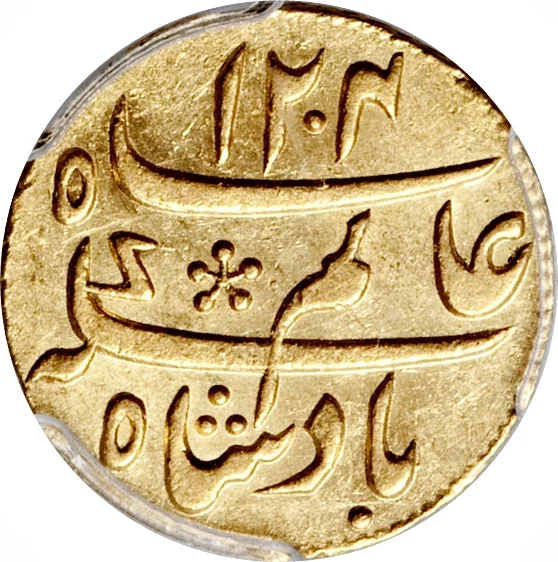
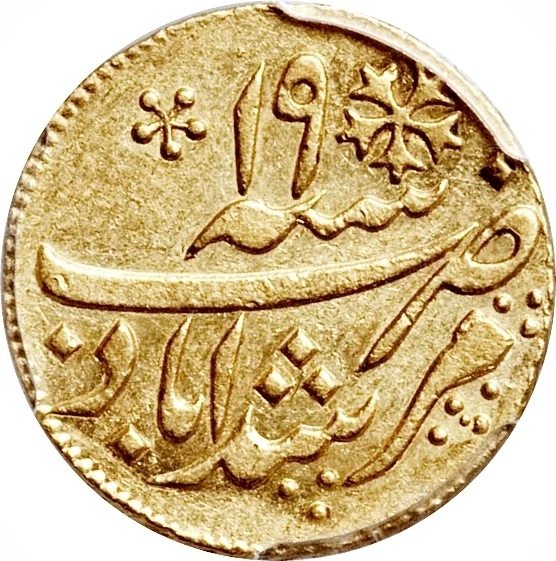
¼ Mohur – Bengal Presidency
India
Context
Year: 1819
Islamic (Hijri) Year: 1204
Country: India 
Issuer: Bengal Presidency
Currency:
(1765—1835)
Demonetized: Yes
Material
References
KM: #Click to copy to clipboard110
Numista: #50402
Value
Bullion value: $506.08
Obverse
Description:
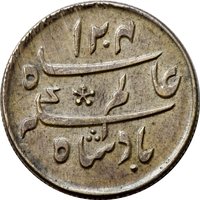
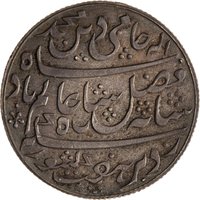
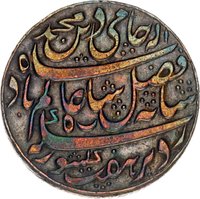
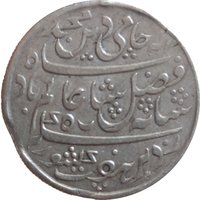
Shah Alam, Mughal Emperor, 1204 AH.
Reverse
Description:
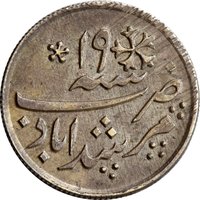
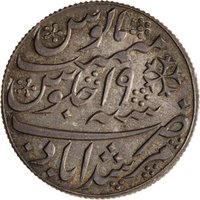
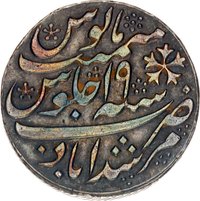
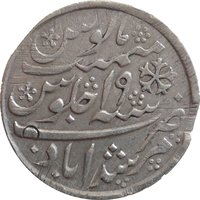
Zarb Murshidabad, 19th century.
Edge
Vertical Milled
Mintings
| Year | Mint Mark | Mintage | Quality | Collection |
|---|---|---|---|---|
| 1819 | — | — | ||
| 1819 | — | — | Proof |
Historical background
In 1819, the Bengal Presidency's currency system was in a state of complex transition, still grappling with the legacy of the late 18th century and the recent introduction of the silver rupee as the sole legal tender. The pivotal Coinage Act of 1793 had established the Company's sicca rupee as the standard, but it existed alongside a bewildering variety of older, worn, and foreign coins, leading to chronic problems of valuation, forgery, and discounting (batta). The system was effectively bimetallic in practice, with gold mohurs also circulating, though silver was legally supreme.
The presidency's economy was strained by a persistent silver shortage, exacerbated by the need to finance trade with China (for tea, paid in silver) and military campaigns. This scarcity drove up the value of silver relative to gold and copper, creating a three-tiered metallic system that was unstable for daily commerce. To address the shortage and standardise the coinage, the Calcutta Mint had begun issuing the new Company rupee in 1818, which was lighter than the old sicca rupee. However, in 1819, both coins circulated simultaneously, causing public confusion and commercial friction as merchants and peasants alike struggled with exchange rates and the demonetisation of older issues.
Consequently, the monetary landscape in 1819 was one of administrative effort clashing with entrenched custom. The East India Company was actively trying to impose a uniform, centralised currency to facilitate revenue collection and trade, but this was met with a fragmented subcontinental economy accustomed to regional coinages. The year thus represents a critical point in the long process of moving from a chaotic, market-driven multiplicity of currencies toward a standardised, state-controlled monetary system, a transition that would only be solidified with the great recoinage of 1835.
The presidency's economy was strained by a persistent silver shortage, exacerbated by the need to finance trade with China (for tea, paid in silver) and military campaigns. This scarcity drove up the value of silver relative to gold and copper, creating a three-tiered metallic system that was unstable for daily commerce. To address the shortage and standardise the coinage, the Calcutta Mint had begun issuing the new Company rupee in 1818, which was lighter than the old sicca rupee. However, in 1819, both coins circulated simultaneously, causing public confusion and commercial friction as merchants and peasants alike struggled with exchange rates and the demonetisation of older issues.
Consequently, the monetary landscape in 1819 was one of administrative effort clashing with entrenched custom. The East India Company was actively trying to impose a uniform, centralised currency to facilitate revenue collection and trade, but this was met with a fragmented subcontinental economy accustomed to regional coinages. The year thus represents a critical point in the long process of moving from a chaotic, market-driven multiplicity of currencies toward a standardised, state-controlled monetary system, a transition that would only be solidified with the great recoinage of 1835.
✨ Legendary