

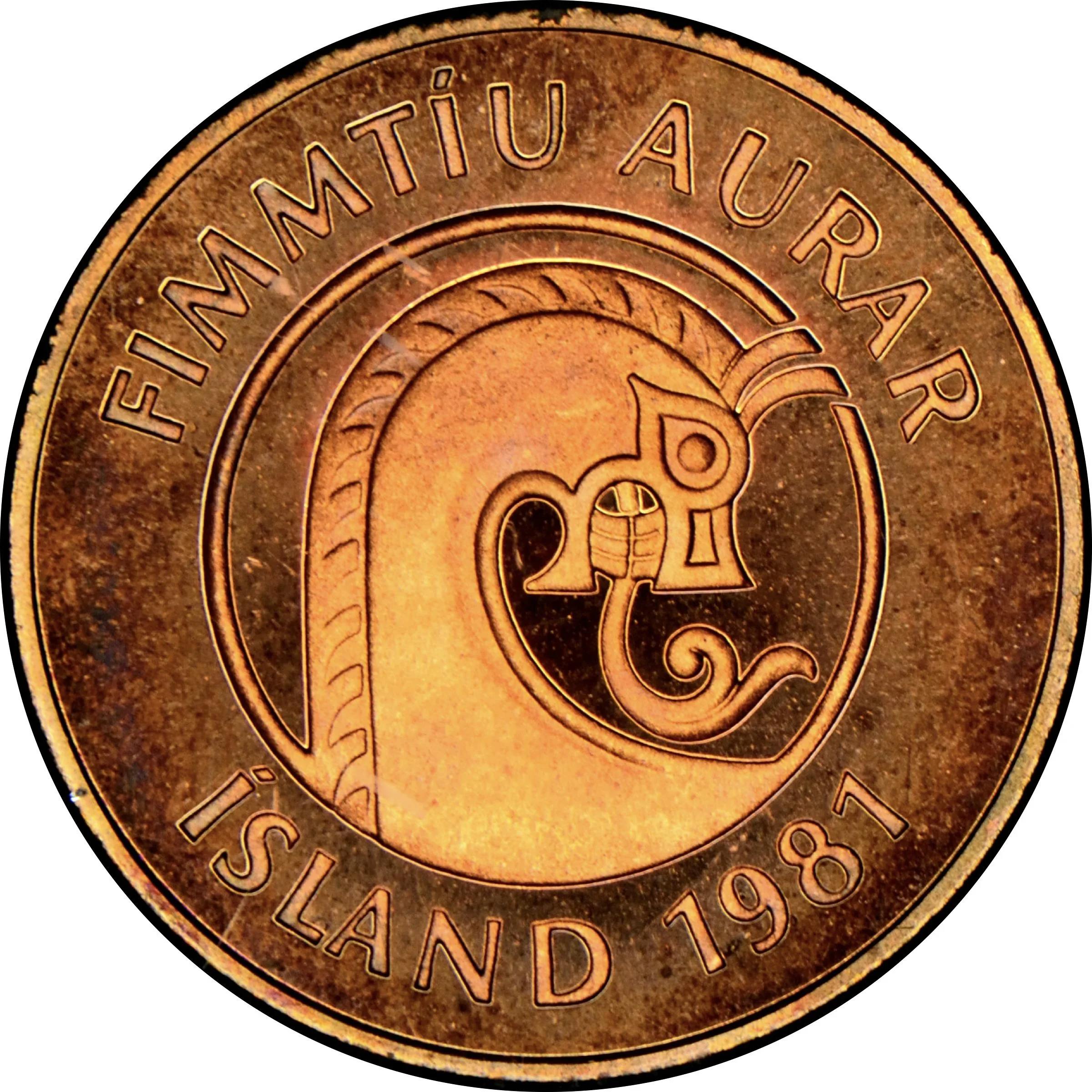
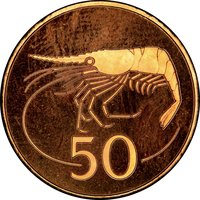
Obverse
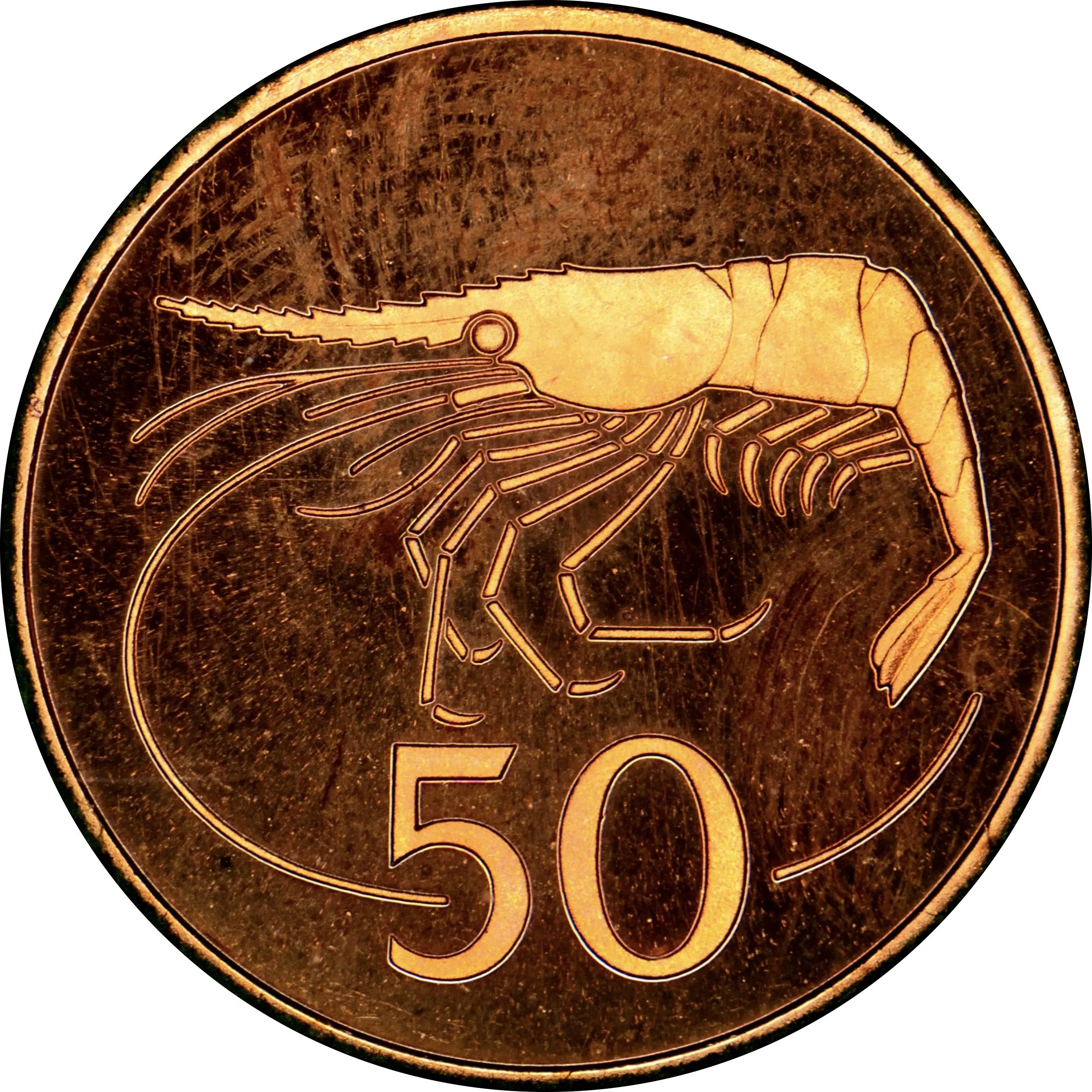
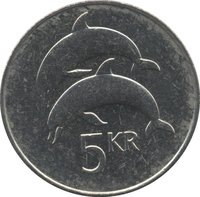
Reverse
Edge
Plain
Categories
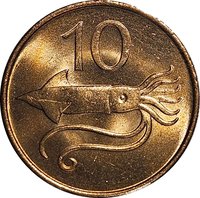
| Animal> Crustacean |
| Mythology> Fantastic animal |
| Animal> Marine invertebrate |
Mints
| Name | Mark |
|---|---|
| Royal Mint | — |
Mintings
| Year | Mint Mark | Mintage | Quality | Collection |
|---|---|---|---|---|
| 1981 | — | 10,000,000 | ||
| 1981 | — | 15,000 | Proof |
Historical background
In 1981, Iceland was grappling with a severe and prolonged period of high inflation, a defining economic challenge that had plagued the nation for over a decade. Annual inflation rates had consistently soared into the double digits, frequently exceeding 40% and even reaching peaks near 60% in the late 1970s. This corrosive environment was fueled by a combination of factors, including indexation of wages to prices, expansive government spending, powerful trade unions securing large wage hikes, and the external shocks of the 1970s oil crises. The Icelandic króna, as a result, was rapidly losing its value, creating significant economic uncertainty and eroding savings.
The government's response to this crisis culminated in a major currency reform on January 1, 1981. This was not a devaluation but a redenomination, where the old króna (ISK) was replaced by a new króna (ISK) at a rate of 100 old krónur to 1 new króna. The primary goal was to simplify monetary transactions by removing zeros from the inflated currency, making accounting and everyday commerce more manageable. New banknotes and coins were introduced, featuring historical figures and symbols, in an effort to psychologically reset public perception of the currency's stability.
However, this reform was largely a technical adjustment to the symptoms, not a cure for the underlying disease of inflation. While it streamlined the monetary system, it did not immediately address the deep-rooted structural issues in the Icelandic economy, such as widespread indexation and fiscal policy. Inflationary pressures persisted throughout the early 1980s, demonstrating that the currency reform alone was insufficient. True stabilization would require more stringent economic policies, including deregulation, fiscal restraint, and eventually the dismantling of the indexation system, which would become central to reforms later in the decade.
The government's response to this crisis culminated in a major currency reform on January 1, 1981. This was not a devaluation but a redenomination, where the old króna (ISK) was replaced by a new króna (ISK) at a rate of 100 old krónur to 1 new króna. The primary goal was to simplify monetary transactions by removing zeros from the inflated currency, making accounting and everyday commerce more manageable. New banknotes and coins were introduced, featuring historical figures and symbols, in an effort to psychologically reset public perception of the currency's stability.
However, this reform was largely a technical adjustment to the symptoms, not a cure for the underlying disease of inflation. While it streamlined the monetary system, it did not immediately address the deep-rooted structural issues in the Icelandic economy, such as widespread indexation and fiscal policy. Inflationary pressures persisted throughout the early 1980s, demonstrating that the currency reform alone was insufficient. True stabilization would require more stringent economic policies, including deregulation, fiscal restraint, and eventually the dismantling of the indexation system, which would become central to reforms later in the decade.
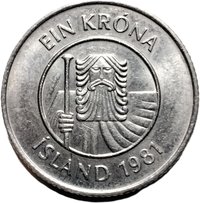
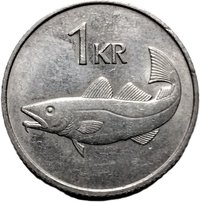
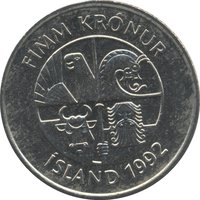
Series: 1981 Iceland circulation coins
🌱 Very Common