

1⁄12 anna – Muscat and Oman
Add to wishlist
Oman
Context
Year: 1894
Islamic (Hijri) Year:: 1311
Country: Oman
Issuer: Muscat and Oman
Ruler: Faisal bin Turki
Currency:
(1891—1959)
Demonetized: Yes
References
KM: #
Numista: #50248
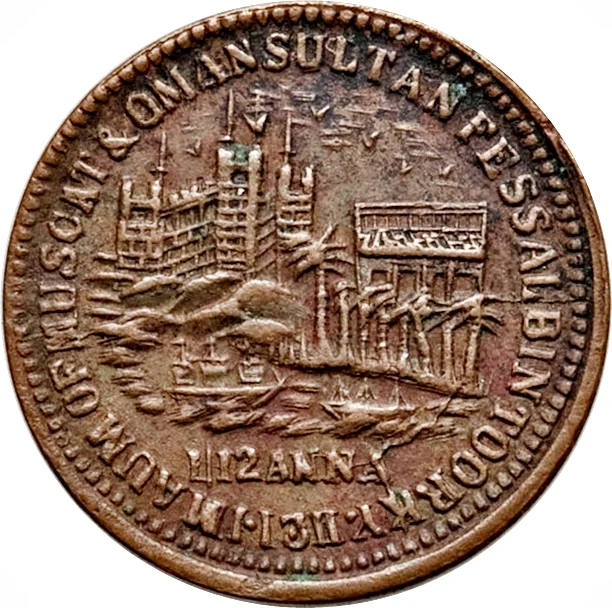
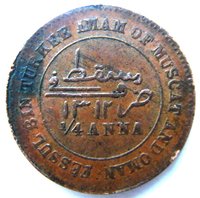
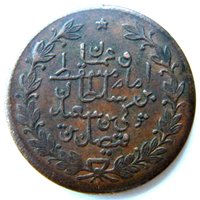
Obverse
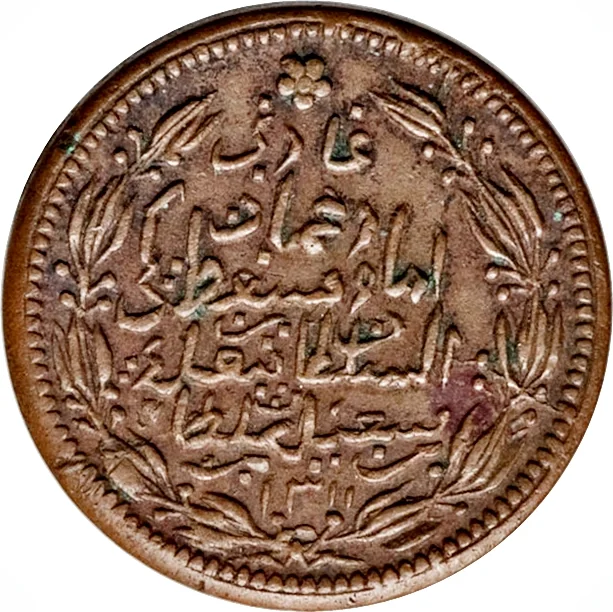
Reverse
Edge
Categories
| Building> Castle or fortification |
| Building> Palace |
| Geography> Sea |
| Transportation> Watercraft |
| Plant> Tree |
| Symbol> Wreath |
Mints
| Name | Mark |
|---|---|
| Muscat | — |
Mintings
| Year | Mint Mark | Mintage | Quality | Collection |
|---|---|---|---|---|
| 1894 | — | — |
Historical background
In 1894, the currency situation in Muscat and Oman reflected its pivotal position in Indian Ocean trade and its complex political ties to British India. The primary circulating currency was the Indian Rupee, alongside its fractional coin, the anna. This was not a formal imposition but a practical consequence of Muscat's deep commercial links with Bombay and the wider British Raj, which dominated regional maritime trade. The Maria Theresa Thaler, the legendary silver dollar of international trade, also remained in significant use, particularly for larger transactions and in the interior, due to its trusted silver content and wide acceptance across the Arabian Peninsula and East Africa.
However, this created a bimetallic system prone to instability. The value of silver against gold was falling globally in the late 19th century, which devalued the silver-based rupee and thaler. This fluctuation caused periodic economic dislocation and complicated both government finance and everyday commerce. Sultan Faisal bin Turki (r. 1888-1913), while under increasing British political influence, still sought to assert monetary sovereignty. In 1894, he made a notable attempt to issue a distinctive copper paisa coin minted in Birmingham, bearing his name and the Hijri date 1312. This was an effort to provide small change and to place a symbol of his authority into daily circulation.
Ultimately, the attempt had limited success. The new coins did not displace the entrenched Indian currency system, and British political and economic hegemony continued to shape the monetary landscape. The currency situation of 1894 thus encapsulates the Sultanate's transitional state: a sovereign entity attempting to navigate its own fiscal policy, yet increasingly integrated into the economic orbit of the British Empire, which would lead to the formal establishment of the Gulf Rupee as the dominant currency in the following decades.
However, this created a bimetallic system prone to instability. The value of silver against gold was falling globally in the late 19th century, which devalued the silver-based rupee and thaler. This fluctuation caused periodic economic dislocation and complicated both government finance and everyday commerce. Sultan Faisal bin Turki (r. 1888-1913), while under increasing British political influence, still sought to assert monetary sovereignty. In 1894, he made a notable attempt to issue a distinctive copper paisa coin minted in Birmingham, bearing his name and the Hijri date 1312. This was an effort to provide small change and to place a symbol of his authority into daily circulation.
Ultimately, the attempt had limited success. The new coins did not displace the entrenched Indian currency system, and British political and economic hegemony continued to shape the monetary landscape. The currency situation of 1894 thus encapsulates the Sultanate's transitional state: a sovereign entity attempting to navigate its own fiscal policy, yet increasingly integrated into the economic orbit of the British Empire, which would lead to the formal establishment of the Gulf Rupee as the dominant currency in the following decades.
💎 Extremely Rare